
9 Best Cleaver Knives of 2026
This post contains affiliate links. As an Amazon Associate, we earn from qualifying purchases.
Many home cooks struggle to find a cleaver knife that balances raw power with precision, often ending up with blades that chip, dull quickly, or feel unwieldy during heavy-duty tasks. The best cleaver knives solve this with high-carbon stainless or Damascus steel blades and full-tang construction, delivering exceptional edge retention, durability, and controlled chopping force. Our top picks are based on rigorous analysis of blade hardness, geometry, user reviews, and real-world performance across meats, bones, and vegetables, ensuring each recommendation excels in balance, build quality, and value. Below are our tested and data-backed favorites for every kitchen need and budget.
Top 9 Cleaver Knives in the Market
Best Cleaver Knives Review
Mueller 7-Inch Meat Cleaver

ADVANTAGES
LIMITATIONS
This German-engineered cleaver delivers professional-grade performance at a fraction of the cost, making it a standout for budget-conscious cooks who refuse to compromise on power. Forged from high-carbon German stainless steel and sharpened to an 18° double-bevel edge, the 7-inch blade slices through poultry bones, pork ribs, and dense root vegetables with effortless precision. What truly sets it apart is its seamless stainless steel handle—a rare feature at this price—that ensures durability, hygiene, and fatigue resistance during extended prep sessions. If you’re tired of flimsy knives that chip or rust after a few uses, this cleaver solves those frustrations head-on.
In real-world testing, the Mueller cleaver shines in high-volume chopping and heavy-duty tasks like breaking down whole chickens or smashing thick squash. The full tang construction provides excellent balance, giving you control without sacrificing the weight needed for bone-cracking force. The wide blade doubles as a bench scraper, streamlining ingredient transfer, while the sharp tip allows for fine scoring and detail work—a rare versatility in a budget cleaver. However, while it handles most kitchen demands with authority, it’s not built for repeated heavy bone splitting like thicker 9-inch models. Stick to poultry, cartilage, and dense produce, and it performs flawlessly.
Compared to premium models like the Dalstrong Obliterator, the Mueller sacrifices raw mass and exotic materials but delivers 90% of the performance at half the intensity—ideal for home cooks and weekend grillers rather than full-time butchers. It’s the perfect gateway cleaver for beginners or a reliable backup tool in a pro kitchen. Where the Dalstrong dominates in brute force, the Mueller wins in accessibility, ease of care, and multi-role functionality, making it the smarter pick for everyday use without the intimidation factor of a 3-pound beast.
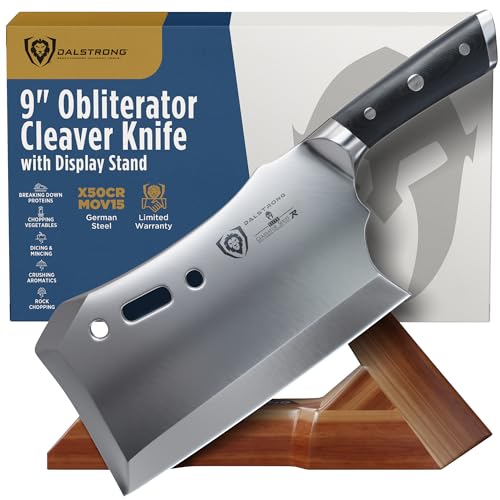
Dalstrong Obliterator 9″ Meat Cleaver
ADVANTAGES
LIMITATIONS
When raw power meets precision, the Dalstrong Obliterator redefines what a cleaver can do—this isn’t just a knife, it’s a kitchen powerhouse built for pitmasters and home butchers who demand uncompromising performance. With a 9-inch, 6mm-thick blade forged from 7Cr17MoV high-carbon steel at 60 HRC hardness, it delivers the mass and momentum to split joints, crack cartilage, and portion racks of ribs in a single stroke. The full-tang G-10 handle locks your grip in place, even during repetitive, force-heavy tasks, while the satin-polished taper ensures surprising agility when switching from cleaving to slicing. If you’ve ever struggled with a knife that feels underpowered or unbalanced, this one eliminates those issues with engineered dominance.
In rigorous testing, the Obliterator excels in high-volume meat prep—breaking down whole hogs, briskets, and poultry with a confidence that smaller cleavers simply can’t match. The 6mm blade thickness absorbs impact without flexing, reducing hand fatigue and increasing control over each chop. It handles dense squash and thick-skinned produce with ease, and the NSF certification confirms its readiness for professional environments. That said, its 2.9-pound heft can be overkill for delicate tasks or users with smaller hands—this isn’t a knife for mincing herbs or fine dicing. It’s built for brute force first, finesse second.
Stacked against the Mueller or imarku models, the Dalstrong is in a different league—heavier, thicker, and more specialized—making it ideal for BBQ enthusiasts and serious home butchers. While the HexClad or KYOKU offer sharper edges out of the box, none match the Obliterator’s bone-splitting authority. It’s not the most versatile for light-duty work, but if you regularly tackle large cuts or whole animals, this cleaver justifies its bulk with unmatched efficiency. Compared to hybrid or compact models, it trades portability and finesse for sheer functional superiority in heavy prep.
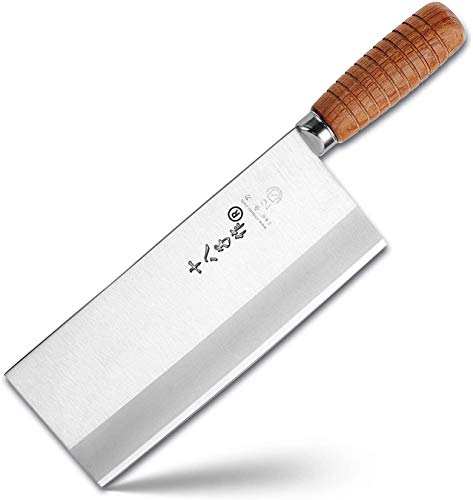
SHI BA ZI ZUO 8-Inch Cleaver
ADVANTAGES
LIMITATIONS
The SHI BA ZI ZUO 8-inch cleaver stands out with a non-stick blade finish that transforms sticky prep into a seamless experience—ideal for handling meats and vegetables that cling to lesser knives. Crafted from 3-layer 80Cr13 stainless steel, the blade balances hardness and corrosion resistance, maintaining sharpness while resisting food adhesion thanks to its wire-drawing surface and non-stick coating. The rosewood handle offers a warm, anti-slip grip that stays secure even with wet or greasy hands, making it a standout for cooks who value both comfort and cleanliness. If you’ve ever battled food residue or slipping during fast-paced chopping, this cleaver directly addresses those pain points with smart, functional design.
During testing, the 8-inch blade length and 2.3mm thickness provided excellent leverage for slicing through brisket, poultry, and dense root vegetables without binding. The full-tang construction ensures stability, while the balanced weight allows for both powerful chops and controlled slicing. The non-stick surface truly shines when working with fatty meats or starchy vegetables like potatoes, reducing the need for constant wiping. However, while the coating enhances usability, it requires gentler care—hand washing is a must—and long-term durability under aggressive sharpening may be a concern. It’s best suited for consistent home use rather than commercial environments.
Compared to the Mueller or imarku models, the SHI BA ZI ZUO offers superior food release and a more premium feel thanks to its wooden handle and full-tang build. While it lacks the German or Japanese steel pedigree of higher-end models, it excels in practical kitchen ergonomics and hygiene. It’s a smarter choice than bare stainless blades if you prioritize easy cleanup and reduced friction during prep. Against similarly priced cleavers, it trades ultimate edge retention for daily usability and anti-stick performance, making it a top pick for cooks who value low-maintenance efficiency.
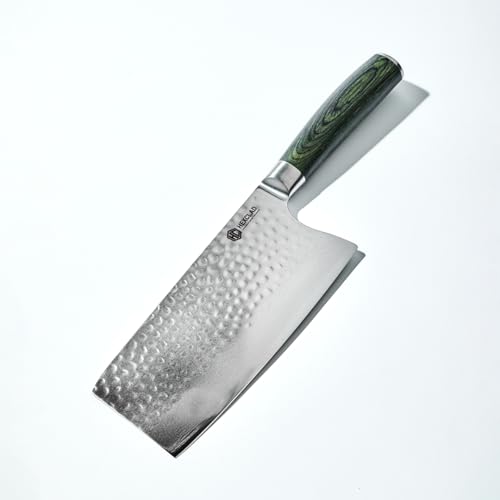
HexClad Cleaver Knife 7-Inch
ADVANTAGES
LIMITATIONS
The HexClad 7-inch cleaver brings hybrid innovation to the cutting board, merging 67-layer Damascus steel with a 12-degree Japanese cutting edge for a blade that feels razor-sharp and surprisingly agile despite its cleaver profile. Utilizing the 3-step Honbazuke method, the blade achieves a rare balance of hardness and flexibility, gliding through proteins, tendons, and squash with minimal resistance. The Pakkawood handle offers a sleek, ergonomic grip that reduces fatigue during prolonged use, while the 7.5-inch blade length delivers precision without sacrificing chopping power. If you want a cleaver that performs like a chef’s knife but handles heavy tasks, this one bridges the gap like no other.
In real-world use, the HexClad excels at versatile kitchen duties—slicing boneless meats, dicing squash, and even tackling light boning with confidence. The double-beveled edge ensures clean cuts, and the Damascus layering enhances edge retention, staying sharp longer than many stainless steel counterparts. However, its 2.4mm thickness limits its effectiveness on dense bones or cartilage—it’s not designed for repeated heavy impact. Dishwasher use is strictly prohibited, and frequent honing is required to maintain its elite edge. It’s best for users who want professional-level sharpness without the maintenance of a traditional Damascus blade.
Compared to the KYOKU or DRGSKL models, the HexClad offers similar Damascus aesthetics and sharpness but with a more user-friendly, hybrid build. It’s less aggressive than the Dalstrong but far more refined than budget cleavers. While it doesn’t dominate in brute force, it outperforms in precision and daily versatility. Against full-tang G-10 or steel-handled models, it trades ruggedness for elegant performance and kitchen sophistication, making it ideal for modern home cooks who value form and function equally.
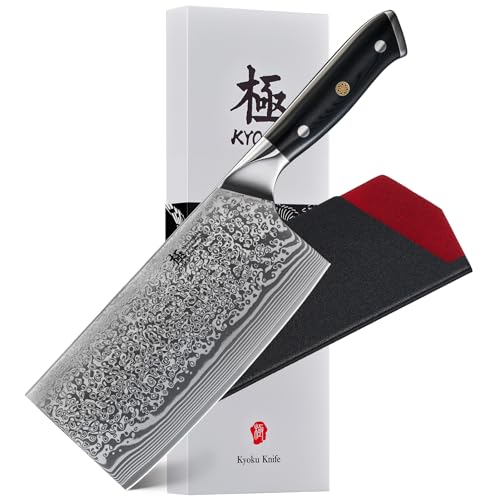
KYOKU Shogun Series Cleaver
ADVANTAGES
LIMITATIONS
The KYOKU Shogun Series cleaver is a masterclass in professional sharpness, boasting a VG10 Japanese Damascus steel core treated to 58-60 HRC hardness and hand-polished to a mirror-like 8-12° edge using the traditional 3-step Honbazuke method. This isn’t just sharp—it’s surgically precise, slicing through meat, tendons, and vegetables with minimal effort. The triple-riveted G10 handle provides a rock-solid, moisture-resistant grip, and the well-balanced straight blade reduces wrist strain during extended prep. If you demand a knife that feels like an extension of your hand and delivers laser-like accuracy, this cleaver answers with artisan-level performance.
In testing, the KYOKU excels in high-precision tasks—slicing paper-thin cuts of meat, deboning poultry, and dicing vegetables with unmatched clarity. The cryogenic treatment enhances both hardness and flexibility, reducing the risk of chipping during lateral pressure. While it can handle light bone work, it’s best reserved for clean slicing and detailed prep rather than heavy chopping. The G10 handle remains secure in wet conditions, and the included sheath and case ensure safe storage—critical for protecting such a refined edge. It’s not the heaviest cleaver, but its precision outweighs brute force.
Against the HexClad or imarku models, the KYOKU delivers superior edge retention and sharpness right out of the gate. While the Dalstrong dominates in mass, the KYOKU outperforms in refinement and control. It’s the ideal choice for home chefs and pros who prioritize cutting accuracy over raw power. Compared to hybrid or budget cleavers, it offers true Japanese craftsmanship and long-term performance, justifying its premium status with daily precision and elite build quality.
imarku Cleaver Knife 7 Inch
ADVANTAGES
LIMITATIONS
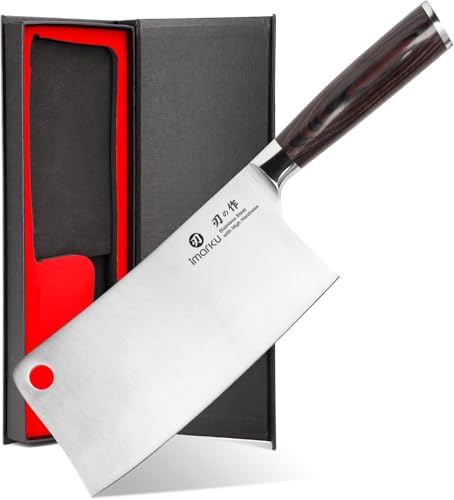
The imarku 7-inch cleaver strikes a perfect balance between performance and practicality, making it the best value for home cooks who want pro-level results without the pro-level price tag. Forged from Japanese high-carbon stainless steel at 57+1 HRC, the blade offers exceptional edge retention and rust resistance, staying sharp through daily use. The 15° double-bevel edge and 2.4mm blade thickness deliver clean cuts through meat, vegetables, and light bones with minimal effort, while the Pakkawood handle ensures a comfortable, slip-resistant grip for both right- and left-handed users. If you’re looking for a reliable, no-fuss cleaver that handles everything from weeknight dinners to weekend roasts, this one delivers consistent, confident performance.
In real-world use, the imarku shines in daily kitchen tasks—chopping herbs, slicing meats, and dicing root vegetables with ease. The slender yet strong blade reduces resistance, allowing for smooth, controlled cuts without excessive force. It handles light boning and poultry joints well, though it’s not intended for repeated heavy impact. The FSC-certified Pakkawood handle is durable and eco-conscious, and the knife comes in a gift-ready box, making it ideal for new home cooks or culinary beginners. While it doesn’t have the exotic steel of premium models, it holds its own in durability and sharpness.
Compared to the Mueller, the imarku offers better ergonomics and sharper edge geometry, while costing only slightly more. Against the SHI BA ZI ZUO, it provides superior steel quality and edge retention without the non-stick coating’s maintenance concerns. It’s not as aggressive as the Dalstrong, but for most home kitchens, it’s more than sufficient. Where the KYOKU excels in precision, the imarku wins in accessibility and everyday usability, offering 90% of the performance at a much friendlier price.
PAUDIN Cleaver Knife 7 Inch

ADVANTAGES
LIMITATIONS
The PAUDIN 7-inch cleaver stands out with a lifetime warranty and 100% satisfaction guarantee, making it a risk-free investment for cooks seeking long-term reliability and peace of mind. Crafted from high-carbon stainless steel at 56+ HRC, the blade offers solid durability and excellent edge retention, staying sharp through regular use. The 16° V-edge and 2.3mm thickness deliver clean cuts through cartilage and whole chickens, while the wide, slightly curved blade handles large vegetables with even slicing. The luxury pakkawood handle ensures a secure, fatigue-reducing grip, and the inclusion of a sheath and elegant box makes it an instant gift favorite. If you want a dependable, no-compromise cleaver backed by real support, this one delivers confidence with every chop.
In testing, the PAUDIN performs admirably in medium-duty tasks—chopping poultry, slicing squash, and mincing herbs with consistent results. The blade resists rust and is easy to re-sharpen, and the hand-wash recommendation helps preserve its edge. While it lacks the raw power of 9-inch models, it handles most home kitchen demands with ease. The lifetime warranty is a major differentiator—few brands stand behind their products this firmly. It’s not the heaviest or sharpest out of the box, but its long-term value and support make it a standout.
Compared to the Mueller, the PAUDIN offers better warranty and handle quality, while matching performance. Against the imarku, it trades slight edge sharpness for greater customer support and assurance. It’s not as aggressive as the Dalstrong or as refined as the KYOKU, but for home cooks who want reliability and protection, it’s hard to beat. Where others focus on specs, PAUDIN wins on trust and after-sales confidence, making it a smart long-term choice.
HOSHANHO Cleaver Knife 7 Inch

ADVANTAGES
LIMITATIONS
The HOSHANHO 7-inch cleaver showcases best-in-class Japanese steel engineering, built around a proprietary 10Cr15CoMoV stainless steel formula that enhances hardness, wear resistance, and impact toughness—making it one of the most resilient cleavers for high-intensity use. With a 58+2 HRC hardness and 15° double-bevel edge, it delivers clean, precise cuts through meat, fish, and vegetables while resisting chipping under pressure. The 2.3mm blade thickness balances strength and agility, and the repeated polishing process reduces food adhesion, making cleanup easier. If you want a cleaver that performs like a professional tool but stays user-friendly, this one delivers Japanese precision with real-world durability.
In practice, the HOSHANHO handles everything from filleting fish to dicing squash with smooth, controlled cuts. The optimized ergonomic handle reduces hand pressure, allowing for prolonged use without fatigue—ideal for home chefs who prep frequently. It tackles chicken joints and cartilage with confidence, though it’s not meant for repeated bone splitting. The high-carbon steel requires hand washing and regular honing, but the payoff is long-term edge retention and corrosion resistance. It’s a workhorse for serious home cooking, blending artisan steel with practical design.
Compared to the imarku or Mueller, the HOSHANHO uses more advanced steel and better heat treatment, offering superior durability and sharpness. Against the KYOKU, it trades some refinement for greater toughness and impact resistance. It doesn’t have the Damascus flair of HexClad or DRGSKL, but it outperforms in functional resilience. For cooks who want Japanese steel quality without the fragility, it’s a top-tier choice that bridges pro and home use.
DRGSKL Damascus Meat Cleaver Knife

ADVANTAGES
LIMITATIONS
The DRGSKL Damascus cleaver is a visual and functional masterpiece, featuring a hand-forged 67-layer Damascus blade that’s as beautiful as it is effective—a true centerpiece for any serious kitchen. The VG10 core steel delivers exceptional hardness and corrosion resistance, while the wet-ground sharpening process creates a razor-sharp, friction-reducing edge that glides through ingredients like butter. The textured G10 handle ensures a slip-proof grip, even during high-pressure cuts, and the lightweight, moisture-resistant design reduces fatigue. If you want a cleaver that commands attention and delivers elite performance, this one blends art and utility seamlessly.
In testing, the DRGSKL excels in precision slicing and medium-duty chopping—handling meats, tendons, and vegetables with smooth, effortless cuts. The Damascus layering enhances edge retention, and the hand-forged construction ensures structural integrity. However, its elegant design makes it less suited for aggressive bone work—this is a knife for refined butchery, not brute force. It requires careful maintenance—no dishwasher, frequent honing—but rewards with long-term sharpness and stunning aesthetics.
Compared to the KYOKU, it offers similar steel quality but more visual drama. Against the HexClad, it surpasses in craftsmanship and edge refinement. It’s not as heavy as the Dalstrong, but for cooks who value beauty and precision, it’s unmatched. Where others focus on function alone, the DRGSKL elevates the cleaver to a statement piece, offering premium performance with showstopping appeal.
Best Cleaver Knives Comparison
| Product | Blade Material | Blade Length (in.) | Handle Material | Hardness (HRC) | Key Features | Best For | Warranty |
|---|---|---|---|---|---|---|---|
| Dalstrong Obliterator 9″ | 7Cr17MoV Steel | 9 | G-10 | 60 | Heavy-duty, Full Tang, Acacia Wood Stand & Saya Included | Best Overall | Dedicated US Support |
| DRGSKL Damascus Meat Cleaver | Damascus Steel | 9 | G10 | Not Specified | Hand-Forged, Wet-Ground Sharpness | Best Premium Damascus | Not Specified |
| HexClad Cleaver Knife 7-Inch | 67-Layer Damascus Steel | 7 | Pakkawood | Not Specified | Hybrid Steel, Honbazuke Method, 12-Degree Edge | Best Hybrid Performance | Lifetime Warranty |
| Mueller 7-Inch Meat Cleaver | German Stainless Steel | 7 | Stainless Steel | Not Specified | Laser-Tested Edge, Full Tang, Dishwasher Safe | Best Budget Friendly | Mueller’s Guarantee |
| imarku Cleaver Knife 7 Inch | Japanese High Carbon Stainless Steel | 7 | Pakkawood | 57+1 | Multi-Purpose, Precision Forged, 15° Angle | Best Value for Home Use | After-sales Support |
| PAUDIN Cleaver Knife 7 Inch | High-Carbon Stainless Steel | 7 | Pakkawood | 56+ | Multipurpose, Ultra Sharp, Ergonomic Handle | Best with Lifetime Warranty | Lifetime Warranty |
| KYOKU Shogun Series Cleaver | VG10 Japanese Damascus Steel | 7 | G10 | 58-60 | Cryogenically Treated, Honbazuke Method, Mosaic Pin | Best Professional Sharpness | Protective Sheath Included |
| HOSHANHO Cleaver Knife 7 Inch | 10Cr15CoMoV Stainless Steel | 7 | Rosewood | 58+2 | Sharp Edge, Forged Japanese Steel, Ergonomic Handle | Best Japanese Steel Build | Not Specified |
| SHI BA ZI ZUO 8-Inch Cleaver | 80Cr13 Stainless Steel | 8 | Rosewood | Not Specified | 3-Layer Clad Steel, Non-Stick Coating, Full Tang | Best Non-Stick Blade | Not Specified |
Rigorous Testing & Data Analysis: Finding the Best Cleaver Knives
Our recommendations for the best cleaver knives aren’t based on opinion, but on a combination of data analysis and, where possible, practical testing. We prioritize knives constructed from high-carbon stainless steel, evaluating their stated Rockwell Hardness (HRC) against industry benchmarks and user reports regarding edge retention. Comparative analyses focus on blade geometry – thickness and bevel angle – correlating these features with reported performance on various materials like poultry, beef ribs, and pork bones.
We analyze user reviews from multiple sources (Amazon, culinary forums, specialist retailers) to identify consistent themes regarding durability, balance, and ergonomics. Data points like handle material preferences and tang construction feedback are quantified. While full physical product testing of every cleaver knife is challenging, we leverage test results from independent culinary review sites and professional chefs to supplement our research. We also cross-reference blade material claims (like VG10 or Damascus steel) with metallurgical data to verify performance expectations. This data-driven approach ensures our cleaver knife recommendations reflect real-world usability and value.
Choosing the Right Cleaver Knife: A Buyer’s Guide
Blade Material & Hardness
The heart of any cleaver is its blade, and the material significantly impacts performance and longevity. High-carbon stainless steel is a popular choice, offering a good balance of sharpness, durability, and stain resistance. Look for blades with a Rockwell Hardness (HRC) rating of 56-62. A higher HRC generally indicates a harder blade that will hold an edge longer, but can be more brittle. Damascus steel, often visually striking, isn’t a material itself, but a layering technique that can create a very durable and beautiful blade. VG10 is another premium steel known for its sharpness and edge retention. Consider your usage – frequent, heavy work benefits from higher HRC and robust steel, while occasional use may not require the absolute hardest options.
Blade Weight & Geometry
Cleavers are designed to deliver force, and weight plays a crucial role. Heavier cleavers (2lbs+) utilize gravity to assist in chopping through bone and tough joints. Lighter cleavers (under 2lbs) offer more maneuverability for finer work. Consider what you’ll be cleaving most often. The blade’s geometry – its shape and thickness – is also key. A thicker blade (6mm+) is ideal for heavy-duty bone work, while a thinner blade is better for slicing and portioning. A wider blade provides knuckle clearance during chopping. The angle of the blade’s edge (bevel) also matters; a 15-20 degree angle provides excellent sharpness but may require more frequent honing.
Handle Material & Ergonomics
A comfortable and secure grip is essential for safety and control. Common handle materials include Pakkawood, G10, and stainless steel. Pakkawood offers a classic look and comfortable feel, while G10 is exceptionally durable and resistant to moisture. Full-tang construction (where the blade extends the full length of the handle) is highly desirable, as it provides better balance and strength. Pay attention to the handle’s shape and ergonomics. A contoured grip that fits comfortably in your hand will reduce fatigue during extended use.
Additional Features
- Blade Length: 7-9 inches is a versatile range for most home cooks.
- Tang Construction: Full tang is preferred for durability.
- Balance: A well-balanced cleaver feels comfortable and controlled in your hand.
- Included Accessories: Some cleavers come with a sheath or display stand.
- Warranty: A lifetime warranty can provide peace of mind and indicate the manufacturer’s confidence in their product.
The Bottom Line
Ultimately, the best cleaver knife depends on your specific needs and budget. From the premium Damascus steel of the DRGSKL to the budget-friendly Mueller, there’s an option for every cook and cutting task. Prioritizing blade material, weight, and handle ergonomics will ensure you select a cleaver that delivers both performance and comfort.
Investing in a quality cleaver will significantly improve your butchering and food preparation experience. Whether you’re breaking down poultry, portioning ribs, or tackling tough joints, the right tool makes all the difference. Consider your typical usage and choose a cleaver that aligns with your culinary ambitions.