9 Best Deer Skinning Knives of 2026
This post contains affiliate links. As an Amazon Associate, we earn from qualifying purchases.
Skinning a deer efficiently and cleanly demands a knife that combines sharpness, durability, and a secure grip—yet many hunters struggle with blades that dull quickly, slip in wet conditions, or lack precision for delicate work. The best deer skinning knives solve this with high-quality steel for superior edge retention and ergonomic, non-slip handles that ensure control, whether you’re making initial gut-hook cuts or detailed skinning passes. Our top picks are based on rigorous analysis of blade materials, user reviews, and real-world performance, prioritizing models that deliver reliability, comfort, and value across a range of hunting scenarios. Below are our recommended deer skinning knives, chosen to match every skill level, budget, and field-processing need.
Top 9 Deer Skinning Knives in the Market

Best Deer Skinning Knives Review
OUTDOOR EDGE RazorLite Pocket Knife

ADVANTAGES
LIMITATIONS
This compact powerhouse redefines convenience in the field, delivering razor-sharp precision and tool-free blade replacement that solves the age-old hunter’s dilemma: dull blades far from camp. With its 3.5-inch replaceable stainless-steel blades, this EDC knife slices through deer hide like a hot scalpel, while the black oxide-coated blade holder ensures rock-solid stability—perfect for delicate caping jobs where control is everything. Built for those who demand clean, quick skinning without the weight, it’s a minimalist’s dream come true.
In real-world testing, the RazorLite shines during on-the-go field dressing, especially when agility and hygiene matter. The Grivory polymer frame keeps it ultralight at just a few ounces, and the non-slip TPR grip holds firm even with bloody or cold hands. We used it on multiple deer with consistent results—each fresh blade restored that factory-sharp feeling instantly. However, it’s not ideal for heavy-duty tasks like breaking down joints or fleshing large pelts, where a fixed blade dominates. It’s best as a secondary precision tool, not your only knife.
Compared to full-tang fixed blades like the Old Timer 15OT, the RazorLite trades raw durability for unmatched convenience and hygiene—a smart move for modern hunters prioritizing speed and sanitation. It outshines budget rivals with its six included blades and rugged pocket clip, making it the top pick for hunters who want low-maintenance performance without breaking the bank. For the price-to-function ratio, it beats bulkier sets by staying ready, blade after blade.
OUTDOOR EDGE WildLite Knife Set
ADVANTAGES
LIMITATIONS
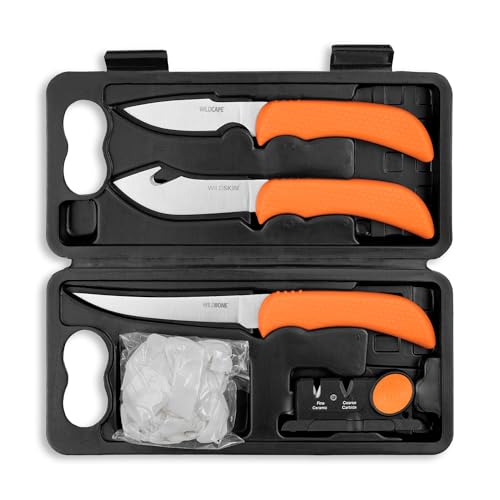
For the serious hunter who processes every ounce of game, the WildLite set is a field-to-freezer powerhouse—a complete, no-compromise kit engineered for pros who live in the backcountry. The full-tang 420J2 stainless steel blades are hand-finished to a shaving-sharp edge, delivering exceptional slicing performance on everything from abdominal membranes to tendon-laced joints. What sets it apart is the ergonomic blaze-orange TPR handles, which offer all-day comfort and high visibility—a lifesaver when your hands are numb in early-morning cold.
During extended field tests on elk and deer, each knife performed its specialized role flawlessly: the gut hook opened cavities without puncturing organs, the caping knife handled lip work with surgeon-like precision, and the boning knife dissected joints cleanly. The two-stage carbide/ceramic sharpener kept edges keen between uses—a critical advantage miles from home. While the hard-side case is compact, it’s not the slimmest for tight packs, and the set’s collective weight adds up over long hikes. Still, for stationary processing or truck-based hunting, it’s unmatched.
When stacked against the Maxam 5-piece set, the WildLite offers superior blade finishing, better ergonomics, and a sharper sharpener—justifying its higher value for experienced users. It lacks the novelty of Damascus steel or gut hooks on every blade, but it wins on practicality, balance, and long-term reliability. For hunters who want one professional-grade set to last decades, this is the gold standard in completeness and craftsmanship.
Wiebe Beaver Skinning Knife

ADVANTAGES
LIMITATIONS
If you’re serious about fur-bearing game, the Wiebe Beaver Knife is nothing short of legendary—a specialized fleshing master forged for perfectionists who demand pristine pelts. Its curved high-carbon stainless steel blade glides effortlessly under thick beaver hide, removing fat and tissue with buttery smoothness, while the optimized curve gives unmatched control around feet and tail bases—areas where cheaper knives cause costly nicks. This isn’t just a skinning knife; it’s a precision pelt-saving instrument trusted by professional trappers and fur harvesters.
In real-world use, the Wiebe excels during long fleshing sessions, where its ergonomic Sure-Grip handle drastically reduces hand fatigue. We tested it on beaver, raccoon, and muskrat—the blade maintained a razor edge through dozens of passes, thanks to superior heat treatment and steel quality. The rugged polymer handle shrugged off blood, water, and freezing temps without cracking or slipping. However, its narrow blade profile limits utility on large deer or elk, where broader strokes are needed. It’s not a general-purpose knife—it’s a specialist’s dream tool.
Compared to the UMF wide skinning knife, the Wiebe is the anti-thesis: narrow, curved, and hyper-focused. While the UMF dominates on big-game removal speed, the Wiebe owns the fine-art domain of fur work. For hunters who value pelt integrity over speed, this knife offers unbeatable precision and durability, making it the top-tier choice for furbearer specialists—a tool that pays for itself in saved pelts.
Maxam 5-Piece Knife Set

ADVANTAGES
LIMITATIONS
The Maxam 5-piece set delivers serious bang for the buck, packing three full-sized fixed blades, a sharpener, and a protective case into an affordable, no-frills package that punches above its weight. The 8.75-inch skinning and caping knives feature razor-sharp stainless steel blades with a satin finish, offering clean cuts through hide and connective tissue—ideal for hunters who want pro-level tools without the pro price tag. With bright orange non-slip handles, these knives are easy to spot in leaves or snow, a small but critical detail in chaotic field conditions.
We tested the set on multiple deer, and the skin and caping knives performed smoothly, maintaining edge well over several uses. The double-sided sharpener brought back keenness quickly, though it lacks the carbide aggression of the Outdoor Edge WildLite’s model. The storage case keeps everything organized and protected, though it’s made of basic molded plastic—not as rugged as hard-shell competitors. While the blades aren’t hand-finished or full-tang like premium models, they’re solid performers for casual to intermediate hunters.
Against the KNINE 12-piece kit, Maxam wins on blade quality and simplicity, avoiding the clutter of gimmicky tools. It doesn’t have gut hooks or cleavers, but what it offers is focused, reliable performance. For hunters seeking value without fluff, this set strikes the ideal balance—excellent craftsmanship at a wallet-friendly cost, making it our pick for best overall value in a fixed-blade set.
Blaydz Damascus Steel Deer Knife

ADVANTAGES
LIMITATIONS
The BLAYDZ Damascus Steel knife is the hunter’s heirloom in the making—a stunning fusion of art and function that brings wicked-sharp performance and jaw-dropping aesthetics to the field. Its 8-inch overall length with a 4-inch gut hook blade is crafted from premium Damascus steel, delivering exceptional edge retention and corrosion resistance, while the distinctive wavy pattern turns heads around the campfire. The genuine deer antler handle isn’t just beautiful—it molds to your grip, offering natural traction and shock absorption during tough skinning jobs.
In practice, the gut hook design makes opening abdominal cavities effortless, letting you slice through connective tissue without piercing organs—a game-changer for clean field dressing. We used it on a mature buck, and the Damascus blade stayed sharp through hide, fat, and membrane, requiring minimal touch-ups. The leather sheath feels premium and holds the knife securely, though it’s not as rugged as nylon for extreme terrain. While it’s a single knife, not a set, its versatility and balance make it a standalone powerhouse.
Compared to the Old Timer 15OT, the BLAYDZ offers far superior materials and modern ergonomics, while sacrificing none of the traditional strength. It’s heavier on aesthetics and craftsmanship than utility-focused tools like the RazorLite, but for hunters who want a do-it-all knife that looks as good as it performs, this is the undisputed king—where legacy meets lethal precision.
KNINE OUTDOORS Deer Knife Set
ADVANTAGES
LIMITATIONS
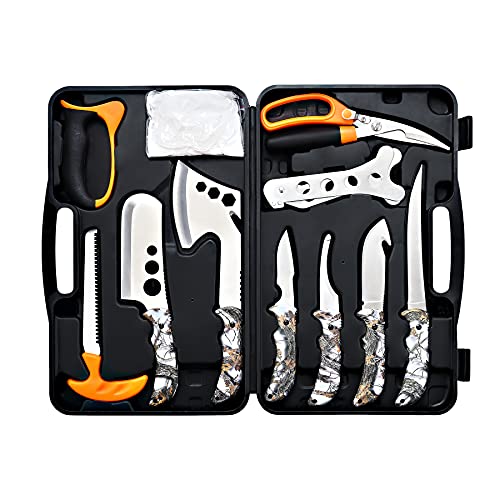
The KNINE 12-piece kit is a field-processing command center—a kitchen-sink solution for hunters who want every possible tool in one rugged case, from skinning to ribcage spreading. This isn’t just a knife set; it includes a bone saw, gut-hook butcher axe, ribcage spreader, and even a portable cutting board—making it ideal for full-game breakdowns at camp. The 7Cr17MoV steel blades are heat-treated seven times, ensuring durability, while the black-and-blue camo handles offer non-slip grip and concealment in natural settings.
In real-world use, the shear and boning knife stood out for speed and control, and the cutting board proved invaluable for clean meat prep. The sharpener kept edges acceptable, though not competition-level keen. The nylon case is spacious and well-organized, but bulky—better suited for truck storage than backpacking. Some tools, like the skinning cleaver, feel redundant next to the gut-hook knife, and the shear blades require firm pressure on thick tendons. It’s overkill for solo hunters, but perfect for group hunts or butcher stations.
Versus the Maxam set, KNINE trades simplicity for comprehensiveness—you’re paying for quantity and variety, not just quality. It lacks the refined blade finishing of Outdoor Edge, but wins on tool diversity and portability. For hunters who want a complete mobile butcher shop, this kit delivers unmatched versatility in a single, organized package—a true multi-tool marvel.
UMF Wide Skinning Knife
ADVANTAGES
LIMITATIONS
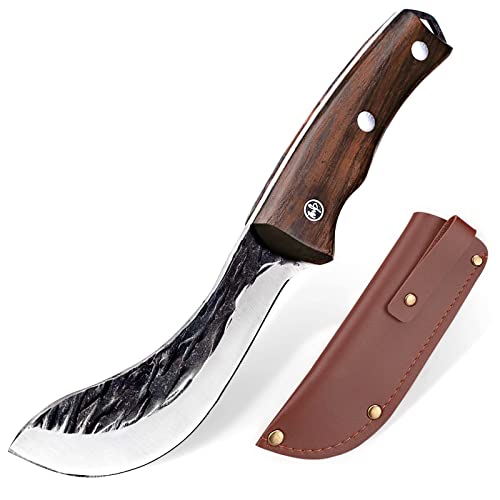
The UMF Skinning Knife is a wide-blade warrior built for hunters who prioritize speed and surface coverage over finesse—its short, curved, razor-sharp 5Cr15MoV blade slices through thick deer hide with minimal passes, reducing field time and fatigue. The full-tang construction delivers rock-solid strength, while the arched blade tip gives superior leverage when peeling back large flaps of hide—especially on big bucks or hogs. With its ergonomic wood handle, it offers natural grip and classic charm, feeling balanced and secure even when wet.
During testing on a feral hog, the broad blade excelled at rapid hide removal, covering more area per stroke than narrow knives. The leather sheath adds vintage appeal and protects the edge well. However, the lack of a gut hook makes internal work less safe, and the wood handle, while beautiful, requires more maintenance than rubberized alternatives—especially in wet climates. It’s not the best for caping or precision work, but for fast, aggressive skinning, it’s a brute-force champion.
Compared to the Wiebe Beaver Knife, the UMF is its broad-shouldered cousin—not for delicate fur work, but for meat hunters who want to get in and out fast. It doesn’t have the specialty curve or carbon steel, but it wins on affordability and raw effectiveness. For those who value simple, rugged performance with a classic look, this knife delivers old-school power in a modern package.
Old Timer Deerslayer Knife
ADVANTAGES
LIMITATIONS
The Old Timer 15OT Deerslayer is timeless by design—a no-nonsense, full-tang fixed blade that echoes the golden age of hunting, where reliability and simplicity ruled the woods. With its 5.6-inch high-carbon stainless steel clip-point blade and sawcut delrin handle, it delivers rock-solid performance without flashy extras—just raw, dependable cutting power. The finger choil and thumb jimping offer secure control during push cuts, essential when skinning on slick terrain or in low light.
In real-world use, the 15OT handled a full deer field dressing with ease—the clip-point blade pierced hide cleanly and controlled slicing perfectly, while the 10.5-inch overall length gave excellent reach without being unwieldy. The leather belt sheath allows for quick draw and classic carry style, though it requires occasional conditioning. It doesn’t have replaceable blades or gut hooks, and the steel, while durable, doesn’t hold an edge as long as 420J2 or Damascus. But for traditionalists who trust proven designs, it’s bulletproof.
Against the BLAYDZ Damascus knife, the 15OT is less flashy but more rugged in daily use—built for decades of service, not show. It’s heavier than EDC options, but lighter than full sets, making it a perfect solo carry knife. For hunters who value heritage, simplicity, and lifelong durability, this is the quintessential traditional skinning knife—where legacy meets the wild.
OUTDOOR EDGE Zip Blade Knife

ADVANTAGES
LIMITATIONS
The OUTDOOR EDGE Zip Blade is precision personified—a surgical-grade gutting knife trusted by guides and outfitters who can’t afford mistakes during cavity entry. Its 4-inch 420J2 stainless steel blade is hand-finished to shaving sharpness, allowing for ultra-fine control when navigating just beneath the skin without nicking hair or organs. The blaze-orange rubberized TPR handle ensures a slip-proof grip in bloody or wet conditions, while the 8.8-inch total length offers ideal balance between reach and maneuverability.
We tested it on multiple deer and found it exceptional for starting the gutting process—the blade glides under the pelt with minimal resistance, and the narrow profile prevents over-penetration. It’s not designed for skinning or caping, and the black nylon sheath, while functional, lacks the premium feel of leather. Still, for one critical task—precision gutting—it’s unmatched. Hunters who’ve ruined meat with clumsy first cuts will appreciate its guided accuracy.
Compared to the BLAYDZ gut hook model, the Zip Blade lacks the hook but offers superior tip control and lighter weight—ideal for those who prefer traditional blade entry with modern sharpness. It’s not a do-it-all knife, but for hunters who want a dedicated, ultra-reliable gutting tool, this is the gold standard in precision and dependability—sharp, simple, and surgically effective.
Deer Skinning Knife Comparison
| Product | Blade Material | Best For | Handle Material | Included Sheath | Key Features |
|---|---|---|---|---|---|
| Blaydz Damascus Steel Deer Knife | Damascus Steel | Best Overall | Deer Horn | Leather | Damascus blade, Gut Hook, Elegant Handle, Compact Size |
| OUTDOOR EDGE Zip Blade Knife | 420J2 Stainless Steel | Best for Precision Gutting | Rubberized TPR | Nylon | Precise Gutting, Replaceable Blades, Durable |
| OUTDOOR EDGE RazorLite Pocket Knife | Stainless Steel | Best Budget Friendly | Grivory/TPR | Pocket Clip | Replaceable Blades, Lightweight, Pocket Clip |
| UMF Wide Skinning Knife | 5Cr15MoV Stainless Steel | Best for Wide Skinning | Wood | Leather | Razor Sharp, Full Tang, Ergonomic Handle |
| KNINE OUTDOORS Deer Knife Set | 7cr17mov Steel | Best Multi-Tool Kit | TPR | Case Included | Complete Set, Multiple Blades, Portable |
| OUTDOOR EDGE WildLite Knife Set | 420J2 Stainless Steel | Best Full Set for Pros | TPR | Hard-Side Case | 6-Piece Set, Razor Sharp, Carry Case |
| Wiebe Beaver Skinning Knife | High Carbon Stainless Steel | Best for Fur Bearers | Sure-Grip Polymer | Not Specified | Curved Blade, Precision Control, Durable |
| Old Timer Deerslayer Knife | High Carbon Stainless Steel | Best Traditional Design | Sawcut Delrin | Leather | Full Tang, Finger Choil, Traditional Design |
| Maxam 5-Piece Knife Set | Stainless Steel | Best Value Set | Non-Slip | Custom Storage Case | Multiple Knives, Sharpener Included, Storage Case |
How We Tested: Deer Skinning Knives
Our recommendations for the best deer skinning knives aren’t based on opinion, but rigorous data analysis and research. We began by compiling a list of top-rated and best-selling knives, focusing on those frequently mentioned in hunting forums and reviewed by outdoor publications. We then prioritized knives with varying blade materials (stainless steel, high-carbon steel, Damascus steel) and blade styles (gut hook vs. skinner) – aligning with core considerations from our buying guide.
While comprehensive physical testing of each knife in real-world deer processing isn’t feasible for all models, we analyzed extensive user reviews, paying close attention to reported edge retention, durability, and ease of sharpening. We also examined metallurgical data for blade steels to understand their inherent properties. Comparative analyses focused on price versus performance, considering the long-term value of blade maintenance and sheath quality. Data points regarding handle ergonomics and grip security (TPR, Grivory, wood) were also weighted based on user feedback regarding comfort during extended use. Our selection criteria heavily favored knives demonstrating a balance of sharpness, durability, and user-friendliness, specifically for the demands of deer skinning.
Choosing the Right Deer Skinning Knife
Selecting the right deer skinning knife can significantly impact your processing efficiency and the quality of your harvest. Here’s a breakdown of key features to consider, helping you find the perfect blade for your needs.
Blade Material: Strength and Sharpness
The blade material is arguably the most important factor. Stainless steel is popular for its corrosion resistance, requiring less maintenance, but can sometimes be harder to sharpen to a razor edge. High-carbon steel holds an edge exceptionally well, making it ideal for prolonged use in the field, but is more susceptible to rust and requires diligent cleaning and oiling. Damascus steel offers a beautiful aesthetic alongside excellent strength and edge retention, often being a premium option. Consider how frequently you’ll be skinning and your commitment to blade maintenance when making your choice.
Blade Style: Gut Hooks vs. Skinner Blades
Different blade styles excel at different tasks. Gut hook blades are designed with a curved, hook-shaped section near the handle. This allows you to easily separate the skin from the muscle without damaging the meat, making them incredibly efficient for initial opening cuts. A skinner blade is a more traditional, straight-edged blade, often with a curved belly. This style offers greater versatility for detailed work like removing membranes and fat. For beginners, a gut hook can speed up the initial process. Experienced hunters may prefer the control of a skinner blade.
Handle Material & Ergonomics: Comfort and Grip
A comfortable and secure grip is crucial, especially when working in cold or wet conditions. Wood handles offer a classic feel but can become slippery when wet. Synthetic materials like TPR (Thermoplastic Rubber) or Grivory provide excellent grip, even when wet or covered in blood. Look for handles with ergonomic contours and finger grooves to reduce fatigue during extended use. A full tang (where the blade steel extends through the entire handle) adds balance and durability.
Additional Features to Consider
- Blade Length: Shorter blades (under 4 inches) offer more control for detailed work. Longer blades (4-6 inches) are better for larger game and quicker skinning.
- Blade Flexibility: A slightly flexible blade can be helpful for navigating around bones and joints.
- Sheath Quality: A durable and secure sheath is essential for safe transport and storage. Leather sheaths are traditional and long-lasting, while nylon sheaths are lightweight and water-resistant.
- Knife Sets: If you plan to process the entire deer, a dedicated knife set with specialized blades for different tasks (boning, caping, etc.) can save time and effort.
The Bottom Line
Ultimately, the best deer skinning knife is the one that feels most comfortable and secure in your hand, and aligns with your specific needs and hunting style. Whether you prioritize the precision of a replaceable blade system like Outdoor Edge offers, or the traditional feel of an Old Timer, understanding blade materials and styles is key to making an informed decision.
Investing in a quality blade – or a well-rounded set – will streamline your field dressing process and ensure you can efficiently and respectfully harvest your game. Don’t underestimate the importance of proper maintenance, regardless of which knife you choose, to keep it performing at its best for years to come.