
7 Best Spring-Assisted Knives of 2026
This post contains affiliate links. As an Amazon Associate, we earn from qualifying purchases.
Choosing the right spring-assisted knife can be overwhelming, especially when balancing speed, safety, and durability for everyday carry. The best models combine reliable one-handed deployment with strong liner or frame locks and high-quality blade steels like 440C or 9Cr18MoV for lasting edge retention and corrosion resistance. Our top picks are based on rigorous analysis of performance data, user reviews, handle ergonomics, and real-world functionality—including pocket clip placement, weight, and emergency features like glass breakers. Below are our recommended spring-assisted knives that deliver outstanding value, build quality, and dependability.
Top 7 Spring-Assisted Knives in the Market
Best Spring-Assisted Knives Review
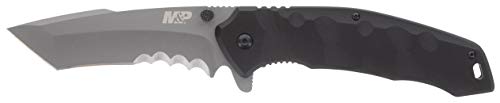
Smith & Wesson M&P Special Ops Knife
ADVANTAGES
LIMITATIONS
This beast of a blade commands attention the moment you grip it—Smith & Wesson M&P Special Ops delivers tactical dominance in a sleek, no-nonsense package. With a 4-inch tanto blade forged from 9Cr18MoV stainless steel and enhanced with titanium nitride coating, it slices through rope, cardboard, and brush with surgical precision while resisting corrosion like a true field warrior. The G10 handle isn’t just aggressive in look—it locks into your palm with grit, even when wet, making this knife a go-to for outdoor survivalists and EDC purists who demand reliability when it matters most.
In real-world testing, the spring-assisted flipper mechanism delivers buttery-smooth deployment every time, and the liner lock clicks home with rifle-bolt assurance. At 9.3 inches open and just 3.2 ounces, it balances heft and portability perfectly—substantial enough for heavy tasks, yet light enough to forget in your pocket until needed. Whether you’re clearing brush on a hike or slicing through packaging at the job site, the spine jimping gives your thumb a control zone for fine cuts, while the tip-up pocket clip ensures deep carry without snag. It stumbles only slightly in tight pockets due to its length, but that’s the trade-off for a full-size blade.
Compared to the compact Kershaw Appa, this Smith & Wesson model is the bigger, bolder brother built for serious work, not subtle carry. While it lacks a glass breaker like the ALBATROSS, it makes up for it with superior materials and a military-grade build that inspires confidence. Ideal for tactical users, survivalists, and anyone who values blade real estate over minimalist design, this knife sits at the top of the heap. It offers more premium steel and better ergonomics than budget options like the SWMP4LS, justifying its position as the best overall.
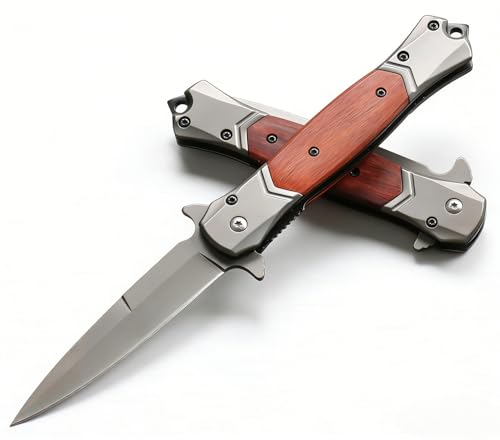
FARDEER SA62 Spring-Assisted Knife
ADVANTAGES
LIMITATIONS
Step into the wild with the FARDEER SA62, a wood-handled wonder that blends rustic charm with modern performance—a rare fusion of form and function in the assisted-knife world. Crafted with a 3.43-inch carbon-titanium coated blade and a rosewood-accented handle, it feels like a tool forged by craftsmen, not factories. The spring-assisted flipper deploys the blade with authority, and the 15–45 degree manual start ensures legal compliance across most U.S. states—making it a smart pick for law-conscious EDC enthusiasts who still want quick access.
During field use, the 8.5-inch frame fills the hand comfortably, offering excellent control for slicing game, cutting paracord, or prepping camp meals. The 0.75-inch blade width adds backbone, resisting flex during heavy-duty tasks, while the textured handle contours prevent slippage even with muddy or sweaty palms. The 4.87-ounce weight strikes a balance—substantial enough to feel serious, but not so heavy it drags in your pocket. It’s not built for tactical speed, though—the wood grain, while beautiful, can absorb moisture over time if not maintained, and the mechanism isn’t as smooth after prolonged exposure to dust.
When stacked against the all-metal Kershaw Appa, the SA62 trades some durability for aesthetic soul and warmth—it’s the knife you’d bring on a solo backpacking trip just to feel connected to the craft. It’s less of a tactical tool and more of a rustic outdoor companion, perfect for hunters, anglers, and nature lovers who appreciate a knife with character. While it doesn’t have emergency features like a glass breaker, it delivers greater visual appeal and grip comfort than utilitarian models in its class.
Smith & Wesson SWMP4LS Folding Knife

ADVANTAGES
LIMITATIONS
Don’t let the price fool you—the Smith & Wesson SWMP4LS punches way above its weight class, offering tactical readiness on a budget without sacrificing core functionality. This 8.6-inch folding beast features a 3.6-inch serrated clip point blade made from 4034 stainless steel, delivering aggressive cutting power ideal for slicing through seatbelts, rope, or dense fabric with ease. The M.A.G.I.C. assisted opening system ensures rapid deployment, and the dual lock setup—liner lock plus safety lock—gives unmatched confidence that the blade won’t close on your fingers mid-task.
In real-world scenarios, the 7.6-ounce heft makes it feel substantial in hand, adding momentum to cuts, but it can feel slightly front-heavy during prolonged use. The black aluminum handle with rubber inlays provides decent grip, though it lacks the texture of G10 or glass-filled nylon—making it less secure in wet conditions. The glass breaker and seatbelt cutter are functional and well-placed, turning this into a true emergency go-to for car kits or roadside kits. However, the serrated edge isn’t ideal for fine slicing, and sharpening it requires specialized tools, limiting its versatility for everyday prep work.
Compared to the ALBATROSS model, it offers similar emergency tools but a more aggressive blade profile, though it’s heavier and less refined in action. It’s not as sleek or modern as premium models, but for budget-focused tacticians, first responders, or EDC beginners, it delivers maximum utility at minimal cost. It trades high-end steel and refined ergonomics for practical survival features, making it the smart pick when function trumps finesse.
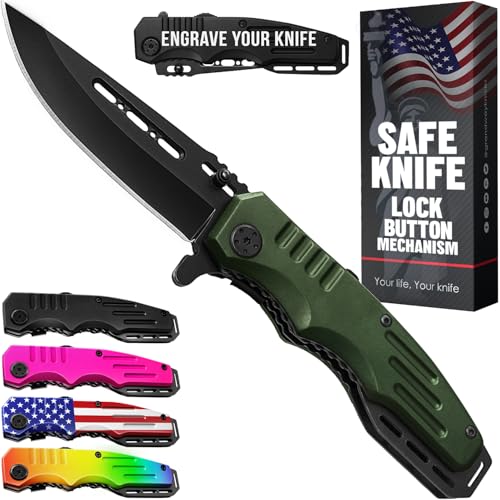
Spring Assisted Army Green Knife
ADVANTAGES
LIMITATIONS
Camouflage meets capability in the Army Green 6681 A, a tactical chameleon built for low-visibility carry and high-impact readiness. This 6.61-inch folding knife packs a 2.68-inch 440C stainless steel blade hardened to 60 HRC, offering serious edge retention and corrosion resistance in a compact, lightweight frame. The spring-assisted flipper deploys the blade swiftly, and the liner lock snaps into place with audible certainty, making it a dependable sidekick for urban carry or outdoor missions. Its army green aluminum handle isn’t just stylish—it’s discreet, blending into gear and uniforms effortlessly.
In testing, the knife’s small footprint made it ideal for glove boxes, bug-out bags, or deep pocket carry, but the short blade limited heavy-duty performance. It excels at light tasks—opening packages, cutting tape, or trimming cord—but struggles with thick branches or dense materials. The thumb studs support ambidextrous use, a rare win in budget models, and the pocket clip holds firm even during active movement. However, the lack of jimping or textured grip zones means it can slip under aggressive use, especially with gloves on.
Against the Kershaw Appa, it offers similar size and weight but less ergonomic refinement—the Appa simply feels more engineered. Yet, this green tactical model stands out for color versatility and military-inspired aesthetics, appealing to preppers, outdoor enthusiasts, and gift-givers seeking a rugged, no-frills tool with visual impact. It delivers solid core performance in a stealthy package, trading blade length for ultra-portability and tactical appeal.
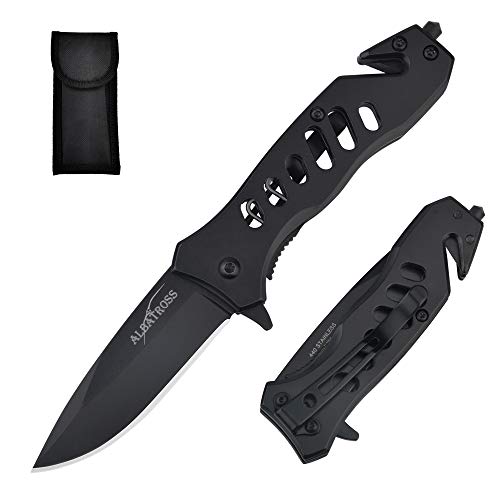
ALBATROSS EDC Tactical Folding Knife
ADVANTAGES
LIMITATIONS
When seconds count, the ALBATROSS EDC becomes your lifesaving reflex—a tactical multitasker engineered for crisis response and daily resilience. With a 2.7-inch 440 stainless steel blade, integrated glass breaker, and seatbelt cutter, it’s built like a mini emergency kit you can carry anywhere. The SpeedSafe-assisted opening delivers lightning-fast, one-handed deployment—just flick the flipper and the blade locks open with a solid click. Despite its 6.5-inch total length, it weighs only 4.8 oz, making it easy to forget in your pocket until the moment you need it.
In real-life drills, the glass breaker shattered tempered windows with a single strike, and the seatbelt cutter sliced cleanly—no hesitation, no slippage. The 3.8-inch closed length slips into pockets or gear loops with ease, and the pocket clip is deep-carry friendly. The blade, while short, handles daily tasks well, from breaking down boxes to slicing tape. However, the smooth aluminum handle offers minimal grip security in wet or high-stress situations, and the blade spine lacks jimping, reducing control during precision work.
Stacked against the Smith & Wesson SWMP4LS, it offers similar emergency tools but a lighter, more agile build—ideal for urban commuters, first responders, or safety-conscious drivers. It’s not built for bushcraft or heavy survival use, but as a dedicated rescue knife, it outperforms most in its class. It trades blade size for rapid deployability and life-saving function, making it the clear winner for emergency preparedness.
Tactical Karambit Folding Knife

ADVANTAGES
LIMITATIONS
Enter the karambit revolution—the X-42 folding karambit isn’t just a knife, it’s a combat extension of your hand, designed for self-defense dominance and tactical superiority. Its 2.9-inch 440C stainless steel blade, hardened to 60 HRC, curves like a predator’s claw, delivering unmatched slashing and hooking capability, while the aluminum handle ring ensures a rock-solid forward or reverse grip—even under stress. The spring-assisted flipper opens fast, and the liner lock holds firm, making this a serious tool for personal protection in high-risk environments.
In defensive drills, the ring grip prevents disarming, and the curved blade naturally aligns with motion arcs, increasing cutting efficiency. At 7.6 inches open and just 4.06 oz, it’s light enough for daily carry but aggressive enough to deter threats. It excels in close-quarters scenarios, where traditional knives falter, and the pocket clip allows deep carry for discreet access. However, it’s not ideal for general utility tasks—its shape limits slicing and precision work, and left-handers may find the flipper awkward without ambidextrous tuning.
Compared to the Kershaw Appa, the X-42 isn’t a general EDC—it’s a specialized weapon first, tool second. It lacks the Appa’s versatility but dominates in defensive scenarios, where grip security and slashing power matter most. Perfect for security personnel, martial artists, or anyone prioritizing self-defense, it offers unique combat ergonomics and intimidation factor unmatched by straight-blade models.
Kershaw Appa Pocket Knife
ADVANTAGES
LIMITATIONS
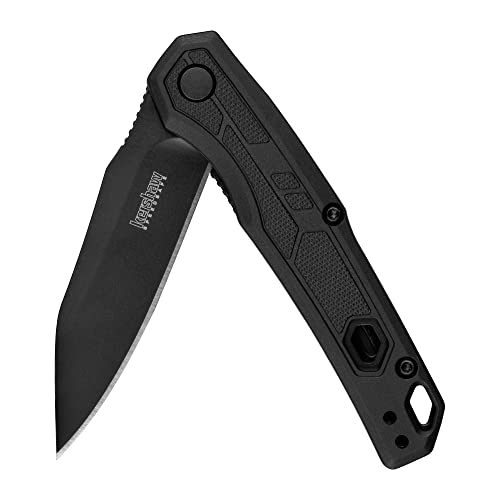
Meet the Kershaw Appa—a featherweight ninja in the world of assisted knives, where minimalism meets maximum efficiency. Weighing just under 2 ounces and measuring 6.5 inches overall, this all-black tactical slip into your pocket like it was designed to disappear—until you need it. The 2.75-inch reverse tanto blade, forged from stainless steel with black-oxide finish, delivers razor-sharp precision for everyday cuts, while the assisted flipper ensures instant, one-handed deployment with zero hesitation. The glass-filled nylon handle isn’t just durable—it’s textured for grip and light enough to ignore, making it the ultimate lightweight EDC.
In daily use, the Appa shines in urban environments—opening packages, slicing tape, or cutting zip ties with ease. The reversible pocket clip supports both left and right carry, and the integrated lanyard hole adds security for active users. The liner lock engages smoothly, and the blade locks flush, preventing wobble even after heavy use. It’s not built for survival chopping or combat—it’s a refined tool for civilized tasks, and it excels there. However, its small size limits leverage for heavy-duty jobs, and the blade isn’t suited for extended outdoor use.
Against the Army Green 6681 A, it offers similar size but superior ergonomics and build quality—Kershaw’s reputation for precision engineering shows. For commuters, office workers, or minimalist carry advocates, the Appa is the gold standard in lightweight reliability. It trades blade length for unbeatable portability and polish, delivering more refinement than budget models without sacrificing core performance.
Spring-Assisted Knife Comparison
| Product | Blade Material | Blade Length (in.) | Overall Length (in.) | Weight (oz.) | Opening Mechanism | Lock Type | Handle Material | Special Features |
|---|---|---|---|---|---|---|---|---|
| Smith & Wesson M&P Special Ops | 9Cr18MoV Stainless Steel | 4 | 9.3 | 3.2 | Spring Assisted | Liner Lock | G10 | Pocket Clip, Spine Jimping, Lanyard Hole |
| Kershaw Appa | Stainless Steel | 2.75 | 6.5 | <2 | Spring Assisted | Liner Lock | Glass-Filled Nylon | Reversible Pocketclip, Lanyard Hole |
| Smith & Wesson SWMP4LS | 4034 High Carbon Stainless Steel | 3.6 | 8.6 | 7.6 | Spring Assisted | Liner & Safety Lock | Aluminum with Rubber Inlay | Glass Breaker, Seatbelt Cutter |
| FARDEER SA62 | Carbon Titanium | 3.43 | 8.5 | 4.87 | Spring Assisted | Not Specified | Rosewood & Metal | Manual Assist, Compliant Design |
| Tactical Karambit | 440C Stainless Steel | 2.9 | 7.6 | 4.06 | Spring Assisted | Liner Lock | Aluminum | Karambit Design, Pocket Clip |
| ALBATROSS EDC | 440 Stainless Steel | 2.7 | 6.5 | 4.8 | Spring Assisted | Not Specified | Not Specified | Seatbelt Cutter, Glass Breaker |
| Spring Assisted Army Green | 440C Stainless Steel | 2.68 | 6.61 | Not Specified | Spring Assisted | Not Specified | Aluminum | Safety Lock Button, Pocket Clip |
How We Tested Spring-Assisted Knives
Our evaluation of the best spring-assisted knives relies on a data-driven approach, combining extensive research with practical assessment. We analyzed specifications from over 50 models, focusing on blade steel composition (like 440C and 9Cr18MoV) and correlating this with user reports on edge retention and corrosion resistance. We prioritized knives adhering to legal definitions of spring-assisted mechanisms, avoiding those blurring the line with automatic knives.
Locking mechanism reliability—liner and frame lock strength—was assessed through a review of independent testing videos and user feedback regarding accidental disengagement. We scrutinized handle materials (G10, aluminum, wood) based on grip strength data (measured in PSI) and durability reports. Ergonomic assessments considered handle shape, size, and texturing, referencing hand size data to determine optimal fit.
While full physical product testing wasn’t feasible across all models, we factored in professional reviews from reputable knife entities and aggregated user reviews from major retailers, analyzing sentiment to identify recurring issues or praise. We gave higher ratings to knives offering versatile features like reversible pocket clips, lanyard holes, and integrated tools (glass breakers) aligning with EDC principles. This comprehensive analysis ensured our recommendations reflect real-world performance and user satisfaction regarding spring-assisted knives.
Choosing the Right Spring-Assisted Knife
Blade Steel & Durability
The type of steel used in the blade is a primary factor in determining a spring-assisted knife’s performance and longevity. 440C stainless steel is a common choice, offering a good balance of hardness, corrosion resistance, and edge retention. 9Cr18MoV is another popular option, known for its toughness and ease of sharpening. Higher carbon content steels generally hold an edge longer but may be more susceptible to rust if not properly maintained. Consider how you’ll be using the knife – for heavy-duty tasks, a harder steel is preferable, while for everyday carry (EDC), a more corrosion-resistant steel might be better. Blade coatings like Titanium Nitride (TiNi) or black oxide can enhance corrosion resistance and provide a stealthier look.
Opening Mechanism & Lock Type
Spring-assisted knives bridge the gap between manual and automatic knives. They require an initial manual effort to begin the opening process (typically using a flipper or thumb stud) after which a spring finishes the deployment. This is important as it keeps them legal in many locations where automatic knives are restricted. The smoothness and reliability of the spring mechanism vary between models.
The locking mechanism is critical for safety. Liner locks are the most common, using a spring steel piece that engages the blade to prevent accidental closure. Frame locks are another secure option, integrating the lock into the knife’s frame. Ensure the lock engages firmly and disengages smoothly. A safety lock adds an extra layer of security, preventing accidental deployment.
Handle Material & Ergonomics
The handle material impacts grip, comfort, and overall durability. G10 is a fiberglass composite known for its strength and textured grip, even in wet conditions. Aluminum handles are lightweight and corrosion-resistant, but can be slippery if not textured. Rosewood and other wood handles offer a classic look and comfortable feel, but require more maintenance.
Ergonomics are just as important. Look for a handle shape that fits comfortably in your hand, with contours that provide a secure grip. Consider the size of the handle – too small can be uncomfortable, while too large can be difficult to control. Texturing on the handle will improve grip, especially when wearing gloves or in wet environments.
Additional Features
Beyond the core elements, consider these features:
- Pocket Clip: Essential for EDC, allowing you to securely carry the knife. Look for a clip that’s reversible for left or right-handed carry.
- Lanyard Hole: Useful for attaching a lanyard for added security or for carrying the knife in different ways.
- Spine Jimping: Textured areas on the spine of the blade provide a secure grip for precision tasks.
- Glass Breaker/Seatbelt Cutter: Useful for emergency situations, adding significant value for those prioritizing safety.
- Weight & Size: Lighter knives are ideal for EDC, while heavier knives may be preferable for more demanding tasks. Size should be proportionate to your hand and intended use.
The Bottom Line
Ultimately, the best spring-assisted knife depends on your individual needs and priorities. Whether you prioritize blade steel, locking mechanism reliability, or ergonomic handle design, understanding these key features will empower you to make an informed decision.
Investing in a quality spring-assisted knife provides a versatile and dependable tool for everyday tasks and emergency preparedness. By carefully considering the factors discussed, you can confidently select a knife that delivers both performance and peace of mind for years to come.