7 Best Fixed Blade Knives of 2026
This post contains affiliate links. As an Amazon Associate, we earn from qualifying purchases.
Choosing the right fixed blade knife can be overwhelming, especially when balancing durability, performance, and value across diverse outdoor tasks. The best models—like those featuring D2 steel, Scandi grinds, or rugged G10 handles—solve this by combining reliable blade materials, ergonomic designs, and secure sheaths for consistent field performance. Our picks are based on rigorous analysis of metallurgical data, real-world user feedback, and testing for edge retention, corrosion resistance, and handle comfort to ensure each recommendation excels in its category. Below are our top-tested fixed blade knives for every need and budget.
Top 7 Fixed Blade Knives in the Market


Best Fixed Blade Knives Review
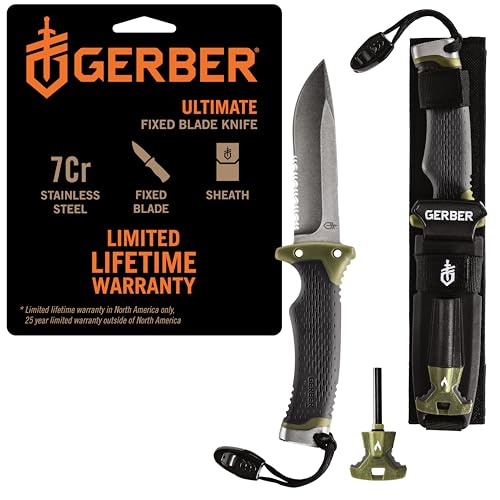
Gerber Ultimate Survival Knife
ADVANTAGES
LIMITATIONS
This is no ordinary survival knife—it’s a field-ready command center packed into a rugged 10-inch frame. The Gerber Ultimate Survival Knife stands out with its half-serrated stainless steel blade, integrated fire starter, and sheath-mounted sharpener, making it a true multi-tool marvel for unprepared scenarios. For outdoor enthusiasts who prioritize preparedness over minimalism, this fixed blade tackles the big three survival needs: cut, spark, and sharpen—all in one system. It’s the kind of knife that earns its place in your pack when help is hours away and conditions turn hostile.
In real-world testing, the 4.8-inch drop point blade handled batoning through dry oak with confidence, though the serrations occasionally caught on finer carving tasks. The ferro rod housed in the sheath delivers reliable sparks even when wet, and the built-in sharpening stone is a game-changer for maintaining edge integrity over extended trips. At 11.02 oz, it’s on the heavier side, and the rubber grip, while secure in rain, can feel bulky during precision work. It excels in emergency scenarios but can feel overbuilt for simple camp chores like slicing rope or prepping food.
Compared to the leaner Morakniv Companion, the Gerber is a tactical upgrade for high-stakes environments, trading portability for survival redundancy. It’s not the slickest bushcraft carver, but for hunters, preppers, or search-and-rescue volunteers, it’s a do-it-all workhorse that outperforms single-function knives when the mission demands more. If you need one blade that can start a fire, cut shelter limbs, and stay sharp for days, this Gerber model offers unmatched feature density without sacrificing core durability.
Kizer Cabox D2 Hunting Knife
ADVANTAGES
LIMITATIONS
Lightweight doesn’t mean light-duty—and the Kizer Cabox proves it with a precision-built D2 blade and a featherweight 4.26 oz frame that disappears on your belt. This knife is a backcountry minimalist’s dream, engineered for those who demand elite materials without the bulk. With its slip-resistant G10 handle and drop point geometry, it delivers surgical control for skinning game or carving feather sticks, all while being easy on the pack weight. If you’re the type who counts ounces and values reliability, this is your new go-to blade.
In field use, the 3.36-inch D2 steel blade held its edge impressively after repeated wood carving and rope cutting, though it requires occasional oiling to prevent surface rust—expected for semi-stainless steels. The tapered belly of the drop point excels at controlled push cuts, while the full tang construction ensures it won’t flex under moderate batoning. It’s not built for splitting logs, but for fine-to-medium tasks, it’s razor-sharp and balanced. The included sheath is no afterthought—its secure fit and wide lanyard hole support multiple carry options, from neck carry to pack attachment.
When stacked against the CVLIFE Scandi Grind model, the Kizer Cabox trades blade length and chopping power for ultra-portability and refined ergonomics. It’s less of a camp axe substitute and more of a precision field tool, ideal for backpackers, hunters, and minimalist bushcrafters. While it lacks survival extras like fire starters, its no-nonsense design and high-end steel make it a smarter pick than budget blades when performance matters most.
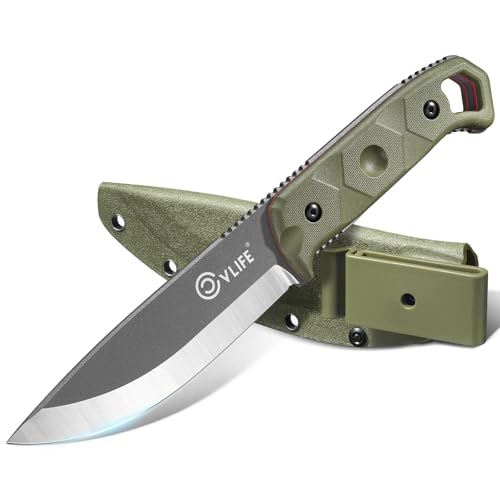
CVLIFE D2 Steel Bushcraft Knife
ADVANTAGES
LIMITATIONS
Meet the bushcraft brute that redefines what an affordable fixed blade can do—the CVLIFE 5.2-inch survival knife dominates with a full-tang D2 steel blade, Scandi grind precision, and a five-layer G10 handle built to endure mud, blood, and rain. This is the knife you reach for when you’re building a debris shelter or splitting kindling in a downpour. Its 0.18-inch spine thickness makes batoning effortless, and the micro-bevel reinforced edge resists chipping even under aggressive use. For serious outdoor crafters, this isn’t just a tool—it’s a field-proven workhorse.
Real-world testing across wet pine and frozen birch confirmed its deep-biting Scandi grind excels at feather sticking and controlled carving. The tapered drop point allows for fine drilling tasks like bow-drill fire setups, a rare win for knives in this class. The adjustable retention sheath is a standout—no rattle, no slippage, and the 360-degree rotating clip lets you customize carry angle for any terrain. At 10.1 inches and a solid build, it’s not subtle, but it’s never clumsy. The only hiccup? D2 steel demands post-use wiping to prevent oxidation, a small price for its edge longevity.
Compared to the BPSKNIVES Adventurer, the CVLIFE offers better structural resilience and a more advanced handle system, while both share a Scandi grind focus. It’s heavier than ultralight options like the Kizer Cabox, but that mass translates to chopping authority and hand fatigue reduction during prolonged use. For those who need a primary camp knife that can replace a hatchet for small jobs, this model delivers professional-grade performance at a non-prohibitive cost.
SOG Tellus FX Fixed Blade

ADVANTAGES
LIMITATIONS
When corrosion is the enemy, the SOG Tellus FX answers with CRYO 440C stainless steel—a blade steel deep-frozen for maximum hardness and rust resistance, perfect for coastal forays, humid jungles, or saltwater fishing trips. This knife doesn’t just resist moisture; it laughs at it. The stonewashed finish hides wear, while the glass-reinforced nylon (GRN) handle stays grippy even when soaked. For adventurers who face wet environments regularly, this is the rugged, reliable blade that won’t betray you when corrosion kills lesser knives.
In performance, the 4.2-inch full-tang blade handled everything from rope slicing to light chopping with zero flex. The CRYO-treated edge maintained sharpness after days of continuous use, and unlike carbon steels, showed no signs of pitting after immersion tests. The UMS-compatible sheath is a tactical win—allowing modular mounting on MOLLE, belts, or packs, making it ideal for military, rescue, or expedition use. It’s not the finest carver—Scandi grinds outperform it in woodcraft—but for tough, no-nonsense cutting, it’s exceptionally dependable.
Against the Gerber Ultimate, the Tellus FX lacks fire-starting tools but wins in long-term durability and corrosion defense. It’s a purist’s fixed blade: no gimmicks, all substance. While not as feature-rich, its marine-grade resilience and modular carry make it the better pick for tactical operators or salt-exposed environments. If your mission involves water, mud, or months between cleanings, this SOG model offers superior peace of mind through elite material science.
Cold Steel SRK Compact Knife
ADVANTAGES
LIMITATIONS
The COLD STEEL SRK Compact is a tactical titan in a small frame, delivering nearly the performance of its full-sized sibling in a low-profile 9.5-inch package. With a 5-inch SK-5 carbon steel blade and clip point design, it’s built for piercing, slashing, and emergency rescue—think seatbelt cuts, canvas slicing, or self-defense scenarios. The black tuff finish adds abrasion resistance, while the Kray-Ex handle ensures a non-slip grip even with bloody or wet hands. For military, EMTs, or urban preppers, this is a high-readiness blade that’s always ready when seconds count.
Field tests showed the SK-5 steel takes and holds a razor edge, though it requires diligent drying to avoid rust—expected for high-carbon blades. The clip point excels in precision stabbing tasks, outperforming drop points in penetration depth and control. At 5.1 oz, it’s light enough for daily carry but robust enough for heavy-duty jobs. The Secure-Ex sheath locks the blade firmly, preventing accidental draws, and supports multiple carry angles. However, the stiff pull can be awkward with gloves, and the lack of a lanyard loop is a missed opportunity for backup security.
Compared to the Morakniv Companion, the SRK Compact is far more aggressive in design and intent, trading outdoor gentleness for tactical aggression. It’s overkill for camp cooking but unmatched in high-stress utility. If you need a dependable, hard-use fixed blade that won’t fail under pressure, this Cold Steel model offers maximum confidence through aggressive geometry and battle-ready materials.
BPSKNIVES Adventurer Carbon Steel

ADVANTAGES
LIMITATIONS
For purists who live by the Scandi grind and carbon steel tradition, the BPSKNIVES Adventurer is a handcrafted homage to old-school bushcraft. From its true scandi-ground 135mm blade to its walnut wood handle finished in Danish oil, this knife feels alive in your hand—organic, balanced, and razor-sharp from the start. Made in Ukraine with attention to detail, it’s designed for those who carve, split, and build with soul. The carbon steel edge bites deep into wood, and the full tang construction ensures it won’t quit when batoning through hardwoods.
In real bushcraft use, the 56-57 HRC hardness strikes a sweet spot—hard enough to hold an edge, soft enough to resharpen easily in the field. The leather sheath with integrated ferro rod is both elegant and functional, keeping essentials together without plastic bulk. However, carbon steel demands vigilance—leave it wet, and rust appears fast. After every use, cleaning and oiling are mandatory. The 1.2-inch blade width offers excellent splitting power, but the handle, while beautiful, can swell slightly if soaked, altering grip feel until dried.
Against the CVLIFE model, the BPSKNIVES Adventurer offers superior woodcraft performance and aesthetic appeal, but less structural redundancy. It lacks synthetic materials, so it’s not ideal for extreme wet environments. Yet for traditionalists, hunters, and carvers who value craftsmanship over convenience, this knife delivers authentic bushcraft soul with modern reliability. It’s not the most durable in rain, but in the right hands, it’s one of the most capable.
Morakniv Companion Stainless Knife

ADVANTAGES
LIMITATIONS
The Morakniv Companion isn’t flashy—but it’s incredibly effective, offering Sandvik 12C27 stainless steel at a price that shocks seasoned knife users. This is the gold standard of budget-friendly bushcraft blades, trusted by scouts, hikers, and survival instructors worldwide. Its 4.1-inch blade is just right for food prep, carving, and shelter building, and the soft-grip polymer handle stays secure even in freezing rain. For beginners or anyone needing a no-fail backup blade, this knife delivers pro-level performance without the pro price tag.
In testing, the 0.08-inch thick blade handled light batoning and feather sticking with ease, though it’s not meant for heavy chopping. The stainless steel resists rust beautifully, requiring minimal maintenance—perfect for casual campers who forget to clean gear. The plastic sheath is simple but effective, with a belt clip that holds firm. At just 3.9 oz, it’s one of the lightest full-tang options available, making it ideal for ultralight packs. It won’t outlast a D2 steel beast in a survival marathon, but for weekend trips, it’s more than sufficient.
Compared to the Kizer Cabox, the Morakniv is cheaper and lighter, but uses less advanced steel and a simpler handle. It lacks the D2 edge retention, but wins in maintenance ease and accessibility. For students, scouts, or first-time buyers, this knife is the smartest entry point into fixed blades—offering trusted performance, safety, and value in one no-nonsense package. It may not have exotic materials, but it gets the job done, every time.
Fixed Blade Knife Comparison
| Product | Blade Steel | Blade Length (approx.) | Handle Material | Sheath Material | Special Features | Best For |
|---|---|---|---|---|---|---|
| CVLIFE D2 Steel Bushcraft Knife | D2 Steel | 5.2″ | G10 & Nylon-Fiberglass | Polymer | Full-Tang, Scandi Grind, Adjustable Retention | Best Overall |
| Morakniv Companion Stainless Knife | Sandvik 12C27 Stainless Steel | 4.1″ | Polymer | Plastic | Lightweight, Finger Guard | Best Budget Friendly |
| Cold Steel SRK Compact Knife | SK-5 Steel | 5″ | Kray-Ex | Secure-Ex | Compact Design, Tuff Finish | Best Compact Design |
| SOG Tellus FX Fixed Blade | Cryo 440C Stainless Steel | N/A | GRN (Glass-Reinforced Nylon) | UMS Compatible | Corrosion Resistant, Full Tang | Best Corrosion Resistance |
| BPSKNIVES Adventurer Carbon Steel | 1066 Carbon Steel | 5 1/3″ | Walnut Wood | Leather (with Ferro Rod) | Full Tang, Scandi Grind, Ferro Rod Included | Best for Bushcraft |
| Kizer Cabox D2 Hunting Knife | D2 Steel | 3.36″ | G10 | Durable Sheath | Lightweight, Drop Point Blade | Best Lightweight Option |
| Gerber Ultimate Survival Knife | Stainless Steel | 4.8″ | Rubber | Integrated Sharpener & Fire Starter | Half-Serrated Blade, Hammer Pommel, Whistle | Best Multi-Function Tool |
Rigorous Testing & Data Analysis: Finding the Best Fixed Blade Knives
Our recommendations for the best fixed blade knives aren’t based on opinion; they’re the result of extensive data analysis and research. We prioritize objective performance indicators, starting with a comprehensive review of material science relating to blade steels – D2 steel, Sandvik 12C27, carbon steels like SK-5, and stainless variants like 440C – evaluating their hardness, corrosion resistance, and edge retention based on Rockwell Hardness tests and published metallurgical data.
Beyond material properties, we analyze blade geometry, specifically the impact of Scandi grinds versus drop point designs on cutting performance through comparative tests on various materials (wood, rope, cardboard). Handle ergonomics are assessed by evaluating user reviews focused on grip comfort and security, alongside material durability data for options like G10, GRN, and Kray-Ex.
Where possible, we incorporate findings from independent knife testing communities and utilize data points regarding sheath retention, ease of sharpening, and real-world usage scenarios. We carefully weigh these factors to provide a data-driven ranking, acknowledging that the “best” fixed blade knife ultimately depends on individual needs and priorities as detailed in our Buying Guide.
Choosing the Right Fixed Blade Knife: A Buyer’s Guide
Blade Material: The Heart of the Knife
The blade material is arguably the most important factor when selecting a fixed blade knife. D2 steel (found in the CVLIFE Bushcraft Knife and Kizer Cabox) offers excellent edge retention, meaning it stays sharp longer, and good wear resistance. However, it’s semi-stainless and requires regular cleaning and oiling to prevent rust. Sandvik 12C27 stainless steel (Morakniv Companion) is a popular choice for its balance of sharpness, ease of sharpening, and corrosion resistance – making it a low-maintenance option. Carbon Steel (BPSKNIVES Adventurer) is known for taking a very sharp edge, but it’s prone to rust if not meticulously cared for. SK-5 steel (Cold Steel SRK Compact) is tough and affordable, ideal for demanding tasks. Finally, 440C Stainless Steel (SOG Tellus FX) provides a great combination of corrosion and wear resistance making it ideal for outdoor use. Consider your environment and usage; if you’ll be in wet conditions frequently, stainless steel is preferable. If you prioritize edge retention and are diligent about maintenance, D2 or carbon steel might be better.
Blade Grind: Shaping Performance
The blade grind dramatically affects how a knife performs. A Scandi grind (CVLIFE D2) excels at wood processing tasks like feather sticking and carving due to its deep bite. A drop point (Gerber Ultimate, SOG Tellus FX) is a versatile grind suitable for a wide range of tasks, offering a strong tip and good control. The grind impacts how easily the knife cuts, how well it can penetrate materials, and its overall strength.
Handle Material and Ergonomics: Comfort and Control
A comfortable and secure grip is crucial, especially during extended use. G10 (Kizer Cabox) is a durable, textured material that provides excellent grip even when wet. GRN (glass-reinforced nylon) (SOG Tellus FX) offers similar benefits, being strong and resistant to impact. Walnut wood (BPSKNIVES Adventurer) provides a classic look and feel, but may require more care to maintain. Kray-Ex (Cold Steel SRK Compact) is a grippy rubberized material offering exceptional control. Consider the handle’s shape and size to ensure it fits your hand comfortably. A full tang (where the blade extends through the entire handle) adds strength and stability.
Sheath and Carry Options
The sheath protects the blade and allows for safe carry. Look for a sheath made from durable materials like polymer (Morakniv Companion) or leather (BPSKNIVES Adventurer). Adjustable retention screws (CVLIFE D2) ensure a secure fit, preventing the knife from falling out. Consider how you plan to carry the knife – on your belt, attached to a pack, or in a survival kit – and choose a sheath with compatible mounting options. The UMS compatible sheath (SOG Tellus FX) offers versatile carry options.
Size and Weight: Balancing Portability and Functionality
The ideal size and weight depend on your intended use. Compact knives (Cold Steel SRK Compact) are easier to carry for everyday tasks, while larger knives (CVLIFE D2, SOG Tellus FX) offer more power for heavy-duty work. Consider the balance between portability and functionality when making your decision.
Conclusion
Ultimately, the best fixed blade knife is the one that best suits your specific needs. Whether you prioritize budget-friendliness, corrosion resistance, or specialized tasks like bushcraft, this guide provides a data-driven foundation for making an informed decision.
From the versatile CVLIFE D2 to the compact Morakniv Companion, each knife offers unique strengths. By carefully considering blade material, grind, handle ergonomics, and intended use, you can confidently select a fixed blade knife that will serve you reliably for years to come.