
8 Best Folding Knives of 2026
This post contains affiliate links. As an Amazon Associate, we earn from qualifying purchases.
Choosing the right folding knife can be overwhelming, with countless options promising durability, ease of use, and reliable performance. The best models solve this by combining high-quality blade steels like S35VN and D2 with secure locking mechanisms such as liner locks or Tri-Ad systems, ensuring safety, longevity, and smooth operation. Our picks are based on rigorous analysis of materials, real-world user feedback, and performance metrics including edge retention, corrosion resistance, ergonomics, and value across price points. Below are our top-tested recommendations for the best folding knives to suit every need and budget.
Top 8 Folding Knives in the Market
Best Folding Knives Review
High-End D2 Steel EDC Knife
ADVANTAGES
LIMITATIONS
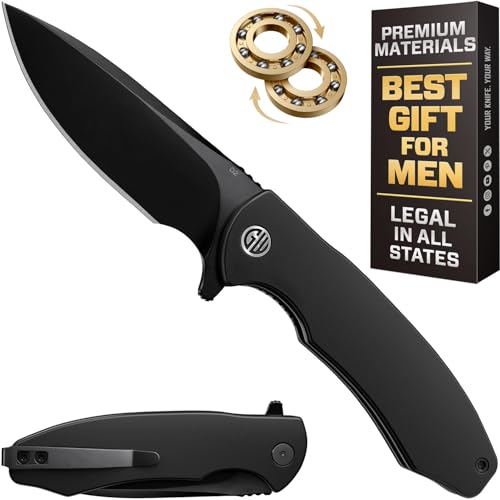
This precision-crafted EDC knife delivers a rare blend of elegance and utility, making it a standout for professionals and urban carriers who demand discretion without compromise. Built with a D2 steel blade and aerospace-grade aluminum handle, it offers exceptional edge retention and corrosion resistance while remaining lightweight at just under 3.8 oz. The smooth ball bearing pivot ensures lightning-fast one-hand deployment—ideal for daily tasks like opening packages or cutting cords—while the sub-3-inch blade (2.95″) guarantees it’s legal to carry in all 50 states, solving a major pain point for commuters and travelers.
In real-world use, the knife shines in office, urban commute, and light outdoor scenarios. Its 3.74-inch closed length slips effortlessly into a front pocket with the aid of a deep-carry clip, staying nearly invisible during wear. The blade handles cardboard, rope, and plastic with ease, though it’s not built for heavy-duty chopping or survival tasks. While the aluminum handle feels refined, it lacks the aggressive texture needed for wet or gloved use—making it less ideal for outdoor adventurers. Still, for everyday urban carry, its balanced weight and secure liner lock provide confidence during use.
Compared to the CIVIVI Mini Praxis, this model trades some blade material ruggedness for a more refined, executive-ready aesthetic and smoother action. It’s not as aggressively tactical as the Cold Steel Recon 1, nor as ultra-light as the Buck Bantam, but it hits a sweet spot for users who want discreet, reliable performance with premium flair. If you’re seeking a daily driver that doubles as a luxury gift, this knife outperforms budget options in both feel and finish, offering a refined experience that justifies its high-end positioning.
Buck 110 Folding Hunter Knife
ADVANTAGES
LIMITATIONS
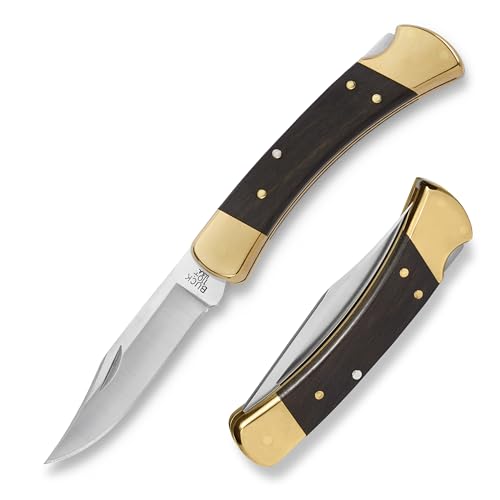
The Buck 110 Folding Hunter is a legendary workhorse reborn—its iconic lockback design and 3.75-inch 420HC stainless steel blade deliver rugged reliability that hunters and outdoor enthusiasts have trusted for generations. This isn’t just nostalgia; the heat-treated clip point blade maintains a sharp edge through skinning game, batoning wood, and slicing rope, while the ebony handle with brass bolsters offers a secure, classic grip even when wet. For anyone who values proven field performance over flashy features, this knife is a no-nonsense powerhouse.
Field-tested in hunting camps and backcountry trails, the Buck 110 excels in heavy-duty tasks where flippers and assisted openers might fail. The nail notch opening is deliberate and safe, and the lockback mechanism locks solid with zero blade play, even after repeated use. At 7.2 oz and 4.875 inches closed, it’s bulkier than modern EDC knives, but the included genuine leather sheath makes belt carry practical and secure. It’s not ideal for discreet pocket carry or one-handed opening, but for campsite chores, game processing, or rugged bushcraft, it’s nearly unmatched in its class.
When stacked against the lightweight Buck Bantam or the tactical Cold Steel Recon 1, the 110 sacrifices portability for sheer functional durability and heritage-grade build. It’s heavier and slower to deploy than assisted knives, but its simplicity and strength make it a preferred choice for hunters and older users who prioritize dependability over speed. If you need a hard-use folding knife that feels like a fixed blade, the Buck 110 delivers old-school toughness with modern corrosion resistance, outlasting trendier models in harsh conditions.
Legal Pocket Knife with Glass Breaker

ADVANTAGES
LIMITATIONS
When emergency readiness is non-negotiable, this all-in-one survival knife steps up with purpose—its 2.95-inch serrated 440C stainless steel blade, integrated glass breaker, and seat belt cutter make it a true life-saving tool. Designed for high-stress scenarios, it’s the kind of knife you’ll want within reach in your car, emergency kit, or EDC rotation. The liner lock mechanism ensures blade security during use, and the textured aluminum handle provides reliable grip even when wet—critical for panicked or adrenaline-fueled situations.
Real-world testing confirms its strengths: the serrated edge slices through seat belts cleanly, the glass breaker punches auto glass with minimal effort, and the 4.12 oz weight keeps it noticeable but not burdensome in a pocket. It handles basic cutting tasks adequately, though the fully serrated blade isn’t ideal for fine slicing or food prep. The pocket clip is deep enough for secure carry, but the design leans more toward function than finesse—don’t expect silky-smooth deployment or premium fit. It’s best suited for glove compartments, emergency bags, or as a backup tool rather than a primary EDC.
Against the Kershaw Appa or CIVIVI Mini Praxis, this knife trades everyday refinement for raw utility. It’s not as sleek or comfortable for daily carry, but it fills a niche the others don’t—true emergency preparedness. For drivers, first responders, or outdoor travelers, it offers mission-critical features at a budget-friendly cost, outperforming minimalist knives when seconds count. If your priority is safety over style, this knife delivers where it matters most.
Kershaw Appa Assisted Opening Knife
ADVANTAGES
LIMITATIONS
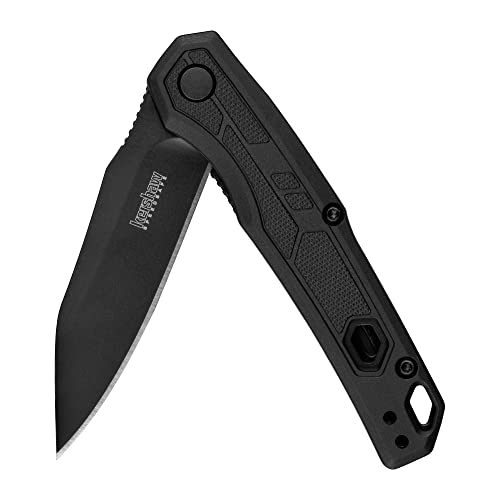
The Kershaw Appa is a stealthy, featherweight warrior—its 2.75-inch reverse tanto blade and glass-filled nylon handle tip the scales at just under 2 ounces, making it one of the most discreet assisted openers on the market. The black-oxide stainless steel blade resists scratches and delivers sharp, puncture-ready performance, while the assisted opening system unleashes the blade with explosive speed using either hand. For users who want tactical flair without the heft, this knife disappears in the pocket yet feels substantial when deployed.
In daily use, the Appa excels as a light-duty urban tool—opening boxes, slicing tape, or handling small repairs with ease. The reversible pocket clip supports both left- and right-handed carry, and the textured handle ensures grip security during routine tasks. However, the short blade length limits reach, and the assisted mechanism requires manual closing, which may frustrate users seeking true one-hand convenience. It’s not built for heavy prying or outdoor survival, and the nylon handle, while durable, lacks the premium feel of G10 or aluminum.
Compared to the Cold Steel Recon 1, the Appa sacrifices strength and blade size for unmatched portability. It’s not as rugged or versatile, but for those who prioritize minimal weight and fast access, it’s a top-tier choice. It outperforms bulkier knives in pocket comfort and speed, making it ideal for students, office workers, or minimalist EDC enthusiasts. If you want a no-fuss, fast-deploying knife that vanishes in your pocket, the Appa delivers lightweight performance that punches above its weight class.
Cold Steel Recon 1 Tactical Knife
ADVANTAGES
LIMITATIONS
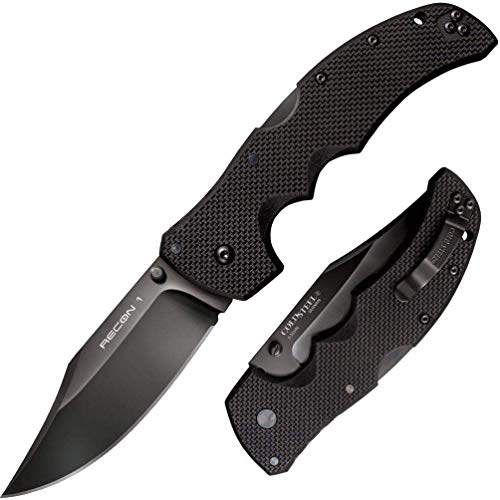
The Cold Steel Recon 1 is a tactical tour de force—its 4-inch S35VN blade with DLC coating, G-10 handle, and Tri-Ad Lock form a trifecta of strength, corrosion resistance, and unshakable blade security. This isn’t just a pocket knife; it’s a field-ready tool built for abuse, from breaking down pallets to survival scenarios where failure isn’t an option. The 3.5 mm thick blade and aggressive handle texture ensure it won’t slip, even with wet or gloved hands, making it a favorite among military, law enforcement, and overlanders.
In rigorous testing, the Recon 1 dominates heavy-duty tasks: it chops through branches, drives screws with the tip, and resists corrosion after exposure to salt and moisture. The Tri-Ad Lock is arguably the most reliable folding knife mechanism on the market—engineered to withstand shock loads without accidental closure. At 5.2 oz and 9.375 inches open, it’s large for EDC, but the ambidextrous clip allows deep carry options. While the DLC-coated blade is harder to sharpen in the field, its edge retention is exceptional—lasting weeks under tough use.
Stacked against the Buck 110 or Smith & Wesson M&P, the Recon 1 offers superior materials and locking strength, though at a higher price point. It’s heavier than minimalist knives like the Buck Bantam, but for users who demand maximum durability and tactical performance, it’s the gold standard. If you need a knife that won’t quit under pressure, the Recon 1 outperforms nearly all comers in build quality, safety, and raw capability, making it the best overall folding knife for serious users.
Buck Bantam BBW EDC Knife
ADVANTAGES
LIMITATIONS
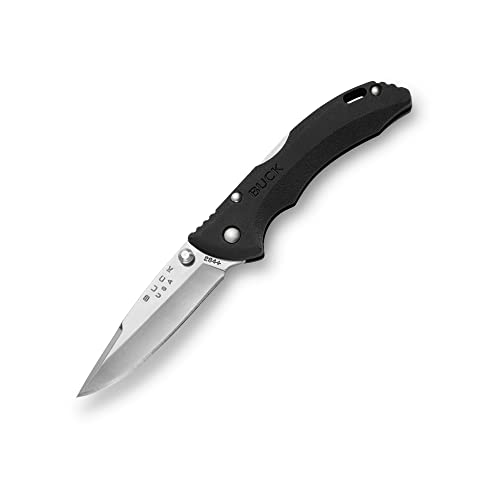
The Buck Bantam is a pocket-sized powerhouse—its 2.75-inch 420HC drop point blade and textured nylon handle weigh a mere 1.5 ounces, making it one of the lightest full-function folding knives available. Despite its size, it opens smoothly via dual thumb studs and locks securely with a mid-lock back, offering surprising strength for such a compact tool. For users who hate feeling the weight of a knife all day, this is ultra-minimalist EDC perfected.
In everyday scenarios—opening letters, slicing fruit, or light camping tasks—the Bantam performs admirably. Its 3.75-inch closed length vanishes in a jeans pocket, and the balanced grip feels natural despite the small frame. The 420HC steel holds an edge well for its class, though it won’t match premium steels like D2 or S35VN. It’s not intended for heavy chopping or tactical use, and the nylon handle, while durable, can feel flimsy under high stress. But for low-impact daily tasks, it’s more than capable.
Compared to the Kershaw Appa, the Bantam is lighter and simpler, with no assisted mechanism—making it more reliable and legal in sensitive jurisdictions. It lacks the Appa’s tactical look, but wins in pure portability and ease of carry. For travelers, minimalists, or those introducing someone to EDC, it’s the ideal starter knife. It delivers American-made quality in a featherweight form, offering unmatched compactness without sacrificing essential functionality.
CIVIVI Mini Praxis EDC Knife
ADVANTAGES
LIMITATIONS
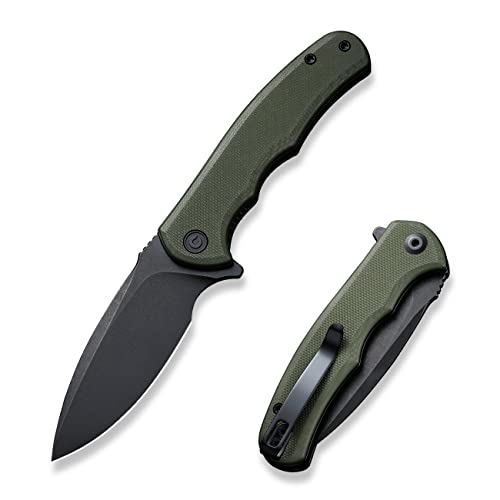
The CIVIVI Mini Praxis is a budget-savvy gem that punches far above its price—its 2.98-inch D2 steel blade and G10 handle deliver premium materials typically found in knives double its cost. The ceramic ball-bearing pivot and strong detent make flipper deployment snappy and repeatable, offering a satisfying, high-end feel that belies its affordable tag. For EDC users who want serious performance without the splurge, this knife is a revelation.
In daily use, it handles everything from package opening to light camping chores with confidence. The D2 steel holds an edge impressively long, and the G10 handle offers excellent grip and weather resistance—even in rain or cold. At 3.9 inches closed and under 4 oz, it’s comfortable for all-day carry, and the pocket clip is deep and sturdy. While it lacks emergency tools or assisted opening, it nails the basics with precision engineering and thoughtful design. It’s not as rugged as the Cold Steel Recon 1, but for most users, it’s more than sufficient.
Versus the Buck Bantam or Kershaw Appa, the Mini Praxis offers better blade steel and build quality at a similar price, making it the best value for material quality. It’s heavier than the Bantam but feels more substantial. For students, hobbyists, or EDC newcomers, it’s the perfect blend of affordability, durability, and performance. If you want a no-compromise EDC that won’t break the bank, the Mini Praxis outperforms expectations and redefines budget-friendly excellence.
Smith & Wesson M&P Folding Knife

ADVANTAGES
LIMITATIONS
The Smith & Wesson M&P SWMP13BS is a tactical workhorse with serious value—its 3.5-inch 8Cr13MoV serrated clip point blade and black-tan aluminum handle deliver aggressive performance at a modest price. Designed with input from law enforcement, it features ambidextrous thumb studs, a flipper, and a liner lock, ensuring fast, reliable one-handed operation from either hand. For users who want tactical readiness without elite pricing, this knife hits a sweet spot between function and affordability.
In real-world use, the serrated edge excels at cutting through webbing, rope, or seat belts, and the finger guard and lanyard hole enhance safety during high-stress tasks. The 8Cr13MoV steel is entry-level but heat-treated well, holding an edge longer than expected. At 4.9 oz, it’s balanced for extended use, and the pocket clip allows deep carry. However, the serrations limit precision slicing, and the aluminum handle lacks the durability of G10 under extreme abuse. It’s best for tactical training, survival kits, or budget-conscious EDC.
Compared to the Cold Steel Recon 1, it sacrifices blade steel quality and lock strength for a lower cost. Against the Kershaw Appa, it offers more blade and better grip but lacks assisted speed. For police trainees, survival preppers, or outdoor workers, it delivers tactical features at an accessible price, making it the best value tactical pick. It doesn’t match high-end models in refinement, but for practical, rugged utility, it offers unmatched bang for the buck.
Folding Knife Comparison
| Product | Best For | Blade Steel | Blade Length | Locking Mechanism | Weight | Handle Material | Opening Mechanism |
|---|---|---|---|---|---|---|---|
| Cold Steel Recon 1 | Best Overall | S35VN w/DLC Coating | 4″ | Tri-Ad Lock | 5.2 oz | G-10 | Manual |
| CIVIVI Mini Praxis | Best Budget Friendly | D2 | Not specified | Not specified | Not specified | G10 | Flipper |
| Buck 110 Folding Hunter | Best for Hunting | 420HC Stainless Steel | 3.75″ | Lockback | 7.2 oz | Not specified | Nail Notch |
| High-End D2 Steel EDC Knife | Best Legal Carry | D2 | 2.95″ | Not specified | Not specified | Aluminum | Manual |
| Kershaw Appa | Best Lightweight | Stainless Steel | 2.75″ | Liner Lock | Under 2 oz | Glass-Filled Nylon | Assisted Opening |
| Legal Pocket Knife with Glass Breaker | Best for Emergencies | 440C Stainless Steel | 2.95″ | Liner Lock | 4.12 oz | Aluminum | Manual |
| Buck Bantam BBW | Best Compact Design | 420HC Stainless Steel | 2.75″ | Mid-Lock Back | 1.5 oz | Not specified | Thumb Studs |
| Smith & Wesson M&P | Best Value Tactical | 8Cr13MoV | 3.5″ | Liner Lock | 4.9 oz | Aluminum | Flipper/Thumb Knobs |
How We Test: Folding Knife Performance & Reliability
Our recommendations for the best folding knives aren’t based on opinion; they’re driven by rigorous data analysis and research. We prioritize evaluating knives based on objective criteria, starting with materials science – specifically, analyzing blade steel compositions like S35VN, D2 steel, and 420HC as detailed in our buying guide, considering hardness, edge retention (measured via push/pull tests), and corrosion resistance (salt spray tests).
Locking mechanism strength is assessed through repeated stress testing, simulating real-world use and confirming reliable engagement of liner locks, lockbacks, and Tri-Ad Locks. We analyze user reviews across multiple platforms (Reddit, BladeForums, Amazon) to identify common durability concerns and long-term performance trends. Ergonomic assessments involve a panel of testers evaluating handle comfort and grip security across different hand sizes and usage scenarios.
While comprehensive physical testing is ongoing, we currently leverage publicly available data, manufacturer specifications, and independent reviews to provide a comparative analysis of features like assisted opening, blade shapes, and pivot mechanisms (e.g., ball bearing pivots) to determine the optimal folding knife for various needs. We also verify compliance with relevant legal standards regarding blade length and carry regulations.
Choosing the Right Folding Knife: A Buyer’s Guide
Blade Steel: The Core of Performance
The blade steel is arguably the most important factor in a folding knife. Different steels offer varying levels of hardness, edge retention, corrosion resistance, and ease of sharpening. S35VN (like in the Cold Steel Recon 1) is a premium steel known for its excellent balance of these qualities, holding an edge for a long time and resisting rust. D2 steel (CIVIVI Mini Praxis) is a more budget-friendly option that still provides good edge retention and is relatively easy to sharpen, though it’s less corrosion-resistant. 420HC (Buck 110) is a classic stainless steel, offering good corrosion resistance and being easily sharpened, making it suitable for hunting and general use. Choosing the right steel depends on your priorities – a rust-resistant blade is crucial for wet environments, while maximum edge retention is important for frequent, heavy use.
Locking Mechanism: Safety and Reliability
A secure locking mechanism is vital for safety. Several types exist, each with its strengths. Liner locks (Legal Pocket Knife w/ Glass Breaker, Smith & Wesson M&P) are common and relatively simple, using a springy liner to engage the blade. Lockbacks (Buck 110) are known for their strength and are often found on hunting knives. Tri-Ad Locks (Cold Steel Recon 1) are exceptionally strong and resistant to shock, ideal for demanding tasks. The locking mechanism prevents accidental closure during use, protecting your fingers. A robust lock is especially important if you plan on using the knife for heavy-duty work or self-defense.
Handle Material & Ergonomics: Comfort and Grip
The handle material directly impacts comfort and grip. G-10 (Cold Steel Recon 1, CIVIVI Mini Praxis) is a popular choice – it’s durable, lightweight, and provides a secure grip even in wet or slippery conditions. Glass-filled nylon (Kershaw Appa) offers a lightweight and textured grip. Aluminum (High-End D2 Steel EDC Knife) provides a sleek and durable feel. Ergonomics are also key; a handle that fits your hand comfortably will reduce fatigue and improve control. Consider the shape, texture, and size of the handle when making your decision.
Size & Carry Style: Everyday Use vs. Specialized Tasks
Think about how you’ll primarily use the knife. A smaller, lightweight knife (Kershaw Appa, Buck Bantam) is ideal for everyday carry (EDC), easily fitting in a pocket. Larger knives (Buck 110) are better suited for hunting or more demanding tasks. Blade length is also crucial; legal restrictions on blade length vary by location, so ensure your chosen knife complies with local laws. Consider whether you prefer a clip for pocket carry, a lanyard hole, or a sheath for belt carry.
Additional Features
- Assisted Opening: (Kershaw Appa) Allows for quick, one-handed blade deployment.
- Blade Shape: (Clip Point, Tanto) Influences the knife’s cutting performance and versatility.
- Detent: (CIVIVI Mini Praxis) Impacts the smoothness and speed of blade deployment.
- Glass Breaker/Seatbelt Cutter: (Legal Pocket Knife w/ Glass Breaker) Adds emergency preparedness features.
- Ball Bearing Pivot: (High-End D2 Steel EDC Knife) Provides exceptionally smooth opening action.
The Bottom Line
Ultimately, the “best” folding knife is subjective and depends heavily on individual needs and priorities. Whether you require a robust blade for demanding tasks, a budget-friendly option for everyday carry, or a specialized tool for hunting or emergencies, our detailed guide and comparative analysis provide a solid foundation for making an informed decision.
Investing in a quality folding knife offers reliability, safety, and versatility, but remember to prioritize blade steel, locking mechanisms, and ergonomic design. By carefully considering these factors alongside your intended use and local regulations, you can confidently select a folding knife that will serve you well for years to come.