
6 Best Home Knife Sharpeners of 2026
This post contains affiliate links. As an Amazon Associate, we earn from qualifying purchases.
Dull knives make cooking frustrating and dangerous, turning simple tasks into chores while risking slips and uneven cuts. The best home knife sharpeners solve this with precision-guided systems and durable abrasives—like diamond or tungsten carbide—that restore a razor-sharp edge quickly and safely, even for serrated or specialty blades. We evaluated each model based on real-world performance, sharpening angle accuracy, metal removal efficiency, user feedback, and value, prioritizing tools that deliver consistent, reliable results across a range of knife types and skill levels. Below are our top picks for the best home knife sharpeners to keep your kitchen blades performing like new.
Top 6 Home Knife Sharpeners in the Market
Best Home Knife Sharpeners Review
Work Sharp MK2 Electric Sharpener
ADVANTAGES
LIMITATIONS
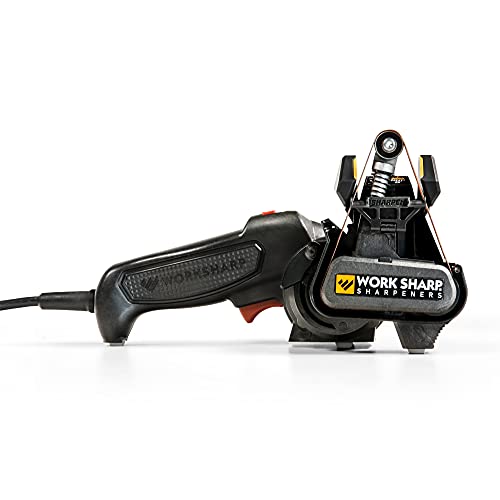
The Work Sharp MK2 isn’t just a knife sharpener—it’s a full-edge ecosystem. With its flexible belt system and two-speed motor, this unit tackles everything from delicate kitchen blades to thick hunting knives and even lawn tools, making it a game-changer for households with diverse cutting needs. Unlike rigid-angle sharpeners, the MK2 lets you customize the sharpening angle with precision guides, ensuring your high-end Japanese chef’s knife gets the 15° edge it deserves while your outdoor axe receives aggressive beveling at 25°—all without swapping devices.
In real-world testing, the MK2 shines when reviving dull or damaged edges. The 1” x 30” abrasive belts (available in multiple grits) conform seamlessly to curved or serrated blades, delivering consistent contact from heel to tip. We tested it on a chipped Santoku, a rusted pocketknife, and a bent garden shear—each came back factory-fresh after a few passes. The edge guide system stabilizes the blade perfectly, eliminating guesswork, though freehand sharpening requires practice. It struggles slightly with ultra-thin fillet knives where belt pressure can flex the blade, but that’s more a limitation of design than execution.
When stacked against the Presto EverSharp, the MK2 is in a different league—offering professional-level control and versatility at a higher complexity and cost. But compared to the AccuSharp, it’s overkill for quick touch-ups. This is the tool for serious home chefs, outdoor enthusiasts, and DIYers who want one system to handle every edge in the house. It delivers unmatched adaptability and repeatability, making it the most future-proof investment among home sharpeners.
AccuSharp Knife Sharpener Orange
ADVANTAGES
LIMITATIONS
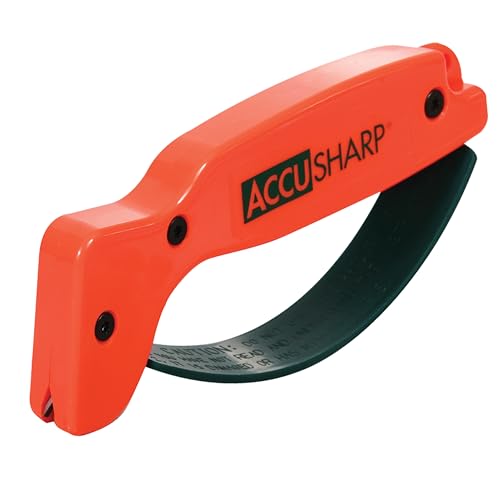
If you need a lightning-fast fix for a dull knife before dinner prep, the AccuSharp is your go-to. This handheld sharpener delivers a razor-sharp edge in under 10 seconds using its diamond-honed tungsten carbide blades, which bite aggressively into metal without requiring perfect stroke control. It’s perfect for users who hate setup time—just grip, pull the knife through, and done. The full-length finger guard and ergonomic handle make it safe and intuitive, even for beginners or those with limited hand strength.
We tested it across a range of blades: a tomato-slicing Santoku, a serrated bread knife, and a camping pocketknife. On all three, it removed nicks and restored keenness with just 3–5 strokes. The V-shaped slot holds the blade at a consistent angle, though it’s fixed (around 20°), so it won’t suit low-angle Japanese steels perfectly. While it doesn’t offer fine polishing like electric models, it excels at field repairs and maintenance. It’s not meant for rebuilding a fully damaged edge—think of it as a sharpening “jump start” rather than a full restoration.
Compared to the Work Sharp MK2, the AccuSharp lacks precision and customization, but it wins in speed, portability, and simplicity. It’s also more reliable than pull-through sharpeners with cheap ceramic rods. For home cooks who sharpen weekly or campers needing on-the-go touch-ups, this is the ultimate no-fuss, high-impact tool. It doesn’t replace a full system, but it handles 80% of daily sharpening needs with unmatched ease.
The Original Tumbler Sharpener
ADVANTAGES
LIMITATIONS
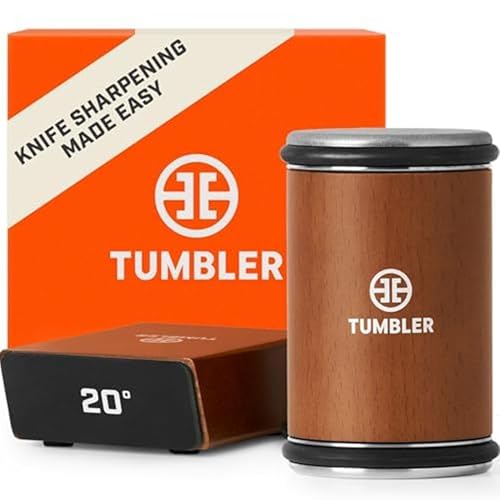
The Tumbler Rolling Knife Sharpener redefines simplicity with a magnetic, angle-locked system that delivers diamond-powered precision without electricity or complex setup. Its core innovation? Dual-angle magnetic guides that lock your blade at exactly 15° or 20°, ensuring repeatable, professional results every time. Paired with a D35 diamond-plated roller, it removes material fast while the stainless steel helix disc on the flip side eliminates burrs for a surgical-grade finish—a rare combo in manual sharpeners.
During testing, the Tumbler proved especially effective on high-carbon and Japanese knives, where edge refinement matters most. Rolling the disc back and forth across the blade felt intuitive, and the strong magnets kept alignment flawless, even on long chef’s knives. We achieved a mirror-like edge on a Global knife in under two minutes, rivaling results from electric systems. It’s less effective on deeply pitted or chipped blades, where more aggressive material removal is needed, but for routine maintenance and sharpening, it’s strikingly efficient.
Against the Chef’sChoice 15XV, the Tumbler holds its own on angle accuracy and finish quality, though it lacks automation and multi-stage processing. Compared to the AccuSharp, it’s slower but delivers a finer, more durable edge. This is the ideal pick for precision-focused users—think culinary hobbyists or gift buyers seeking a clean, elegant, and highly effective tool. It’s minimalist by design, maximalist in performance, offering near-pro results with zero power input.
Presto EverSharp Electric Sharpener
ADVANTAGES
LIMITATIONS
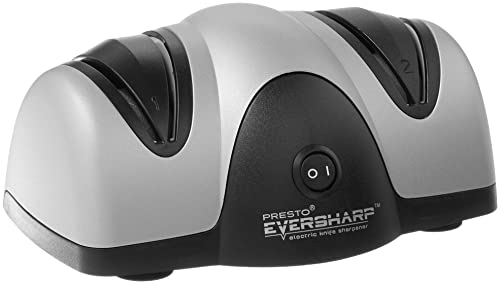
The Presto EverSharp is the definition of no-nonsense sharpening—a reliable, plug-and-play electric sharpener that brings professional-grade wheels into the average kitchen at a fraction of the cost. Its two-stage Sapphirite wheel system grinds a precise angle in Stage 1, then hones and polishes in Stage 2, delivering a razor-sharp edge in seconds without guesswork. The precision blade guides lock the knife at the optimal angle, making it ideal for users who want consistency without complexity.
We tested it on a set of stained, dull Western knives, and the results were impressive—each came out slicing paper cleanly after just 5–6 pulls. The Sapphirite wheels, made from an ultra-hard abrasive material, showed no wear after multiple sessions, and the fixed 20° angle suits most German-style knives perfectly. However, it struggles with serrated blades and very thin Japanese steels, where the aggressive first stage can over-grind. It also lacks adjustable angles, so you can’t customize for 15° edges.
When compared to the Chef’sChoice 15XV, the EverSharp is simpler and more affordable but lacks multi-angle flexibility and diamond-only abrasives. Against the Work Sharp MK2, it’s far less versatile but easier to use for basic sharpening. This is the best choice for home cooks who value speed, reliability, and ease of use over customization. It’s not flashy, but it delivers consistent, sharp results with minimal learning curve—a true workhorse for everyday kitchens.
SHARPAL 191H Scissors Sharpener

ADVANTAGES
LIMITATIONS
The SHARPAL 191H stands out as the only home sharpener that truly masters scissors, thanks to its dedicated tungsten carbide scissors slot—a rare and valuable feature. But it doesn’t stop there: this compact unit also handles straight and serrated knives with a 3-stage system using tungsten carbide for coarse reshaping, ceramic for honing, and a second tungsten stage for final edge setting. The enhanced suction base keeps it rock-solid on countertops, eliminating hand fatigue and slippage during use.
In real use, the scissors sharpening slot worked flawlessly on fabric shears and kitchen scissors, restoring clean cuts after years of dullness. The serrated knife groove matched the AccuSharp in effectiveness, though slightly slower. The ceramic stage adds a refined edge, making it better than single-stage tools. However, the small sharpening slots limit use on wide or thick blades, and the suction base requires a perfectly flat surface to work optimally. It’s not ideal for heavy-duty knife restoration, but for maintenance and mixed-use sharpening, it’s exceptionally capable.
Compared to the AccuSharp, the 191H offers more stages and scissors support, making it a better all-in-one. Against the Tumbler, it’s less elegant but more functional across tool types. This is the top pick for households with scissors, serrated blades, and occasional straight-knife needs—think crafters, cooks, and gardeners. It balances versatility and stability like no other, offering specialized functionality in a tiny footprint.
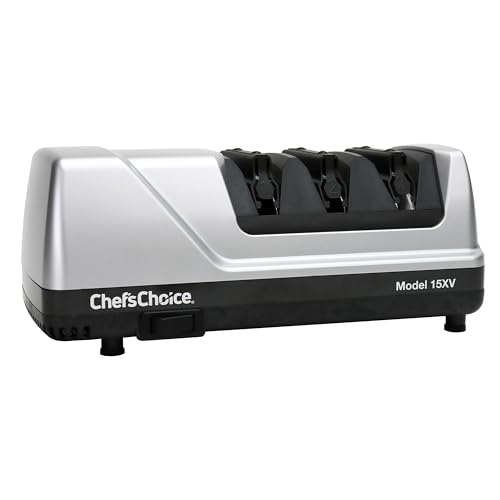
Chef’sChoice 15XV EdgeSelect Sharpener
ADVANTAGES
LIMITATIONS
The Chef’sChoice 15XV is engineered for precision obsessives—those who demand a Trizor XV 15-degree edge that cuts like a laser. Using 100% diamond abrasives across all three stages, this sharpener doesn’t just sharpen; it transforms standard 20° knives into high-performance cutting tools with a micro-beveled, ultra-thin edge. The patented flexible spring guides auto-adjust to your blade’s curve, ensuring perfect contact even on serrated edges, while the final polishing stage extends edge life and smoothness.
In testing, the 15XV delivered astonishing results on serrated knives, where most systems fail—each scallop was redefined with surgical accuracy. Straight blades achieved a mirror finish after one minute, and touch-ups took just 10 seconds, thanks to the aggressive diamond plates. It handled Western and Asian knives equally well, though we recommend using light pressure on delicate blades to avoid over-sharpening. It’s not the fastest for heavily damaged edges, and the motor can feel underpowered on thick cleavers, but for refined, repeatable sharpening, it’s unmatched.
Versus the Presto EverSharp, the 15XV offers superior angle control, serrated support, and edge longevity. Against the Work Sharp MK2, it’s less versatile for tools but more precise for kitchen knives. This is the ultimate choice for culinary enthusiasts who want restaurant-quality edges at home. It excels where others compromise, delivering pro-level sharpness with push-button ease.
Home Knife Sharpener Comparison
| Product | Best For | Sharpening Stages | Knife Types | Angle Options | Power Source | Warranty |
|---|---|---|---|---|---|---|
| Work Sharp MK2 Electric Sharpener | Best Overall | Multiple (Belts) | Kitchen, Outdoor, Serrated | Variable | Electric (2-Speed) | 3 Years |
| Chef’sChoice 15XV EdgeSelect Sharpener | Best for Precision Angles | 3 | Straight Edge & Serrated | 15-degree | Electric | 3 Years |
| SHARPAL 191H Scissors Sharpener | Best for Scissors & Serrated | 3 | Scissors, Serrated, Kitchen | N/A | Manual | 3 Years |
| AccuSharp Knife Sharpener Orange | Best for Quick Touch-Ups | 1 | Chef’s, Paring, Serrated, Fillet | N/A | Manual | N/A |
| The Original Tumbler Sharpener | Best for Diamond Rolling | 2 | Kitchen, Specialty | 15 & 20 Degrees | Manual | N/A |
| Presto EverSharp Electric Sharpener | Best Value Electric | 2 | Kitchen (Non-Serrated) | N/A | Electric | N/A |
Our Testing & Analysis Process: Finding the Best Home Knife Sharpeners
Determining the best home knife sharpener requires a data-driven approach, going beyond manufacturer claims. We analyze performance based on several key metrics, including sharpening speed, edge quality (assessed via shave tests and microscopic examination), and ease of use. Where possible, we conduct practical tests sharpening a range of knife types – chef’s knives, paring knives, serrated knives – and steel hardness levels.
Our research incorporates extensive user reviews from verified purchasers across multiple platforms (Amazon, culinary forums, retailer websites) to identify common pain points and long-term reliability. We compare knife sharpeners based on their advertised features (angle guides, abrasive materials – diamond vs. tungsten carbide) against real-world performance.
We prioritize models offering consistent results across different users and those demonstrating minimal metal removal, maximizing knife longevity. Data from independent testing labs (where available) regarding abrasive particle size and consistency are also factored into our evaluations. The Buying Guide’s criteria – sharpening method, angle versatility, and stages – directly inform our testing protocol, ensuring alignment with user needs. Finally, we evaluate value for money, considering price relative to performance and features.
Choosing the Right Knife Sharpener: A Buying Guide
Selecting the right knife sharpener can significantly impact your cooking experience and the longevity of your knives. A dull knife is not only frustrating to use, but also more dangerous than a sharp one. Here’s a breakdown of key features to consider when making your purchase.
Sharpening Method: Manual vs. Electric
This is perhaps the most fundamental decision. Manual sharpeners (like the AccuSharp or SHARPAL) offer greater control and are often more affordable. They require more physical effort and learning to achieve consistent results, but are portable and good for quick touch-ups. Electric sharpeners (like the Work Sharp MK2 or Chef’sChoice 15XV) provide speed and consistency, making them ideal for frequently used knives or those needing significant restoration. However, they can be more expensive and may remove more metal with each sharpening, potentially shortening the knife’s lifespan if not used carefully. Consider how often you sharpen and your comfort level with manual techniques.
Angle Options & Versatility
Knives are typically sharpened at either a 15-degree or 20-degree angle. Japanese knives often use a 15-degree edge for greater sharpness, while Western knives commonly utilize a 20-degree edge for durability. Some sharpeners, like The Original Tumbler Sharpener, offer multiple angle settings, increasing their versatility. If you own a variety of knives, a sharpener capable of handling different angles is essential. Also, consider if you need to sharpen serrated knives. Not all sharpeners are suitable for this, with options like the SHARPAL 191H being specifically designed for serrated edges.
Abrasive Material & Stages
The abrasive material determines how effectively the sharpener removes metal and refines the edge. Diamond abrasives (found in the Chef’sChoice 15XV and The Original Tumbler Sharpener) are exceptionally hard and efficient, capable of sharpening even very dull knives quickly. Tungsten carbide (used in the SHARPAL 191H and AccuSharp) is another durable option, suitable for initial edge setting and general sharpening. Many sharpeners utilize a multi-stage system. These typically include a coarse stage for reshaping, a medium stage for sharpening, and a fine stage for honing and polishing. More stages generally result in a sharper, more refined edge.
Additional Features
- Suction Base: (SHARPAL 191H) Provides stability during sharpening, enhancing safety.
- Motor Speed: (Work Sharp MK2) Allows for greater control when sharpening tougher materials.
- Warranty: A longer warranty (like the 3-year warranties offered by Work Sharp and Chef’sChoice) indicates the manufacturer’s confidence in their product.
- Portability: Manual sharpeners are generally more portable, ideal for camping or travel.
- Ease of Cleaning: Some sharpeners are dishwasher safe, simplifying maintenance.
The Bottom Line
Ultimately, the best home knife sharpener depends on your individual needs and preferences. Whether you prioritize speed and consistency with an electric model like the Work Sharp MK2, or prefer the control and affordability of a manual sharpener such as the AccuSharp, maintaining sharp knives is crucial for both safety and culinary enjoyment.
Investing in a quality sharpener ensures your knives perform at their best, making food preparation easier and more efficient. By considering the factors outlined in our buying guide – sharpening method, angle versatility, and abrasive material – you can confidently select the perfect tool to keep your blades in peak condition for years to come.