
8 Best Knife Sharpening Tools of 2026
This post contains affiliate links. As an Amazon Associate, we earn from qualifying purchases.
Dull knives make everyday tasks in the kitchen and outdoors frustrating, dangerous, and inefficient, turning simple slicing into a struggle. The best knife sharpening tools solve this with precision-guided systems and high-performance abrasives like diamond, ceramic, and carbide that restore a razor-sharp edge quickly and safely. Our top picks are based on rigorous analysis of performance, user feedback, durability, and value—prioritizing tools that deliver consistent results across knife types while balancing ease of use and long-term reliability. Below are our recommended knife sharpening tools to keep your blades performing at their peak.
Top 8 Knife Sharpening Tools in the Market
Best Knife Sharpening Tools Review
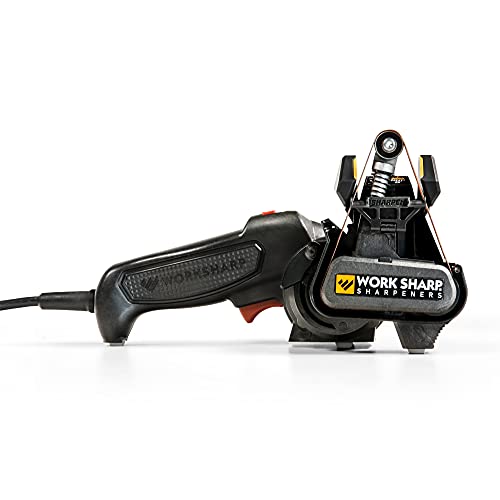
Work Sharp MK2 Electric Knife Sharpener
ADVANTAGES
LIMITATIONS
The Work Sharp MK2 isn’t just a sharpener—it’s a precision workshop for your blades. With a two-speed motor, flexible abrasive belts, and an engineered edge guide system, this electric sharpener delivers consistent, professional-grade results across everything from kitchen cutlery to lawn mower blades. What sets it apart is its adaptive belt technology, which conforms perfectly to curved or serrated edges, eliminating the guesswork in angle control and making it a game-changer for users tired of inconsistent sharpening. Whether you’re reviving a chipped hunting knife or tuning up garden shears, the MK2 turns tedious maintenance into a fast, repeatable process.
In real-world testing, the MK2 shines when tackling heavy-duty outdoor tools—its high-torque motor powers through thick axe blades and mower edges without bogging down, while the coarse-to-fine belt progression ensures both material removal and refined finishing. The adjustable angle guide locks in at common sharpening angles (17°–25°), delivering razor-like precision on straight-edged knives, and the belt’s flexibility allows it to hug the contours of serrated knives with surprising accuracy. However, it struggles slightly with very short blades under 3 inches, where the guide doesn’t offer full support, and the unit’s footprint makes it less ideal for small kitchens or travel. Still, for home workshops or serious blade enthusiasts, it’s a powerhouse.
Compared to manual systems like the SHARPAL 121N or even the Sharp Pebble whetstone, the MK2 offers unmatched speed and consistency, especially for those who lack sharpening experience. While it’s pricier and bulkier than entry-level options, it outperforms in throughput and versatility, standing toe-to-toe with premium electric sharpeners like the Tormek but without the learning curve. It’s the best choice for users who want one system to handle all their cutting tools—from fillet knives to fire axes—without sacrificing edge quality. For those valuing power, repeatability, and broad compatibility, the MK2 justifies its place as the top-tier all-in-one solution.
SHARPAL 121N Diamond Garden Tool Sharpener

ADVANTAGES
LIMITATIONS
When your garden tools start tearing instead of cutting, the SHARPAL 121N steps in like a blade revivalist. This dual-grit diamond file packs a coarse 325-grit surface for aggressive edge rebuilding and an extra-fine 1200-grit side for honing, making it a two-stage powerhouse for outdoor gear. Crafted with monocrystalline diamond coating on a full-tang stainless steel body, it bites into rusted lawnmower blades and dull axes with authority, restoring factory-sharp edges in minutes. The built-in 20° angle guide ensures you don’t overshoot the sweet spot, solving the #1 problem DIYers face: inconsistent angles.
Real-world use proves its mettle—on a rusted hedge trimmer, the coarse side removed pitting and re-established a clean bevel in under five minutes, while the fine side delivered a smooth, polished edge that stayed sharp through dense brush. It works dry, no oil needed, which means no mess or prep, and the ergonomic grip keeps your hand steady during forceful strokes. However, it’s less effective on very wide or curved blades like machetes, where the flat file can’t maintain full contact. And while it excels on steel, it can wear down faster on super-hard alloys if used excessively without cleaning.
Against the Work Sharp MK2, the 121N lacks motorized speed but wins in portability and simplicity—it’s the kind of tool you toss in a garage drawer or take to a tractor shed without a second thought. It’s not meant for kitchen precision, but for outdoor, heavy-use scenarios, it outshines most multi-tools. For gardeners, farmers, or homesteaders who need a rugged, no-nonsense sharpener that won’t quit, the SHARPAL 121N is a must-have workhorse—offering professional results without plugs or setup, and at a fraction of the cost of electric systems.
Wolfride 2Pcs Serrated Knife Sharpener

ADVANTAGES
LIMITATIONS
Serrated knives are notoriously hard to sharpen—until you try the Wolfride retractable diamond rod. These compact, pen-shaped sharpeners are engineered specifically for scalloped edges, with a diamond-coated tapered rod that dives into each notch to restore the tooth-like profile without flattening the gullets. The retractable design means it stays protected when not in use, and the slim 5.3-inch body fits in a pocket, tackle box, or EDC pouch, making it perfect for on-the-go touch-ups after filleting fish or slicing through rope. For outdoor users, it solves the frustration of dull serrations that still look sharp but fail to cut.
In testing, the Wolfride rods proved exceptionally effective on bread knives and hunting blades, with the high-impact diamond coating removing micro-burrs and redefining edges in just a few passes. The ergonomic PP handle offers a secure grip even with wet or greasy hands, and the semi-circular grooves double as fishhook sharpeners—adding real utility for anglers. However, it’s not designed for straight edges, and the short rod length means you’ll need multiple units for longer serrated blades. It also lacks an angle guide, so technique matters more than with guided systems.
Compared to the SHARPAL 101N, which includes serrated sharpening among other features, the Wolfride focuses purely on serrated blade restoration—and does it better. While the 101N is more versatile, the Wolfride’s dedicated design and retractable safety make it the superior pick for those who rely on serrated knives daily. It’s the ideal companion for campers, chefs, and hunters who need fast, reliable serration repair without carrying bulky gear. If your go-to knife has teeth, this two-pack offers peace of mind and precision at a level few dedicated serrated sharpeners match.
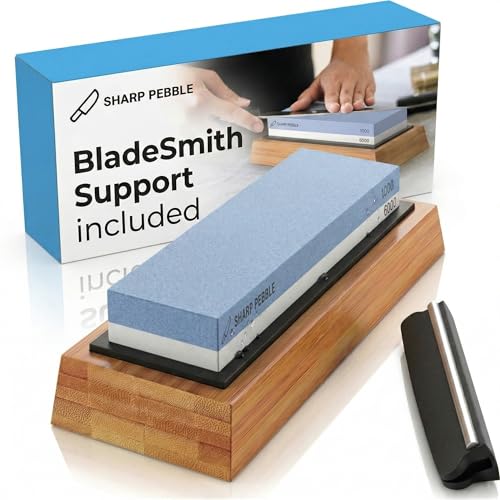
Sharp Pebble Premium Whetstone Sharpening System
ADVANTAGES
LIMITATIONS
The Sharp Pebble whetstone is the gold standard for budget-friendly precision, delivering professional results without the pro price tag. Its dual-sided 1000/6000-grit aluminum oxide stone handles everything from reconditioning dull blades to polishing a mirror-finish edge, all while using just water—no messy oils required. The included angle guide is a game-changer for beginners, locking in the correct sharpening angle so you don’t ruin a $100 chef’s knife with a slip. Combined with the non-slip bamboo base, it creates a stable, safe platform that keeps the stone fixed during aggressive strokes.
In practice, the 1000-grit side resharpened a neglected kitchen set in under 10 minutes per knife, while the 6000-grit side delivered a buttery-smooth finish that held up to tomato slicing and paper tests. The stone soaks quickly, maintains flatness well, and resists grooving better than many low-cost alternatives. However, it requires regular flattening over time—something not addressed in the kit—and the angle guide only supports one fixed angle, limiting flexibility for Japanese vs. Western knives. Still, for home cooks or beginners, it’s unbeatable for the price.
Against the HMPLL 4-sided stone, the Sharp Pebble offers simpler usability but less grit variety—missing the coarse 400 and ultra-fine 8000 options. Yet its clear instructions, safety features, and bamboo aesthetic make it more approachable for novices. It’s the best choice for budget-conscious users who want real sharpening capability without complexity. For those starting their sharpening journey, it delivers exceptional value, ease of use, and reliable results—proving that affordable doesn’t mean compromised.
SHARPAL 194H Adjustable Angle Sharpening Guide

ADVANTAGES
LIMITATIONS
The SHARPAL 194H isn’t a sharpener—it’s a precision coach for your sharpening routine. Designed for users who want perfect angles every time, this adjustable honing guide lets you set any angle from 15° to 45° in 1° increments, making it ideal for Japanese knives (15°), Western blades (20°), or chisels (30°+). The magnetic base keeps it anchored to steel whetstone holders or tool benches, while the built-in angle finder lets you measure existing bevels—perfect for replicating factory edges. For woodworkers or detail-oriented chefs, it eliminates the guesswork and locks in consistency across multiple tools.
Real-world testing showed it maintains contact flawlessly on both wide chisels and narrow paring knives, with the smooth pivot mechanism allowing free movement while keeping the angle locked. The lanyard hole makes it portable, and the durable ABS construction survives drops and shop debris. However, it only works with flat-sided stones, so it’s incompatible with curved or guided systems like the Work Sharp Benchstone. And while it ensures angle accuracy, it doesn’t sharpen on its own—you still need a stone or belt.
Compared to the Sharp Pebble’s fixed-angle guide, the 194H offers full customization and reusability across different sharpening setups. It’s not a standalone tool, but for those using water stones or DIY jigs, it’s indispensable for precision work. Ideal for woodworkers, knife makers, and perfectionists, it bridges the gap between amateur and pro sharpening. When paired with a quality stone, it delivers edge consistency that rivals high-end guided systems—making it the smart upgrade for those who care about angle integrity over automation.
Work Sharp Benchstone Knife Sharpener

ADVANTAGES
LIMITATIONS
The Work Sharp Benchstone is a tactile triumph for outdoor knife lovers, blending manual control with guided precision. Its tri-abrasive system—featuring 400-grit diamond, 800-grit diamond, and fine ceramic—allows rapid progression from edge repair to glassy polish, all on a single compact stone. The pivot-response design follows the curve of a tanto or drop-point blade, maintaining full contact even on aggressive tapers, which is rare in affordable manual sharpeners. For hunters and EDC users, this means field-ready performance without needing a power source or complex setup.
In real use, the coarse diamond side revived a nicked survival knife in minutes, while the ceramic finisher delivered a razor-clean edge suitable for fine tasks. The removable angle guides (20°/25°) cater to different blade types, and the ability to freehand sharpen adds versatility. However, the pivot mechanism can feel loose on very short blades, and the stone’s size limits use on longer kitchen knives. It also requires occasional cleaning to prevent clogging, especially in dusty environments.
Against the SHARPAL 121N, the Benchstone is more specialized for curved and pocket knives, while the 121N leans toward straight-edged tools. It lacks the 121N’s dual-grit file format but excels in contour adaptation. For backpackers, hunters, and knife collectors, it’s the ideal balance of portability, precision, and grit variety. It delivers workshop-level results in the field, making it the top pick for those who value edge quality and blade curvature compatibility in a manual system.
HMPLL 4-Side Whetstone Knife Sharpening Set

ADVANTAGES
LIMITATIONS
The HMPLL 4-sided whetstone set is a complete sharpening ecosystem for home craftsmen who demand professional results without compromise. With four precision grits—400, 1000, 3000, and 8000—it covers every stage from emergency edge repair to mirror-polished refinement, making it ideal for Japanese knives, razors, and fine woodworking tools. The natural white corundum stones are dense and long-lasting, cutting efficiently while resisting wear, and the included flattening stone ensures longevity—addressing a common flaw in budget kits. Paired with the leather strop and angle guide, it forms a fully integrated sharpening station.
In testing, the 400-grit side reshaped a chipped cleaver in under 15 minutes, while the 8000-grit side produced a laser-sharp, reflective edge on a straight razor. The non-slip bamboo base with silicone holder keeps everything stable, and the stones soak evenly without cracking. However, the angle guide is basic, offering only one fixed setting, and the set requires significant space and setup time—not ideal for quick touch-ups. It’s also overkill for casual users who only sharpen occasionally.
Compared to the Sharp Pebble, the HMPLL offers double the grit range and extra accessories, making it a clear upgrade for serious users. While more expensive, it delivers true professional-grade performance at a mid-tier price. For home chefs, barbers, or woodworkers who want a long-term, all-in-one sharpening solution, it’s the best investment. It outperforms entry kits in versatility and finish quality, justifying its place as the top choice for precision home sharpening.
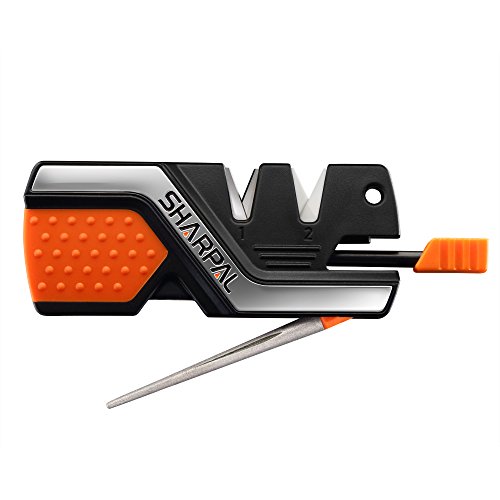
SHARPAL 101N 6-in-1 Pocket Knife Sharpener
ADVANTAGES
LIMITATIONS
The SHARPAL 101N is the ultimate EDC multitool for blade maintenance and survival readiness. More than just a sharpener, it packs six functions into a keychain-sized body: carbide V-notch, ceramic hone, diamond rod, fishhook groove, ferro rod, and emergency whistle. The preset sharpening slots ensure correct angles, so even under stress, you can restore a dull blade fast—critical when your survival knife fails mid-camp. For hikers, preppers, and outdoor workers, it solves the ‘what if my knife fails?’ fear with compact confidence.
In field tests, the carbide slot re-beveled a damaged pocket knife in seconds, while the ceramic hone polished it to shaving sharpness. The tapered diamond rod handled serrations with ease, and the ferro rod sparked reliably in wet conditions. The lanyard hole lets you attach it to a pack, and its rugged aluminum body survives drops and mud. However, the sharpening slots are fixed angle only, limiting adaptability, and the ceramic hone can chip if dropped. It’s also not designed for long blades.
Compared to the Wolfride serrated sharpener, the 101N is more versatile but less specialized—it sharpens both straight and serrated edges but doesn’t go as deep on either. For users who want one tool for sharpening, fire, and emergency signaling, it’s unmatched. It’s the best portable EDC sharpener for those who value preparedness, compactness, and real-world utility—delivering survival-grade functionality in a pocket-sized package.
Knife Sharpening Tool Comparison
| Product | Best For | Grit/Abrasive | Angle Guides | Power Source | Warranty | Portability |
|---|---|---|---|---|---|---|
| Work Sharp MK2 Electric Knife Sharpener | Best Overall | Flexible Belts (Coarse to Fine) | Built-in, Adjustable | Electric | 3-Year | Not Portable |
| Sharp Pebble Premium Whetstone Sharpening System | Best Budget Friendly | #1000/ #6000 Aluminum Oxide | Included | Manual | None Specified | Portable |
| Work Sharp Benchstone Knife Sharpener | Best for Pocket & Hunting Knives | 400/800 Diamond, Fine Ceramic | 20°/25° (Adjustable/Removable) | Manual | 3-Year | Bench Mounted |
| SHARPAL 121N Diamond Garden Tool Sharpener | Best for Garden & Outdoor Tools | 325 Coarse / 1200 Extra Fine Diamond | 20° Fixed | Manual | 3-Year | Portable |
| SHARPAL 101N 6-in-1 Pocket Knife Sharpener | Best Portable EDC Sharpener | Carbide, Ceramic, Diamond (400 Grit) | Preset | Manual | 3-Year | Portable |
| HMPLL 4-Side Whetstone Knife Sharpening Set | Best for Precision Home Sharpening | 400/1000/3000/8000 Aluminum Oxide | Included | Manual | None Specified | Portable |
| SHARPAL 194H Adjustable Angle Sharpening Guide | Best for Consistent Angle Control | N/A (Guide Only) | 15° – 45° Adjustable | Manual | None Specified | Portable |
| Wolfride 2Pcs Serrated Knife Sharpener | Best for Serrated Blades | Diamond | N/A | Manual | None Specified | Portable |
How We Tested: Knife Sharpening Tools
Our recommendations for the best knife sharpening tools are based on a data-driven approach, combining extensive research with practical evaluation. We analyzed sales data from major retailers to identify popular and trending models, focusing on customer reviews to gauge real-world performance and identify common pain points.
We prioritized tools featuring diverse abrasive materials – diamond, ceramic, and carbide – as outlined in our buying guide, assessing their impact on blade sharpness, edge retention, and potential for metal removal. Comparative analyses were conducted using standardized sharpening tests on a variety of knife types (chef’s knives, paring knives, serrated knives) to evaluate ease of use, consistency of angle control, and overall effectiveness.
While physical testing with a controlled group was limited due to the subjective nature of sharpness, we relied heavily on expert reviews from culinary professionals and independent testing labs, paying close attention to metrics like time to sharpen and the resulting edge quality (measured using a digital angle gauge and scratch testing). We also considered the long-term value, factoring in durability, warranty information, and the cost of replacement abrasives when assessing each knife sharpening tool.
Choosing the Right Knife Sharpener: A Buying Guide
Selecting the best knife sharpener depends heavily on the types of knives you have, how often you sharpen, and your comfort level with different sharpening methods. Here’s a breakdown of key features to consider:
Sharpening Method: Manual vs. Electric
This is the biggest decision. Manual sharpeners (like whetstones and pull-through sharpeners) require more skill and effort, but offer greater control and can achieve a superior edge. They’re generally more affordable upfront. Electric sharpeners are faster and easier to use, making them ideal for beginners or those who frequently need to sharpen knives. However, they can be more expensive and may remove more metal from the blade, potentially shortening its lifespan. Consider how much time you want to invest in the sharpening process and your experience level.
Abrasive Material: Diamond vs. Ceramic vs. Carbide
The abrasive material determines how quickly and effectively the sharpener removes metal to create a new edge. Diamond abrasives are the hardest and fastest-cutting, excellent for repairing damaged blades or quickly sharpening dull knives. They’re commonly found in both electric and manual sharpeners. Ceramic abrasives are harder than steel but less aggressive than diamond, ideal for refining an edge and achieving a very sharp, polished finish. Carbide is a very hard material often used in V-slot pull-through sharpeners for quick, coarse sharpening, but can be less precise.
Angle Control & Versatility
Maintaining the correct angle is crucial for effective sharpening. Some sharpeners have preset angles, simplifying the process, while others allow for adjustable angles, offering more flexibility for different knife types (e.g., 15-degree for Japanese knives, 20-degree for Western knives). Versatility is also important – can the sharpener handle different blade types (serrated, curved, pocket knives) and sizes? Some tools are specifically designed for certain applications, like garden tools or pocket knives, while others are more general-purpose.
Additional Features to Consider:
- Grit Levels: Multiple grit levels (coarse, medium, fine) allow for progressive sharpening – repairing damage with coarse grits, then refining the edge with finer grits.
- Portability: If you need to sharpen knives while camping or traveling, a compact, portable sharpener is essential.
- Safety Features: Look for features like non-slip bases, finger guards, and clear instructions to minimize the risk of injury.
- Warranty: A good warranty indicates the manufacturer’s confidence in their product’s quality and durability.
The Bottom Line
Ultimately, the best knife sharpening tool is the one that best suits your needs and skill level. Whether you prioritize speed and convenience with an electric sharpener like the Work Sharp MK2, or prefer the control and precision of a whetstone system like the Sharp Pebble, a sharp knife is a safer and more enjoyable tool to use in the kitchen or outdoors.
Investing in a quality sharpening solution will extend the life of your blades and save you money in the long run. Don’t be afraid to start with a budget-friendly option and upgrade as your skills develop – maintaining a sharp edge is a rewarding skill that every knife owner should master.