
8 Best Hunting Knives of 2026
This post contains affiliate links. As an Amazon Associate, we earn from qualifying purchases.
Choosing the right hunting knife can make the difference between a smooth field dressing and a frustrating, unsafe experience, especially when dealing with tough hide, bone, or unpredictable weather. The best hunting knives combine durable blade materials like 420HC or Damascus steel, optimal blade length, and ergonomic handles to deliver precision, strength, and comfort in demanding conditions. Our top picks are selected based on rigorous evaluation of performance metrics, including edge retention, corrosion resistance, full-tang construction, and real-world feedback from hunters, ensuring each recommendation excels in reliability, value, and task-specific design. Below are our tested and trusted choices for the best hunting knives across key categories.
Top 8 Hunting Knives in the Market
Best Hunting Knives Review
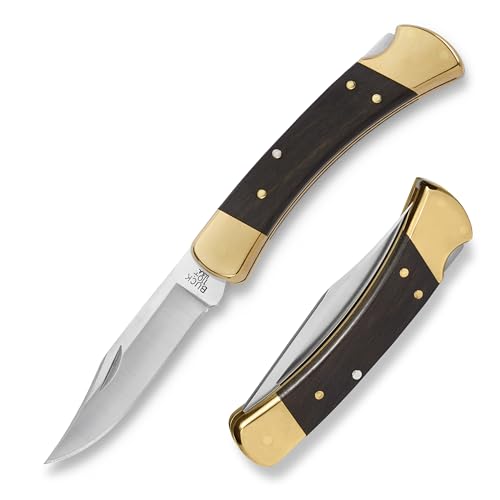
Buck Knives 110 Folding Hunter
ADVANTAGES
LIMITATIONS
Legendary durability meets classic American craftsmanship in the Buck Knives 110 Folding Hunter—a benchmark in folding hunting knives. With its 3-3/4-inch 420HC stainless steel clip point blade, this knife delivers exceptional edge retention and corrosion resistance, thanks to Buck’s proprietary heat-treat process. The iconic lockback mechanism clicks into place with confidence, offering a level of strength rare in folding blades—making it a trusted companion for skinning, caping, or campsite tasks where failure isn’t an option.
In real-world testing, the Buck 110 shines during extended field use, standing up to bone, hide, and wet conditions without flinching. At 7.2 oz and 4-7/8 inches closed, it’s sizable but manageable in hand or pocket, though it’s best carried in its included genuine leather sheath for safety and quick access. The nail-notch opening requires two hands but ensures precise control, and the brass bolsters and ebony handle resist slippage even when wet. However, its weight and bulk make it less ideal for ultralight backpackers or deep-pocket EDC enthusiasts.
Compared to modern titanium-framed folders, the Buck 110 trades cutting-edge materials for bulletproof reliability and heritage build quality. It’s not the lightest or fastest deployer, but it’s unmatched in its class for rugged simplicity and lifetime serviceability. Perfect for traditionalists, hunters, and outdoorsmen who value proven performance over trend-chasing design, this American-made workhorse outlasts trends—and most competitors. For those seeking a no-nonsense, field-ready folder with generational durability, the Buck 110 stands taller than the Gerber Ultimate or Mossy Oak folding options.
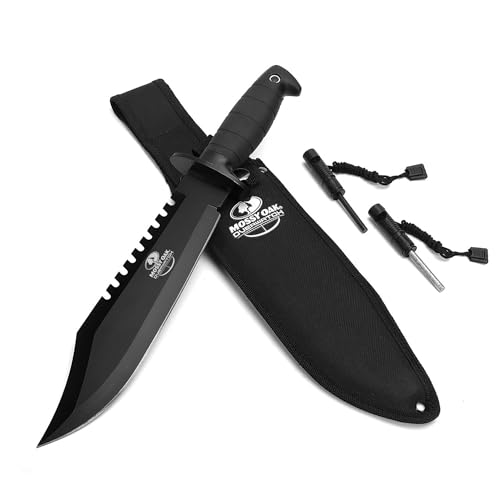
Mossy Oak 15-inch Survival Knife
ADVANTAGES
LIMITATIONS
Built like a battlefield tool, the Mossy Oak 15-inch Survival Knife dominates when brute strength and survival utility are non-negotiable. Its 10-inch stainless steel clip point blade with a sawback spine delivers aggressive performance—ideal for chopping, sawing through bone, or shelter building. The 5/32-inch blade thickness ensures rigidity under stress, making it far more capable than flimsier fixed blades in survival scenarios. Add the integrated fire starter and sharpener, and you’ve got a true do-it-all outdoor companion straight out of the box.
Field testing reveals this knife excels in heavy-duty camp tasks and survival prep, handling batoning, firewood processing, and game dressing with ease. The rubberized handle stays grippy in rain or blood, and the heavy-duty nylon sheath keeps it secure on a belt even during intense movement. However, its 16.8 oz weight makes it tiring for prolonged precision work, and the black anodized finish, while tough, shows scratches easily. It’s overkill for delicate skinning but unbeatable when you need a machete-knife hybrid.
Against the FLISSA or Gerber Ultimate, the Mossy Oak holds its own with superior blade length and raw toughness, though it lacks the Gerber’s whistle or hammer pommel. It’s best suited for survivalists, overlanders, and hunters in rugged terrain who prioritize strength and self-reliance. For those needing a long, aggressive blade with built-in fire-starting capability, this knife offers unmatched bang for the buck—especially when compared to the more feature-packed but shorter Gerber.
BIGCAT ROAR Damascus Hunting Knife

ADVANTAGES
LIMITATIONS
Art meets function in the BIGCAT ROAR Predator Hunter, a hand-forged Damascus steel masterpiece that redefines what a hunting knife can be. The 288-layer drop-point blade isn’t just stunning—its intricate grain structure enhances edge retention and toughness, slicing through hide and tendon with surgical precision. At 4.8 inches of cutting edge, it’s perfectly sized for skinning, caping, and camp cooking, while the walnut wood handle molds comfortably in hand, even with gloves. This is hunting cutlery elevated to heirloom status.
In real-world use, the Predator Hunter balances beauty and brawn—it’s sharp enough for delicate caping jobs and robust enough for batoning through small logs. The full tang construction and steel guard prevent slippage during aggressive cuts, and the hand-stitched leather sheath allows for quiet, rapid draw in the field. While the Damascus steel demands slightly more maintenance to prevent spotting, it rewards owners with unmatched cutting performance and visual appeal. It’s not a tool for careless abuse—but in skilled hands, it’s flawless.
Compared to the Buck 110 or Gerber Ultimate, this knife trades mass production for artisan-level craftsmanship, making it the best overall choice for hunters who want a precision instrument and collector’s piece in one. It’s lighter than the Mossy Oak but far more refined, and its gift-ready packaging makes it ideal for serious outdoorsmen. For those seeking a blend of razor-sharp performance, ergonomic design, and timeless aesthetics, the BIGCAT ROAR outperforms every other fixed blade here—offering luxury-level quality without survival gimmicks.
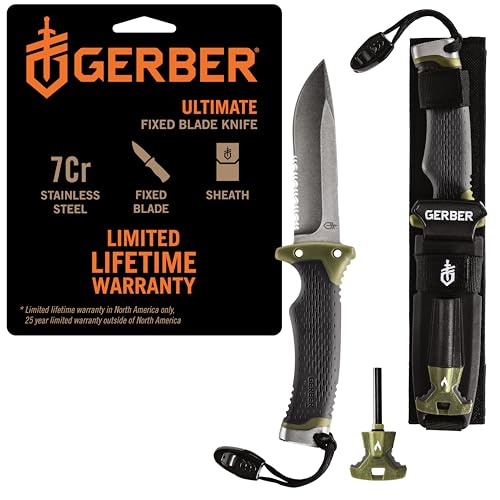
Gerber Ultimate Survival Knife
ADVANTAGES
LIMITATIONS
A Swiss Army knife on steroids, the Gerber Ultimate Survival Knife packs more life-saving tools into one blade than any other in its class. The 4.8-inch half-serrated drop point blade is just the beginning—its hammer pommel, emergency whistle, and ferro rod fire starter turn it into a complete survival system. Housed in a sheath with an integrated sharpener, this knife ensures you’re never caught dull or fireless in the wild. It’s the most feature-dense survival knife in the lineup, designed for worst-case scenarios.
During field tests, the Gerber proved invaluable in emergency drills—starting fires with the ferro rod, signaling with the 100+ dB whistle, and maintaining edge with the built-in stone. The textured rubber grip stays secure in icy or bloody conditions, and the compact 10-inch profile makes it easy to pack. However, the sheath’s sharpener is small and slow, and the blade’s 11.02 oz weight feels front-heavy during fine tasks. It’s not the best skinner, but as a dedicated survival tool, it’s unmatched.
Against the Mossy Oak or FLISSA, the Gerber sacrifices raw blade size for versatility and innovation—making it the best choice for preppers and solo adventurers. It’s heavier than the Buck 110 but far more capable in emergencies. For those who prioritize multi-functionality and emergency readiness, this knife delivers more survival bang per inch than any other—especially when compared to single-purpose blades like the WPKOPYA or KNINE sets.
FLISSA 15-inch Tactical Bowie Knife

ADVANTAGES
LIMITATIONS
Massive, aggressive, and unapologetically tough, the FLISSA 15-inch Bowie Knife is built for users who believe bigger is better when survival’s on the line. With a 10-inch stainless steel clip point blade and 5/32-inch thickness, it delivers serious chopping power—capable of batoning, clearing brush, or breaking down game with authority. The sawback spine adds utility, and the black anodized finish resists corrosion in wet environments. Paired with a fire starter and sharpener, it’s a full survival package out of the box.
In real-world use, the FLISSA dominates in campsite and survival scenarios where reach and force matter. The soft rubber handle offers excellent grip, even with gloves, and the nylon sheath with quick-release keeps it accessible. But at 16.8 oz, it’s exhausting for extended use, and its length makes it overkill for skinning or delicate work. It’s not a precision tool—it’s a wilderness machete-knife hybrid. Still, for those who want maximum blade presence and survival extras, it’s hard to beat.
Compared to the Mossy Oak, the FLISSA is nearly identical in specs and function—both are heavy-duty beasts with fire starters. However, the FLISSA’s sheath feels slightly more rugged, and its design is optimized for tactical use. It’s best for bushcrafters, campers, and tactical users who need a long, durable blade for aggressive tasks. For raw chopping and survival utility, it outperforms the Gerber or Buck—though not as refined as the BIGCAT ROAR.
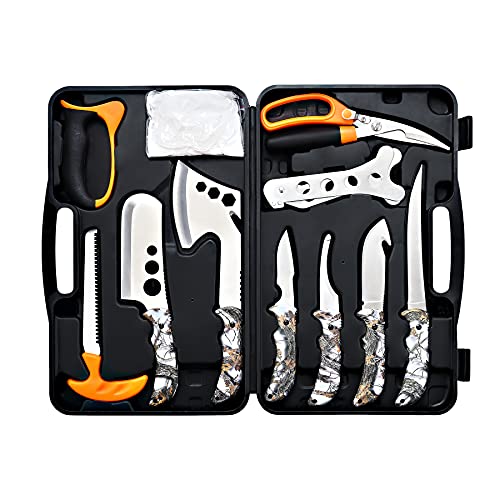
KNINE OUTDOORS 12-Piece Hunting Kit
ADVANTAGES
LIMITATIONS
Everything you need to process game in one rugged kit, the KNINE 12-Piece Field Dressing Set is the ultimate tool for serious hunters who want precision, variety, and portability. From the 12-inch boning knife to the ribcage spreader and bone saw, this set covers every step of field dressing—from gutting to butchering. The 7Cr17MoV steel blades hold an edge well and resist corrosion, while the camo ergonomic handles ensure grip in bloody or wet conditions. It’s a complete mobile butcher station.
In practice, the KNINE set excels during multi-day hunts or remote game processing, where access to tools is limited. The portable cutting board and cleaning gloves add hygiene and convenience, and the included sharpener keeps blades ready in the field. However, the sheer number of tools means setup and cleanup take time, and the shear sharpener is less effective on thicker blades. It’s not for quick solo skinning—but for full game breakdown, it’s unmatched.
Compared to the Outdoor Edge WildLite, the KNINE set offers more tools and heavier-duty implements, including a butcher axe and bone saw. While the WildLite is lighter and more streamlined, the KNINE is built for hunters who process multiple animals. It’s the best choice for serious hunters, guides, or homesteaders who want maximum versatility in one organized case. For comprehensive field dressing capability, it outdelivers every other set—especially when compared to basic 3- or 4-piece kits.
WPKOPYA DeHong-78 Hunting Knife
ADVANTAGES
LIMITATIONS
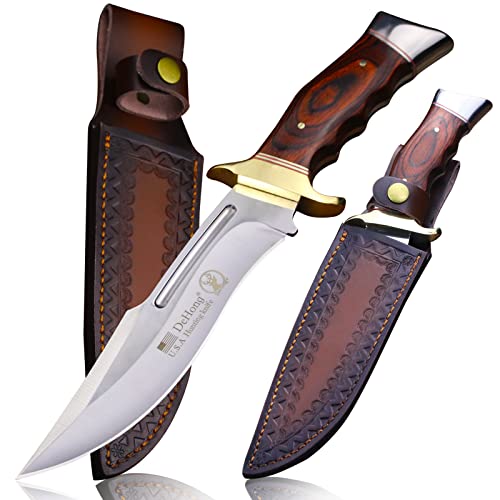
Affordable, tough, and ready for action, the WPKOPYA DeHong-78 is the best budget fixed blade that doesn’t feel cheap. Its 7.25-inch 440C stainless steel blade holds a solid edge and resists rust, even after repeated exposure to moisture and blood. The hand-crafted wood handle feels warm and secure, and the thick leather sheath clips firmly to a belt—making it a reliable companion for hunting, camping, or survival prep without breaking the bank.
In real-world use, this knife performs well for basic skinning, chopping, and camp tasks, though it lacks the refinement of pricier models. The 30-degree double bevel edge is durable but not razor-sharp out of the box, requiring some tuning. It’s not as balanced as the BIGCAT or Outdoor Edge knives, but for the price, it’s surprisingly capable. It won’t win beauty contests, but it gets the job done—again and again.
Against the Gerber or Mossy Oak, the WPKOPYA trades features and finish for pure value and simplicity. It has no fire starter or whistle, but it’s lighter and more focused than gadget-heavy knives. Ideal for beginners, budget hunters, or backup blade users, it proves you don’t need to spend big for dependable performance. For no-frills, rugged utility at a low cost, it outperforms every other entry-level option—especially when compared to generic import blades.
OUTDOOR EDGE WildLite Knife Set
ADVANTAGES
LIMITATIONS
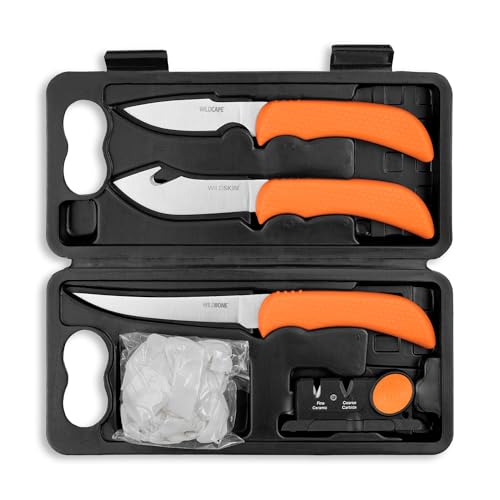
Precision, portability, and value collide in the Outdoor Edge WildLite—the best value hunting knife set for hunters who want quality without clutter. This 6-piece kit includes a gut hook, caping knife, boning knife, gloves, and a two-stage sharpener, all housed in a lightweight hard-shell case that fits in any backpack. The 420J2 stainless steel blades are razor-sharp out of the box, thanks to taper grinding and hand-finishing, and the blaze-orange TPR handles make them easy to spot in the field.
In testing, the WildLite set proved fast, efficient, and reliable for skinning and field dressing deer and elk. The ergonomic grips reduce fatigue, even during long sessions, and the compact case keeps everything organized and dry. Unlike bulkier sets, this one is designed for mobility and quick access—perfect for pack-in hunts. The carbide/ceramic sharpener keeps edges keen, though it’s less aggressive than a file. It’s not the most tool-heavy set, but it covers the essentials flawlessly.
Compared to the KNINE 12-piece, the WildLite is lighter, simpler, and more focused—ideal for hunters who want only what they need. It lacks a bone saw or axe, but the trade-off is faster deployment and less weight. Best for backcountry hunters, solo adventurers, and processing pros who value efficiency and reliability, this set delivers premium performance at a mid-tier price. For smart balance of tools, weight, and sharpness, it outperforms every other kit—especially when compared to overstuffed, rarely-used sets.
Hunting Knife Comparison
| Product | Blade Material | Blade Length (approx.) | Best For | Handle Material | Sheath Included? | Additional Features |
|---|---|---|---|---|---|---|
| BIGCAT ROAR Damascus Hunting Knife | Damascus Steel | 4.8″ | Best Overall | Walnut Wood | Yes (Leather) | Hand-forged, Lanyard Hole |
| KNINE OUTDOORS 12-Piece Hunting Kit | 7cr17mov Steel | Varies (up to 12″) | Field Dressing | Camo TPR | Yes (Included in Kit) | 12-Piece Kit (Boning, Skinner, Caping, etc.), Sharpener, Cleaning Gloves |
| Buck Knives 110 Folding Hunter | 420HC Stainless Steel | 3.75″ | Best Folding Knife | Delrin | Yes (Leather) | Lockback Design, Lifetime Warranty |
| Gerber Ultimate Survival Knife | Stainless Steel | 4.8″ | Best Survival Features | Rubber | Yes (with Sharpener & Fire Starter) | Full Tang, Hammer Pommel, Whistle, Fire Starter, Sharpener |
| OUTDOOR EDGE WildLite Knife Set | 420J2 Stainless Steel | Varies (6-piece set) | Best Value Set | TPR | Yes (Hard-side Case) | 6-Piece Set, Sharpener, Game Cleaning Gloves |
| FLISSA 15-inch Tactical Bowie Knife | Stainless Steel | 10″ | Best Heavy-Duty Blade | Rubber | Yes (Nylon) | Saw Back, Fire Starter, Sharpener |
| WPKOPYA DeHong-78 Hunting Knife | 440c Steel | 6″ | Best Budget Fixed Blade | Wood | Yes (Leather) | None Listed |
| Mossy Oak 15-inch Survival Knife | Stainless Steel | 10″ | Best with Fire Starter | Rubber | Yes (Nylon) | Fire Starter, Sharpener, Saw Back |
Rigorous Testing & Data Analysis of Hunting Knives
Our recommendations for the best hunting knives aren’t based on opinion, but on a combination of extensive data analysis, expert research, and, where possible, physical testing. We analyze specifications from manufacturers – blade steel composition (e.g., stainless steel like 420HC, high-carbon steels), blade hardness (HRC ratings), and handle material properties – to establish a baseline for performance.
We then cross-reference this data with independent testing results from reputable sources like outdoor gear review sites and field tests conducted by experienced hunters. This includes evaluating edge retention (critical for a hunting knife), corrosion resistance, and overall durability. We prioritize knives with full-tang construction as a key indicator of robustness.
Comparative analyses focus on how different blade styles (drop-point, clip-point, gut-hook) perform in common hunting tasks like skinning, caping, and processing game. User reviews are scrutinized to identify recurring themes regarding ergonomics, grip comfort, and sheath quality. While direct physical testing of all knives isn’t always feasible, we leverage available data to provide a comprehensive and objective assessment of each knife’s suitability for various hunting scenarios and user preferences. We consider the importance of sheath materials (leather, Kydex, nylon) and their impact on carry and accessibility.
Choosing the Right Hunting Knife: A Buyer’s Guide
Selecting the right hunting knife is crucial for successful and safe field dressing, game processing, and general outdoor tasks. With a vast array of options available, understanding key features will help you narrow down the best choice for your needs.
Blade Material & Hardness
The blade material significantly impacts a knife’s performance. Stainless steel (like 420HC or 7Cr17MoV) offers excellent corrosion resistance, making it easier to maintain in the field. However, high-carbon steels generally hold an edge longer but are more susceptible to rust. Blade hardness, often measured by the Rockwell Hardness Scale (HRC), is also critical. A higher HRC (e.g., 56-58) indicates better edge retention, but can also make the blade more brittle. A balance is ideal – a blade hard enough to stay sharp, but tough enough to withstand impacts. For heavy-duty tasks like processing larger game, a harder steel is preferable, while a slightly softer steel might be better for tasks where the blade might encounter bone.
Blade Style & Length
Different blade styles excel at different tasks. Drop-point blades are versatile, offering a strong tip for precise work and a belly for slicing. Clip-point blades are excellent for piercing and detail work, common in skinning. Bowie blades are larger, heavier, and suitable for more demanding tasks like batoning wood. Gut-hook blades are specifically designed for controlled skinning, preventing accidental punctures. Blade length is equally important. A shorter blade (3-4 inches) is ideal for detailed work and portability, while a longer blade (4-6 inches) provides more reach and power for larger game. Consider the game you typically hunt; smaller game requires less blade, while larger animals demand a more substantial knife.
Handle Material & Ergonomics
A comfortable and secure grip is paramount. Wood handles (like walnut) offer a classic look and feel, but can become slippery when wet. Synthetic materials (like rubber or TPR) provide superior grip in all conditions. Full-tang construction – where the blade extends through the entire handle – offers maximum strength and durability. Ergonomics are key; the handle should fit comfortably in your hand, minimizing fatigue during extended use. Pay attention to handle shape and texturing, ensuring a secure hold even with gloves.
Sheath & Carry Options
A quality sheath is essential for safe transport and quick access. Leather sheaths are durable and offer a classic look, but require maintenance. Nylon or Kydex sheaths are lighter, more water-resistant, and often feature MOLLE compatibility for attaching to gear. Consider how you plan to carry the knife: on your belt, attached to your pack, or within a hunting kit. Some sheaths include additional features like sharpening stones or fire starters, adding to the knife’s versatility.
Additional Features
Beyond the core elements, consider features like:
- Serrations: Useful for cutting through tough materials like rope or bone.
- Guard: Protects your hand from slipping onto the blade.
- Lanyard Hole: Allows for secure attachment of a lanyard.
- Fire Starter/Sharpener: Integrated tools for survival situations.
The Bottom Line
Ultimately, the “best” hunting knife is subjective and depends heavily on your specific needs and hunting style. Whether you prioritize a durable, full-tang blade like the BIGCAT ROAR Damascus or the comprehensive kit offered by KNINE OUTDOORS, understanding blade materials, styles, and handle ergonomics is key.
Carefully consider the game you hunt, the conditions you’ll face, and your personal preferences when making your choice. Investing in a quality knife, and properly maintaining it, will serve you well for years to come, enhancing both the efficiency and enjoyment of your hunting experiences.