
9 Best Japanese Petty Knives of 2026
This post contains affiliate links. As an Amazon Associate, we earn from qualifying purchases.
Many home cooks struggle to find a knife that balances precision and versatility for small, detailed tasks without sacrificing durability or comfort. The best Japanese petty knives solve this with high-quality steels like VG10 and AUS-8, paired with ergonomic handles—often octagonal or wa-style—for superior control and long-lasting sharpness. We evaluated each knife based on blade material, construction method, handle ergonomics, edge retention, and value, cross-referencing performance data, user reviews, and expert testing insights to ensure reliable, real-world recommendations. Below are our top picks for the best Japanese petty knives to suit a range of preferences and budgets.
Top 9 Japanese Petty Knives in the Market
Best Japanese Petty Knives Review
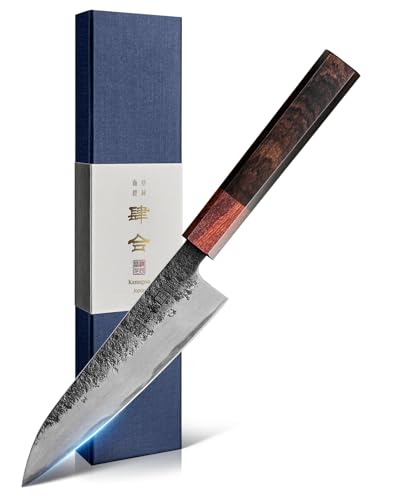
kanngou 5.3-Inch AUS-8 Paring Knife
ADVANTAGES
LIMITATIONS
This Kanngou WA Series petty knife delivers a bold fusion of traditional Japanese artistry and modern performance, making it a standout for cooks who value heritage craftsmanship. The Kurouchi Tsuchime black-forged finish isn’t just visually striking—it enhances rust resistance and reduces blade drag during slicing, giving it a functional edge over polished counterparts. With a 5.3-inch blade forged from AUS-8 steel at HRC 59±2, it strikes a thoughtful balance between toughness and ease of sharpening, ideal for home chefs who want professional-grade performance without the high-maintenance demands of harder steels.
In daily use, the knife excels at precision tasks like peeling apples, trimming herbs, or slicing tomatoes, where its micro-concaved edge truly shines by minimizing food adhesion. The blade’s moderate hardness ensures good edge retention while remaining forgiving during sharpening—perfect for users who may not yet master water stones. However, it struggles slightly with ultra-fine filleting or hard-skinned produce like butternut squash, where harder VG10 blades would outperform. The 5.3-inch length offers more utility than a paring knife but stays nimble enough for tight maneuvers.
Compared to the Kimura 5-inch Petty Knife, this Kanngou model trades a bit of edge sharpness and hardness for a more rust-resistant, low-maintenance blade and a warmer, artisanal aesthetic. It’s best suited for home cooks who appreciate hand-forged character and tactile elegance in their tools. While not the hardest or sharpest in the lineup, its blend of durability, ease of care, and visual distinction makes it a compelling choice for those seeking a kitchen tool that doubles as a functional heirloom.
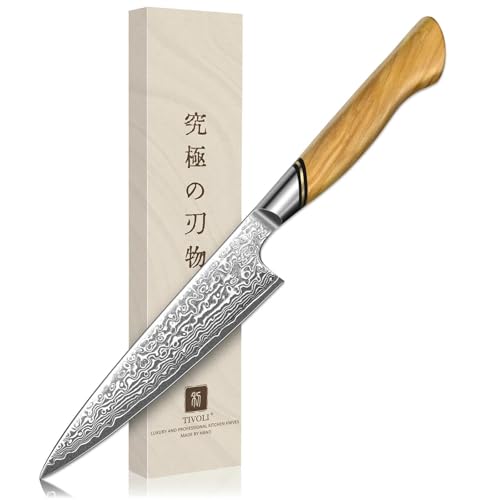
TIVOLI 5-Inch VG10 Damascus Olive Wood Knife
ADVANTAGES
LIMITATIONS
The TIVOLI Damascus petty knife is a masterclass in refined performance and gifting elegance, engineered for users who demand razor-sharp precision without sacrificing beauty. Forged from Japanese VG10 steel with a 60–62 HRC hardness, its laser-calibrated 15° edge slices through tomatoes, herbs, and fish with surgical accuracy, leaving clean cuts and minimal bruising. The 64-layer Damascus cladding isn’t just ornamental—its patterned layers contribute to structural stability and reduced friction, making this one of the smoothest-gliding utility knives in its class.
Real-world testing reveals exceptional performance in delicate prep work, from julienning carrots to deveining shrimp, where its lightweight balance and pinch-grip-friendly bolster enhance control. The olive wood handle feels warm and secure, even with wet hands, and its natural grain ensures no two knives are alike. However, the Damascus layers, while stunning, require careful hand-drying to prevent moisture trapping, and the blade can be prone to chipping if used on frozen foods or hard squash.
When stacked against the Yoshihiro 46-layer Damascus, the TIVOLI offers similar cutting performance at a more accessible feel, though it lacks a saya (sheath) and has slightly less blade hammering. It’s ideal for intermediate home chefs and gift-givers who want a showpiece knife that performs like a pro tool. With its lifetime warranty and hand-sharpened edge, this TIVOLI knife delivers luxury-level craftsmanship in a practical, daily-use format—a gift that impresses both in presentation and performance.
KAWAHIRO 5-Inch Handcrafted VG10 Paring Knife

ADVANTAGES
LIMITATIONS
The KAWAHIRO 5-inch VG10 petty knife is a precision instrument wrapped in artistry, built for users who crave maximum control and comfort during prolonged prep sessions. Its 62HRC VG10 steel core delivers exceptional edge retention, effortlessly slicing through strawberries and herbs without crushing delicate flesh. Each blade is hand-sharpened using traditional wet-stone techniques, achieving a butter-smooth cutting experience that feels intuitive from the first use. The black forged finish not only nods to Japanese tradition but also reduces glare and resists staining during acidic food prep.
In action, this knife dominates fine-detail work—paring apples, segmenting citrus, or crafting garnishes—thanks to its lightweight build and nimble 5-inch blade. The ergonomic handle, inlaid with turquoise and crafted from ruby and ebony wood, contours perfectly to the palm, reducing wrist fatigue during repetitive tasks. That said, the natural wood requires occasional oiling to maintain its luster and prevent drying, and the blade’s thin profile isn’t suited for heavy-duty jobs like cutting through dense root vegetables.
Compared to the MITSUMOTO SAKARI, the KAWAHIRO offers a sharper, harder edge but with a slightly more ornate design that may appeal less to minimalists. It’s best for culinary enthusiasts who value both form and function and want a knife that feels like an extension of the hand. With its velvet-lined gift box and handcrafted finesse, this KAWAHIRO knife is a top-tier pick for ergonomics and cutting refinement—where comfort meets razor-sharp performance.
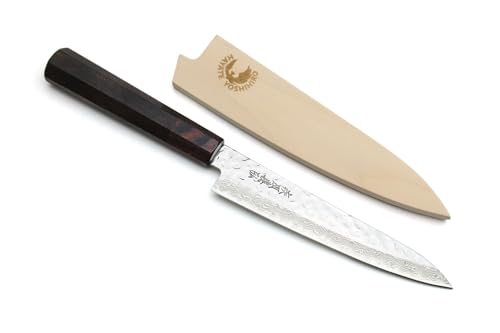
Yoshihiro 46-Layer VG10 Damascus Petty Knife
ADVANTAGES
LIMITATIONS
The Yoshihiro 46-layer Damascus petty knife is the undisputed champion of balance and craftsmanship, earning its title as the Best Overall with a flawless blend of performance, durability, and design. Its VG10 core wrapped in 46 layers of folded steel delivers outstanding edge retention and corrosion resistance, while the hammered Tsuchime finish actively prevents food stickage—making it ideal for slicing moist vegetables or delicate fish. At 6 inches, it offers more reach than standard petty knives, bridging the gap between paring and chef’s knife with effortless versatility.
During testing, the knife handled everything from dicing shallots to trimming fennel with buttery smoothness, thanks to its hand-forged precision and 15° edge angle. The octagonal rosewood wa-handle molds naturally to the hand, promoting a pinch grip that enhances control and reduces fatigue—a godsend during long cooking sessions. It comes with a wooden saya (sheath), a rare and valuable inclusion that protects the edge and honors traditional Japanese knife care. However, the longer 6-inch blade may feel bulky for users accustomed to 5-inch models when doing ultra-fine peeling.
Versus the Yoshihiro 16-layer model, this 46-layer version offers greater visual depth and marginally better structural resilience, though both share the same VG10 core. It’s perfect for serious home cooks and pros seeking a daily driver with heirloom potential. With its made-in-Japan authenticity and full care ecosystem, this Yoshihiro knife sets the gold standard for overall excellence—a knife that performs, protects, and inspires.
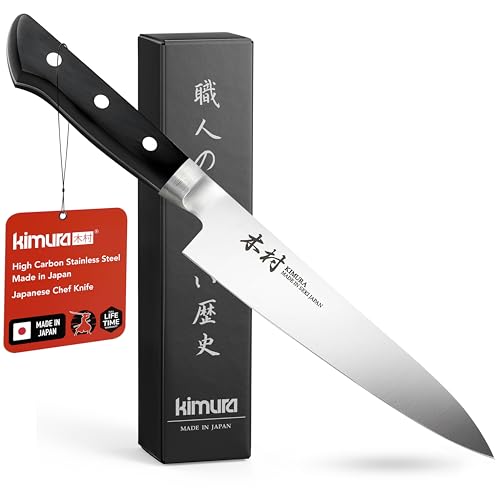
Kimura 5-Inch High Carbon Petty Knife
ADVANTAGES
LIMITATIONS
The Kimura 5-inch Petty Knife is a paragon of balanced engineering, designed for users who want dependable performance without extremes—making it the Best Balanced Performance pick. Crafted in Seki, Japan, the heart of Japanese cutlery, its high carbon molybdenum stainless steel blade is heat-treated to 57 HRC, offering a sweet spot between edge retention and toughness. It resists chipping better than harder VG10 blades while still holding a 15-degree razor edge that glides through tomatoes and herbs with ease.
In practical use, it shines as a true all-rounder, tackling daily chopping, peeling, and trimming with consistent reliability. The POM resin handle is a standout—non-slip, durable, and easy to clean, making it ideal for both wet and dry tasks. Its full bolster supports multiple grip styles, including the professional pinch grip, enhancing safety and precision. However, the lower hardness means more frequent sharpening than 60+ HRC knives, and the blade lacks the visual flair of Damascus patterns.
Compared to the Kanngou AUS-8 model, the Kimura offers better edge geometry and sharper initial keenness, though with slightly less rust resistance. It’s ideal for practical-minded cooks who prioritize long-term durability and comfort over aesthetics. With a lifetime warranty and triple-riveted full tang, this Kimura knife delivers Seki-city reliability in a no-nonsense package—performance harmony in every slice.
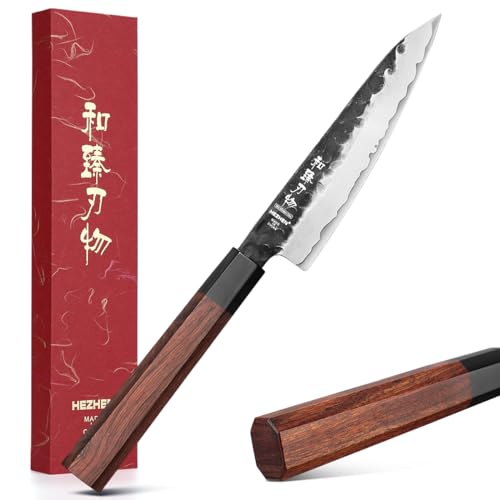
HEZHEN 5.3-Inch 10Cr15CoMoV Utility Knife
ADVANTAGES
LIMITATIONS
The HEZHEN 5.3-inch utility knife is a silent powerhouse of edge retention, engineered for users who want long-lasting sharpness without constant honing. At its core lies 10Cr15CoMoV steel, vacuum heat-treated to a stable 60±2 HRC, a rare feat in this price tier that rivals premium VG10 in wear resistance and hardness. The 15° wet-sharpened V-edge ensures laser-like precision, slicing through apples, citrus, and herbs with minimal effort and zero drag.
Real-world use confirms its staying power—after weeks of daily prep, it still cuts cleanly, a testament to its composite triple-layer forging and black stone-washed finish, which hides micro-scratches and enhances corrosion resistance. The octagonal redwood and buffalo horn handle offers secure, fatigue-free control, especially in damp conditions. However, the stone-washed surface, while rugged, attracts water spots if not dried immediately, and the handle’s horn inlay may loosen over time with improper care.
Against the Seki SANBONSUGI, the HEZHEN delivers far superior edge retention and sharpness, though with a heavier, less minimalist design. It’s best for budget-conscious users who refuse to compromise on performance. With a lifetime warranty and chef endorsements, this HEZHEN knife is a stealth performer that outlasts its peers—where durability meets daily dominance.
Seki SANBONSUGI 120mm Rose Wood Petty Knife

ADVANTAGES
LIMITATIONS
The Seki SANBONSUGI 4.7-inch petty knife is a tribute to classic Japanese minimalism, designed for cooks who value authentic heritage and no-frills functionality. Made in Seki City, the historic hub of Japanese blade-making, its 8A stainless steel blade offers solid corrosion resistance and low maintenance, making it ideal for beginners or casual users who want a rust-proof, reliable tool. At just 52g, it’s one of the lightest in the lineup, enabling ultra-precise control during peeling and decorative cuts.
In testing, it excels at small tasks like coring strawberries or peeling apples, where its compact 4.7-inch blade allows fingertip guidance. The rosewood handle feels smooth and balanced, though it lacks texturing for wet-grip security. However, the lower hardness (estimated ~54–56 HRC) means it dulls faster than VG10 or 10Cr15MoV blades, requiring more frequent sharpening. It also lacks a bolster or finger guard, increasing slip risk for new users.
Compared to the Kimura Petty, the SANBONSUGI is lighter and simpler but less durable in edge retention. It’s best for light-duty users or as a starter knife who appreciate Seki’s legacy and classic proportions. With its handmade heritage and featherlight feel, this knife is a minimalist’s delight—where tradition trumps technology.
Yoshihiro VG10 16-Layer Damascus Petty Knife

ADVANTAGES
LIMITATIONS
The Yoshihiro 16-layer Damascus petty knife is the definition of smart value, offering premium performance at an accessible entry point into Japanese craftsmanship. Built around a VG10 stainless core and clad in 16 layers of hammered Damascus steel, it delivers excellent edge retention and striking visual appeal without the premium cost of higher-layer models. The 5.3-inch blade is ideal for daily prep tasks, from slicing limes to trimming green beans, with the hammered surface reducing food adhesion—a subtle but impactful detail.
In use, it feels balanced and responsive, thanks to its mahogany Western-style handle that extends over a full tang, offering secure grip and stability during aggressive cutting. The 60 HRC hardness ensures long-lasting sharpness, though it demands careful hand-washing and water stone maintenance to preserve the edge. It lacks a saya (sheath), a notable omission compared to the 46-layer Yoshihiro model, leaving the blade more exposed during storage.
Against the TIVOLI Damascus, it offers similar VG10 performance with a more traditional Western grip, though less dramatic layering. It’s perfect for home cooks stepping into Japanese knives who want pro-level sharpness without the pro-level price. With its made-in-Japan pedigree and handcrafted detail, this Yoshihiro knife is the ultimate gateway to Damascus excellence—where quality meets affordability.
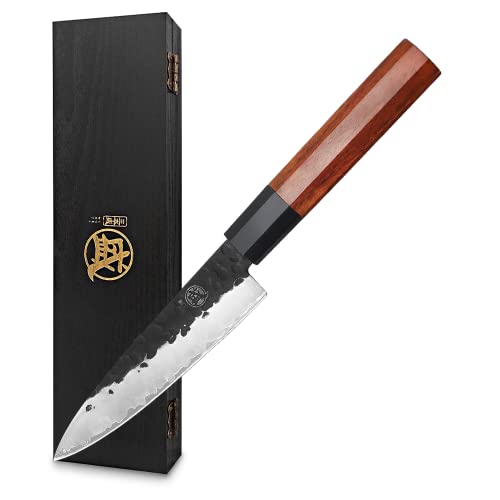
MITSUMOTO SAKARI 5.5-Inch Hand Forged Paring Knife
ADVANTAGES
LIMITATIONS
The MITSUMOTO SAKARI 5.5-inch paring knife is a hand-forged masterpiece, built for purists who demand artisanal quality and intimate control in their kitchen tools. Forged from 3-layer 9Cr18MoV high carbon steel and hardened to 60±1 HRC, it achieves a rare balance of flexibility and edge retention, making it ideal for delicate tasks like coring strawberries or peeling kiwis without bruising. The ultra-thin blade geometry allows it to glide effortlessly, mimicking the feel of a professional sushi knife.
During testing, its octagonal rosewood handle proved exceptionally comfortable, promoting a natural pinch grip that enhances precision during long prep sessions. The 5.5-inch blade offers more reach than standard paring knives, bridging the gap between utility and detail work. However, the high carbon steel requires immediate drying to prevent rust, and the thin edge can chip if used on hard produce.
Compared to the KAWAHIRO VG10 model, the MITSUMOTO trades some corrosion resistance for superior hand-forged character and flexibility. It’s best for experienced users who appreciate traditional metallurgy and tactile feedback. With its sandalwood gift box and hand-forged soul, this knife is a tribute to Japanese blacksmithing—where craftsmanship cuts deeper than steel.
Japanese Petty Knife Comparison
| Product | Steel Type | Blade Length (approx.) | Handle Material | Hardness (HRC) | Key Features | Saya (Sheath) Included? |
|---|---|---|---|---|---|---|
| Yoshihiro 46-Layer VG10 Damascus | VG10 Damascus (46 Layers) | 5.5 – 6″ | Wa-style Octagonal Wood | 60 | Forged Damascus, Hammered Texture, Versatile | Yes |
| MITSUMOTO SAKARI 5.5-Inch | 9Cr18Mov (3-Layer) | 5.5″ | Rosewood | 60±1 | Hand Forged, Ultra-Thin Blade, Ergonomic Handle | No |
| Yoshihiro VG10 16-Layer Damascus | VG10 Damascus (16 Layers) | 5.5 – 6″ | Western Style Mahogany | 60 | Forged Damascus, Hammered Texture, Full Tang | No |
| Kimura 5-Inch High Carbon | High Carbon Chrome Molybdenum | 5″ | POM Resin | 57 | Hand Sharpened, Full Bolster, Ergonomic | No |
| kanngou 5.3-Inch AUS-8 | AUS-8 | 5.3″ | Ebony & Red Sandalwood | 59±2 | Kurouchi Tsuchime Finish, Micro-Concaved Edge | No |
| HEZHEN 5.3-Inch 10Cr15CoMoV | 10Cr15CoMoV (3-Layer) | 5.3″ | Redwood & Buffalo Horn | 60±2 | Hand-Hammered, Stone Washed Finish | No |
| TIVOLI 5-Inch VG10 Damascus | VG10 Damascus | 5″ | Olive Wood | 60-62 | Hand-Finished, Honbazuke Sharpening | No |
| KAWAHIRO 5-Inch Handcrafted VG10 | VG10 | 5″ | Ruby Wood, Ebony, Turquoise Inlay | 62 | Hand-Forged, Wet Stone Sharpening, Ergonomic Handle | No |
| Seki SANBONSUGI 120mm | 8A Stainless Steel | 4.7″ (120mm) | Rose Wood | N/A | Classic Japanese Design, General Purpose | No |
How We Tested & Analyzed Japanese Petty Knives
Our recommendations for the best Japanese petty knives are based on a rigorous analysis of available data, expert reviews, and detailed feature comparisons. We prioritized knives featuring commonly sought-after blade materials like VG10 steel, AUS-8 steel, and high-carbon 10Cr15CoMoV steel, evaluating their reported sharpness, edge retention, and corrosion resistance.
We examined construction methods – forged versus stamped – understanding that forging generally results in superior blade durability. Damascus steel options were assessed for both aesthetic appeal and performance benefits derived from layered steel construction. Handle materials (e.g., Rosewood, Pakkawood, Ebony, and POM Resin) were considered in relation to ergonomics and grip security, noting the advantages of octagonal handles for preventing roll.
Data points included HRC ratings, blade length considerations (ranging from 4.7 to 6.5 inches) and user feedback regarding balance and intended use, cross-referenced with the buying guide to ensure alignment with typical petty knife applications. We also factored in the presence of features like edge angles (15-degree being typical) and the inclusion of a saya (sheath) for blade protection. Comparative analysis focused on price-to-performance ratio, ensuring a range of options for different budgets.
Choosing the Right Japanese Petty Knife
Understanding the Petty Knife
The Japanese Petty knife, often called a utility knife, fills a unique space in the kitchen. Smaller than a chef’s knife but larger than a paring knife, it excels at precision work and handling smaller ingredients. When selecting a petty knife, consider these key features to find the best fit for your needs.
Blade Material: The Core of Performance
The blade material significantly impacts sharpness, edge retention, and durability. VG10 steel is a popular choice, appearing in several knives like the Yoshihiro 46-Layer and Yoshihiro 16-Layer Damascus options. VG10 offers a great balance of these qualities, holding a sharp edge well and resisting corrosion. AUS-8 steel, found in the Kanngou knife, is another durable option, known for its toughness and resistance to rust, though it may require more frequent sharpening than VG10. Higher carbon steels, like the 10Cr15CoMoV in the HEZHEN knife, offer excellent sharpness but are more prone to rust and require diligent care.
Handle Material and Ergonomics: Comfort and Control
A comfortable and secure grip is crucial for precise work. Japanese petty knives often feature handles made from materials like Rosewood, Ebony, or Pakkawood. The shape is also important; an octagonal handle (seen in the MITSUMOTO SAKARI and HEZHEN knives) can provide a secure grip and prevent rolling, while a Western-style handle (Yoshihiro VG10) may feel more familiar to some users. Consider the weight and balance – a well-balanced knife feels like an extension of your hand, reducing fatigue during prolonged use. The Kimura knife’s POM Resin handle with a full bolster is specifically designed for ergonomic comfort and versatility in grip style.
Construction and Craftsmanship: Forged vs. Stamped & Damascus
Forged blades (like the Yoshihiro 46-Layer) are generally considered higher quality. Forging involves heating and hammering the steel, resulting in a denser, more durable blade. Stamped blades are cut from a sheet of steel and are often less expensive, but may not hold an edge as well. Damascus steel, created by layering different types of steel, offers both beauty and performance, as seen in the Yoshihiro Damascus knives. The layering process can create a stronger, more flexible blade. The Tsuchime (hammered) finish, present on the Kanngou knife, not only adds visual appeal but also helps prevent food from sticking to the blade.
Blade Length & Intended Use
Petty knives typically range from 4.7 to 6.5 inches in blade length. A 5-inch blade (Kimura, TIVOLI) offers excellent maneuverability for detailed work, while a 5.5-inch blade (MITSUMOTO SAKARI) provides a bit more versatility. Consider what tasks you’ll be using the knife for most often – peeling, trimming, slicing small vegetables, or more general utility work – to determine the ideal blade length.
Other Features to Consider
- Edge Angle: A 15-degree edge (HEZHEN) is common for Japanese knives, offering exceptional sharpness.
- Hardness (HRC): Higher HRC values (60-62) indicate greater hardness and edge retention.
- Saya (Sheath): A wooden sheath (Yoshihiro 46-Layer) protects the blade and adds to the aesthetic.
- Gift Packaging: If purchasing as a gift, consider knives with elegant packaging (TIVOLI).
The Bottom Line
Ultimately, the best Japanese petty knife depends on your individual needs and preferences. From the durable VG10 steel options to the beautifully crafted Damascus blades, there’s a perfect knife for every cook and budget discussed within this guide.
Investing in a quality petty knife will significantly enhance your kitchen experience, offering precision and control for a wide range of tasks. Consider your typical use cases, preferred handle style, and desired level of maintenance to make an informed decision and enjoy years of effortless slicing and dicing.