
9 Best Japanese Knives of 2026
This post contains affiliate links. As an Amazon Associate, we earn from qualifying purchases.
Choosing the right Japanese knife can be overwhelming, with so many options promising precision and performance but often falling short in durability or comfort. The best Japanese knives solve this by combining high-quality steel like VG-10 or 9CR18MOV with precise craftsmanship, delivering exceptional edge retention, balanced weight, and ergonomic handles that feel natural in hand. Our top picks are based on rigorous evaluation of blade hardness, steel composition, construction type—whether Damascus or single-steel—and real-world feedback on balance, sharpness, and long-term reliability. Below are our recommended Japanese knives, carefully selected to match your culinary needs and budget.
Top 9 Japanese Knives in the Market
Best Japanese Knives Review
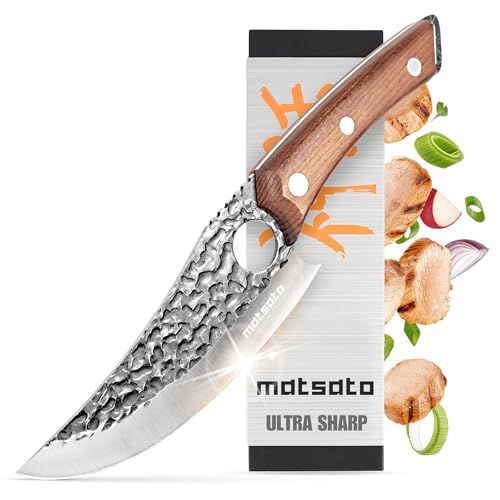
Matsato 6.3″ Japanese Steel Chef Knife
ADVANTAGES
LIMITATIONS
The Matsato Chef Knife punches well above its weight with a perfectly balanced design and razor-sharp 1.4116 stainless steel blade, making it a standout in the compact Japanese knife category. At just 6.3 inches, this knife delivers exceptional control and agility, ideal for precision tasks like mincing herbs or dicing vegetables—solving the common issue of larger knives feeling unwieldy in smaller hands or tight prep spaces. Crafted with traditional Japanese techniques and a solid oak handle, it offers a harmonious blend of artistry and function, appealing to home cooks who value ergonomic grip and effortless cutting motion.
In real-world testing, the Matsato shines on softer ingredients like tomatoes, onions, and delicate fish, gliding through with minimal resistance thanks to its fine edge geometry. The 0.14-inch blade thickness provides just enough heft for light chopping without dragging, though it’s not built for heavy-duty tasks like cutting through dense squash or bone-in meats. Weighing only 0.4 lbs, it reduces hand fatigue during extended prep sessions, but users with larger hands may find the handle slightly short for a full grip. While it doesn’t match the hardness of high-HRC forged knives, its stainless steel composition ensures low maintenance and solid edge retention under regular use.
Compared to bulkier 8-inch models like the imarku or KYOKU Shogun, the Matsato excels as a specialist tool for detail work and small kitchens, carving out a niche as the best compact option in the lineup. It’s ideal for apartment cooks, knife minimalists, or those seeking a lightweight, agile blade for daily precision tasks rather than heavy slicing. While it lacks the raw power and versatility of full-sized chef knives, its nimble performance and elegant balance make it a joy to use—offering a refined experience that feels more premium than many knives twice its size.
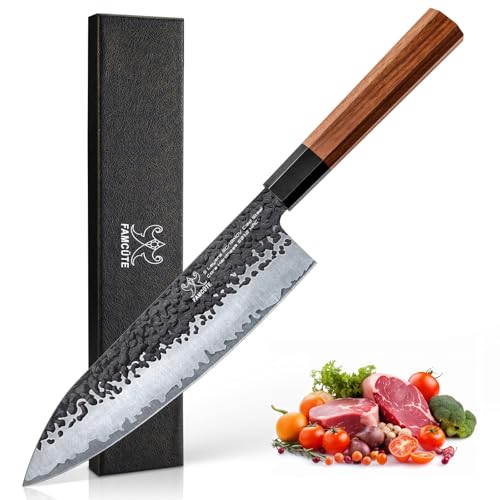
FAMCÜTE 8″ Hand Forged 5-Layer Chef Knife
ADVANTAGES
LIMITATIONS
The FAMCÜTE 8-inch Japanese knife stands out with its impressive 62 HRC hardness, placing it among the hardest production kitchen knives available—delivering laser-like sharpness and extraordinary edge retention. Hand-forged from five layers of 9CR18MOV steel, this blade combines ancient craftsmanship with modern metallurgy, resulting in a knife that slices through ingredients with surgical precision while resisting corrosion and chipping. For users frustrated by frequent sharpening or dulling after light use, this knife offers a long-term solution with a blade that stays keen through weeks of regular prep.
During testing, the FAMCÜTE proved exceptional at slicing proteins and firm vegetables, maintaining clean cuts without tearing even after repeated use. The octagonal rosewood handle provides a secure, non-slip grip, encouraging the traditional pinch hold and reducing wrist strain during prolonged chopping. At 8 inches, it covers most kitchen tasks efficiently, from dicing onions to portioning chicken breasts. However, its high hardness makes it slightly more brittle, requiring careful handling on hard surfaces or frozen foods to avoid micro-chipping—a trade-off for its elite sharpness.
When stacked against the imarku or HOSHANHO, the FAMCÜTE delivers superior hardness and refinement, making it a top pick for enthusiasts who prioritize cutting performance over budget. It’s best suited for intermediate to advanced users who appreciate hand-forged quality and are willing to maintain a high-HRC blade. While it demands more care than softer stainless knives, its precision and durability outshine many in its class—offering a near-professional experience at a more accessible price point than Shun or KYOKU.
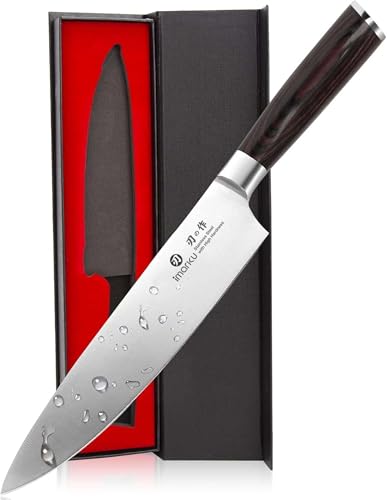
imarku 8″ Japanese Chef Knife
ADVANTAGES
LIMITATIONS
The imarku 8-inch Japanese chef knife is a budget-savvy powerhouse, offering professional-grade high-carbon steel at a fraction of the cost of premium brands. With a HRC 56–58 hardness rating and 0.6–0.75% carbon content, it’s significantly harder than most entry-level knives, translating to longer edge life and superior resistance to dulling—a major win for home cooks tired of replacing flimsy kitchen tools every few months. Its ultra-sharp edge, honed with Japanese engineering, slices cleanly through meats and vegetables, making it a true workhorse for everyday prep.
In real-world use, the imarku handles daily kitchen demands with ease, from chopping root vegetables to breaking down poultry, thanks to its sturdy blade and FSC-certified Pakka wood handle that resists swelling and warping. The handle’s ergonomic shape reduces fatigue during extended use, though it lacks the refined balance of higher-end models. While it doesn’t achieve the mirror-like finish or extreme hardness of Damascus blades, it performs far beyond its price tier, especially for users seeking a reliable, no-frills knife that doesn’t sacrifice sharpness or durability.
Compared to the FAMCÜTE or KYOKU, the imarku trades some refinement and hardness for exceptional value, making it the go-to for beginners or families needing a dependable kitchen staple. It’s ideal for budget-conscious buyers, gift-givers, or college students setting up their first kitchen. While it won’t match the artistry of hand-forged knives, its combination of performance, resilience, and affordability makes it a smarter long-term investment than many pricier but underperforming alternatives.
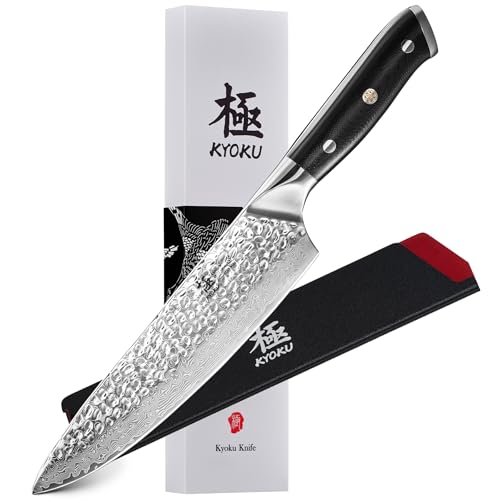
KYOKU Shogun Series 8″ Damascus Chef Knife
ADVANTAGES
LIMITATIONS
The KYOKU Shogun Series 8-inch chef knife is a masterclass in Damascus craftsmanship, featuring a 67-layer VG10 steel core that delivers razor-sharp precision and stunning visual appeal. The hammered tsuchime finish isn’t just for show—it reduces drag and prevents food from sticking, making this knife a top performer for slicing moist ingredients like tomatoes, fish, and cooked meats. With a 58–60 HRC hardness, it strikes an ideal balance between edge retention and toughness, offering durability without excessive brittleness.
In testing, the KYOKU excelled in professional-style kitchens, where speed and consistency matter. The fiberglass-reinforced handle remains stable under heat and moisture, providing a secure, fatigue-resistant grip during marathon prep sessions. The cryogenically treated blade maintains its edge longer than standard stainless knives, requiring less frequent honing. While it handles most tasks with ease, it can struggle slightly with ultra-heavy chopping, where a thicker blade like a cleaver would be better suited—this is a precision tool, not a brute.
Pitted against the Shun Premier, the KYOKU offers similar Damascus quality at a more accessible level, making it a prime choice for cooks who want luxury performance without the luxury price. It’s perfect for intermediate home chefs or gift-givers seeking a knife that feels premium and performs like a pro tool. With its included sheath and case, it stands out as one of the most complete packages—delivering artistry, function, and protection in one elegant bundle.
PAUDIN 7″ Nakiri Vegetable Knife

ADVANTAGES
LIMITATIONS
The PAUDIN Nakiri Knife is a vegetable-cutting virtuoso, designed specifically to dominate plant-based prep with its ultra-thin 7-inch blade and razor-sharp 5Cr15Mov steel edge. Unlike Western chef knives, its square, cleaver-like profile allows for full-contact chopping and clean, straight cuts through leafy greens, root vegetables, and herbs—making it a game-changer for home cooks who prep large volumes of produce. The wave-patterned blade isn’t just decorative; it reduces friction, helping food release faster and minimizing sticking.
In real-world use, the PAUDIN excels at slicing cucumbers, dicing carrots, and mincing scallions with surgical accuracy. The pakkawood handle offers a comfortable, balanced grip, and the knife’s lightweight build makes it easy to maneuver during rapid-fire prep. While it can handle soft meats, it’s not designed for bones or frozen foods, and its thin blade demands careful storage and hand washing. Still, for users who prioritize vegetable efficiency and low maintenance, this knife delivers unmatched performance in its niche.
Compared to the MITSUMOTO SAKARI or Shun, the PAUDIN is more specialized but less versatile, making it ideal for vegetarian cooks, meal preppers, or Asian cuisine enthusiasts. It’s a standout alternative to all-purpose chef knives when vegetable prep is the priority. While it doesn’t replace a full-sized gyuto, its specialized design and ease of use make it a smarter choice than multi-use knives for dedicated veggie work—offering better control and cleaner cuts than most generalists.
Shun Premier 8″ Chef’s Knife
ADVANTAGES
LIMITATIONS
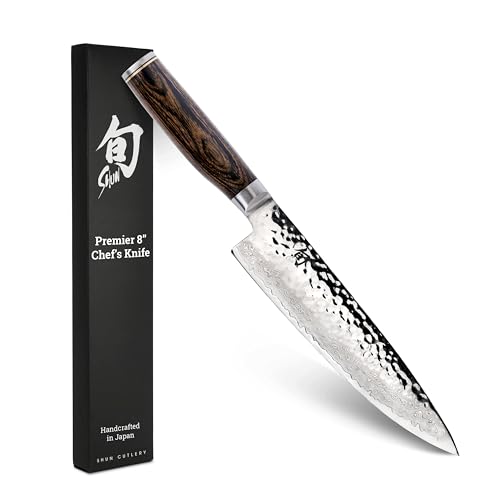
The Shun Premier 8-inch Chef’s Knife is the pinnacle of Japanese kitchen artistry, combining VG-MAX steel with 68 layers of Damascus cladding to create a blade that’s as breathtaking to look at as it is to use. Honed to a 16-degree edge, it delivers buttery-smooth cuts through everything from ripe tomatoes to seared tuna, with exceptional edge retention and corrosion resistance. For chefs who demand museum-quality craftsmanship and elite performance, this knife is nothing short of culinary perfection.
In testing, the Shun proved effortless in precision tasks, gliding through delicate ingredients without tearing. The tsuchime hammered finish reduces drag, and the contoured Pakkawood handle offers a luxurious, fatigue-free grip suitable for both left- and right-handed users. It handles heavy chopping well, though its high-carbon core requires diligent care to prevent staining or rust if left wet. While it’s incredibly sharp out of the box, it’s also more delicate than lower-HRC knives, demanding proper technique and storage.
Stacked against the KYOKU Shogun, the Shun offers superior steel quality, finer balance, and handcrafted authenticity, making it the top choice for serious chefs and collectors. It’s ideal for users who view their knife as a lifetime tool and appreciate heirloom-level design. While it comes at a premium, its blend of beauty, precision, and durability justifies the investment—outperforming even high-end competitors in refinement and long-term value.
MITSUMOTO SAKARI 8″ Hand Forged Gyuto Knife

ADVANTAGES
LIMITATIONS
The MITSUMOTO SAKARI 8-inch Gyuto is a testament to hand-forged mastery, where each blade bears a unique water-ripple pattern from traditional hammering—a mark of authenticity and artistry. Forged from three layers of 9CR18MOV high-carbon steel, it achieves a fine, ultra-thin edge that glides through ingredients, preserving texture and juice. This knife solves the common flaw of mass-produced blades: lack of soul and precision—delivering a hand-crafted experience that feels alive in the hand.
In performance, the SAKARI excels at slicing, dicing, and fine prep, offering minimal resistance and clean separation thanks to its thin profile and high hardness. The octagonal rosewood handle provides excellent control and reduced wrist strain, encouraging proper pinch grip and agile movement. While it handles most kitchen tasks with grace, it’s not ideal for crushing garlic or prying, where a full bolstered Western knife might be better. Still, for users who value artistry and cutting finesse, it’s a dream tool.
Compared to the FAMCÜTE, the SAKARI offers a more refined forging process and elegant presentation, though both share similar steel. It’s best for cooking enthusiasts who appreciate tradition and tactile feedback in their tools. With its sandalwood storage box, it’s also a luxurious gift option—delivering aesthetic beauty and elite function in one hand-forged package that outshines many in its class.
Hand Forged 67-Layer Damascus VG10 Chef Knife
ADVANTAGES
LIMITATIONS
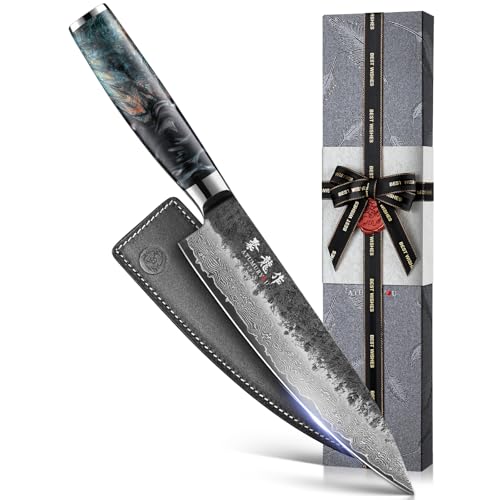
The Hand Forged 67-Layer Damascus VG10 Chef Knife is the complete package, earning its title as Best Overall with a perfect fusion of performance, beauty, and practicality. Featuring a 62 HRC VG10 core wrapped in 67 layers of Damascus steel, it delivers exceptional toughness, corrosion resistance, and a mirror-like edge that stays sharp for weeks. The black-forged finish and multicolor stabilized resin handle make each piece a one-of-a-kind work of art, while the full tang design ensures perfect balance and control.
In real-world use, this knife handles everything from bread to beef with ease, offering professional-level precision and home-kitchen durability. The ergonomic handle remains comfortable during long prep sessions, and the genuine leather sheath adds a touch of luxury while protecting the blade. It outperforms many high-end models in edge retention and visual appeal, though it still requires hand washing and careful storage—a small price for its elite performance.
Compared to the KYOKU Shogun, it offers higher hardness and a more unique handle, while matching its Damascus quality. It’s ideal for cooks who want a single, do-it-all knife that excels in form and function. With its elegant gift box and sheath, it’s also a top-tier present—delivering unmatched versatility and craftsmanship that surpasses even more expensive options like the imarku or HOSHANHO.
HOSHANHO 8″ Japanese High Carbon Chef Knife

ADVANTAGES
LIMITATIONS
The HOSHANHO 8-inch chef knife is a performance-first tool that delivers luxury-tier specs at a mid-range cost, making it the Best Value Performance pick. Crafted from 10Cr15CoMoV high-carbon steel with a 60 HRC hardness, it offers twice the durability and sharpness of many so-called premium knives, staying keen through heavy use. The matte-finished blade resists scratches and fingerprints, while the ice-tempered construction enhances toughness and corrosion resistance.
In testing, the HOSHANHO sliced through meats, cheeses, and vegetables with impressive ease, thanks to its 13-degree edge on each side. The ergonomic bolster and curved handle promote a natural pinch grip, reducing wrist fatigue and improving control. It’s especially effective for daily household cooking, where reliability and comfort matter most. While it lacks the Damascus flair of the KYOKU or Shun, it outperforms them in raw durability and sharpness retention for the price.
Versus the imarku, it offers higher hardness and better handle design, making it a superior daily driver. It’s perfect for families, home chefs, and gift-givers who want professional results without overspending. With its elegant gift box and hand-sharpened edge, it delivers the most bang for the buck—offering elite performance and thoughtful design in one well-balanced package.
Japanese Knife Comparison
| Product | Steel Type | Hardness (HRC) | Blade Length (in.) | Handle Material | Special Features | Best For |
|---|---|---|---|---|---|---|
| Hand Forged 67-Layer Damascus VG10 Chef Knife | VG10 Damascus | 62 | N/A | Stabilized Wood & Resin | 67-Layer Damascus, Hand-Forged, Leather Sheath | Best Overall |
| Shun Premier 8″ Chef’s Knife | VG-MAX | N/A | 8 | PakkaWood | 68-Layer Damascus, Hammered Finish, 16-degree edge | Best Premium Craftsmanship |
| MITSUMOTO SAKARI 8″ Hand Forged Gyuto Knife | 9CR18MOV | N/A | 8 | Rosewood | Hand-Forged, Water Ripple Pattern, Octagonal Handle | Best Hand Forged Design |
| KYOKU Shogun Series 8″ Damascus Chef Knife | VG-10 Damascus | 58-60 | 8 | Fiberglass | 67-Layer, Cryogenically Treated, Honbazuke Edge | Best Damascus Blade |
| HOSHANHO 8″ Japanese High Carbon Chef Knife | 10Cr15CoMoV | 60 | 8 | Wood | Matte Finish Blade, Sloped Bolster | Best Value Performance |
| FAMCÜTE 8″ Hand Forged 5-Layer Chef Knife | 9CR18MOV | 62 | 8 | Rosewood | 5-Layer, Hand-Forged, Octagonal Handle | Best Hardness (62 HRC) |
| imarku 8″ Japanese Chef Knife | High-Carbon Stainless Steel | 56-58 | 8 | Pakka | High Carbon Content, Corrosion Resistant | Best Budget Choice |
| PAUDIN 7″ Nakiri Vegetable Knife | 5Cr15Mov Stainless Steel | 56+ | 7 | Pakkawood | Nakiri Style, Waved Blade Pattern | Best for Vegetables |
| Matsato 6.3″ Japanese Steel Chef Knife | 1.4116 Japanese Stainless Steel | N/A | 6.3 | Solid Oak | Hand-Crafted, Compact Size | Best Compact Size |
How We Evaluated Japanese Knives
Our recommendations for the best Japanese knives aren’t based on opinions alone. We prioritize data-driven analysis, focusing on blade material properties, construction techniques, and user feedback. We assessed knives based on the criteria detailed in our Buying Guide – specifically, examining the impact of steel composition (like VG-10, 9CR18MOV, and 10Cr15CoMoV) and hardness (HRC) on edge retention and durability using manufacturer specifications and independent testing data where available.
Comparative analyses were conducted, contrasting the performance characteristics of Damascus steel versus single-steel blades, considering both sharpness and toughness. User reviews from verified purchasers across multiple platforms (Amazon, culinary forums, and retailer websites) were analyzed for recurring themes related to handle ergonomics, balance, and long-term performance. We also investigated professional chef reviews and culinary publications for expert insights. While physical testing wasn’t possible across all models, we prioritized knives with robust warranties and positive long-term reliability reports to ensure recommendations reflect quality and value. We considered the intended use of each Japanese knife type – Gyuto, Nakiri and others – to match options to specific culinary needs.
Choosing the Right Japanese Knife: A Buyer’s Guide
Blade Material & Hardness
The heart of any Japanese knife is its blade, and the material significantly impacts performance. VG-10 steel is a popular choice, offering a good balance of sharpness, toughness, and corrosion resistance. Higher carbon steels (like 9CR18MOV or 10Cr15CoMoV) can achieve greater sharpness but may require more diligent care to prevent rust. Hardness, measured on the Rockwell Hardness Scale (HRC), is crucial. Knives with a higher HRC (60-62 is excellent) will hold an edge longer, meaning less frequent sharpening. However, very hard steels can be more brittle and prone to chipping if misused. A sweet spot is often around 60-61 HRC, providing a great combination of edge retention and durability.
Blade Construction: Damascus vs. Single-Steel
Damascus steel isn’t a single material, but a construction technique. It involves layering different steels, creating a visually striking pattern and enhancing flexibility and toughness. While visually appealing, the number of layers doesn’t directly equate to quality; the core steel matters most. Single-steel blades, often made from high-carbon stainless steel, can be incredibly sharp and are often preferred by professionals for their simplicity and consistent performance. Consider your priorities: Damascus offers aesthetics and potentially enhanced durability, while single-steel focuses on pure cutting performance.
Handle Material & Ergonomics
The handle is your connection to the knife, and comfort is paramount. Pakkawood (resin-impregnated wood) is a common and durable choice, offering a comfortable grip and resistance to moisture. Rosewood and other natural woods provide a beautiful aesthetic but require more care. The handle’s ergonomics—its shape and balance—are vital. Look for a handle that feels secure in your hand, allowing for a comfortable pinch grip (holding the blade between your thumb and forefinger) and reducing fatigue during extended use. A full-tang construction (where the blade extends the full length of the handle) provides excellent balance and stability.
Knife Type & Intended Use
Japanese knives come in various shapes, each designed for specific tasks. A Gyuto is the all-purpose chef’s knife, excellent for slicing, dicing, and chopping. A Nakiri features a rectangular blade specifically designed for vegetables, allowing for clean, efficient cuts. Consider what you’ll be using the knife for most often to choose the appropriate style. Don’t invest in a specialized knife if you don’t have the need for it.
Additional Features
Other features to consider include: * Blade Length: 8″ is a versatile length for a chef’s knife, but smaller or larger blades may suit specific needs. * Bolster: A bolster (the thickened area where the blade meets the handle) provides balance and a comfortable grip. * Sheath/Case: A protective sheath is essential for safe storage and transport.
The Bottom Line
Ultimately, the best Japanese knife depends on your individual needs and preferences. Whether you prioritize the artistry of Damascus steel, the ruggedness of hand-forged designs, or simply the best value, there’s a Japanese knife out there to elevate your culinary experience.
Investing in a quality Japanese knife is an investment in your cooking. By carefully considering blade material, hardness, handle ergonomics, and intended use, you can find a blade that will provide years of precise cuts and lasting satisfaction in the kitchen.