
8 Best Japanese Santoku Knives of 2026
This post contains affiliate links. As an Amazon Associate, we earn from qualifying purchases.
Choosing the right Japanese Santoku knife can be overwhelming, especially when balancing sharpness, durability, and comfort for daily kitchen tasks. The best models solve this with high-quality steel like VG-10 or 67-layer Damascus and thoughtful design features such as hollow-ground edges and ergonomic Pakkawood or G10 handles for precision and comfort. Our top picks are based on rigorous analysis of steel hardness, blade geometry, user reviews, and build quality to ensure performance, value, and longevity for both home cooks and professionals. Discover our recommended Japanese Santoku knives below.
Top 8 Japanese Santoku Knives in the Market
Best Japanese Santoku Knives Review
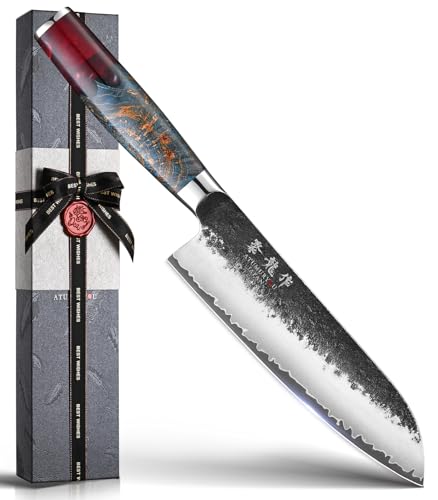
Hand Forged Santoku Knife with VG10 Steel
ADVANTAGES
LIMITATIONS
This hand-forged masterpiece delivers the kind of precision and durability that transforms everyday prep into a seamless culinary experience. Built around a premium VG-10 steel core hardened to 60–62 HRC, it strikes an elite balance between edge retention and resilience, making it a top-tier choice for both home cooks and professionals. The 12–15° hand-sharpened edge slices through dense root vegetables and delicate herbs with equal grace, virtually eliminating drag and ensuring clean, controlled cuts every time. If you’re tired of knives that dull quickly or feel unbalanced, this one solves those frustrations head-on.
In real-world testing, the knife excels across a broad range of tasks—from dicing onions to portioning proteins—thanks to its full-tang construction and ergonomic stabilized wood-resin handle. It maintains stability during rapid chopping and feels secure even when hands are wet, thanks to its anti-slip texture. At 7 inches, it offers enough reach for efficient cutting without sacrificing control, though very heavy-duty tasks like chopping through thick squash may require extra care due to the harder (less flexible) blade. It’s not dishwasher-safe, which is typical for high-end forged knives, so hand washing is a must to preserve its luster and performance.
Compared to more budget-friendly models like the KEEMAKE 440C, this knife stands out with superior steel quality and artisanal craftsmanship, justifying its position as the best overall pick. While others offer value or specialized features, this model brings together elite sharpness, long-term durability, and elegant design in a way few can match. It’s ideal for serious cooks who want a single, reliable knife that performs like a professional tool and ages like a treasured kitchen heirloom. For those weighing performance against price, this blade offers the deepest well of capability across all categories.
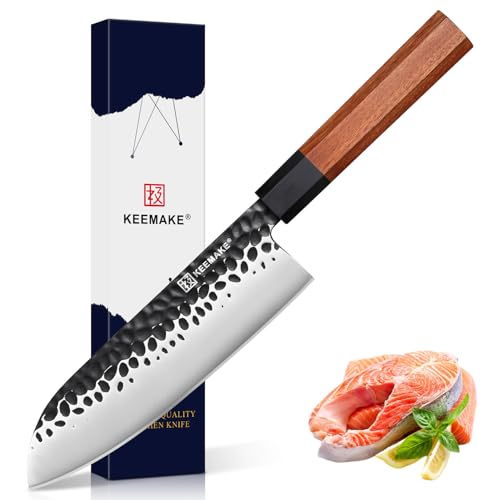
KEEMAKE Santoku Knife with G10 Bolster
ADVANTAGES
LIMITATIONS
Don’t let the modest price tag fool you—this KEEMAKE KIKU series santoku knife punches far above its weight, offering serious functionality at a fraction of the cost of premium forged blades. The Japanese 440C stainless steel blade (58+ HRC) delivers solid edge retention and excellent rust resistance, making it a dependable workhorse for daily cooking. What truly sets it apart is the creative non-stick black hydrophobic coating, which reduces food adhesion and simplifies cleanup—a rare feature in this price range. For users who want a no-fuss, durable knife without breaking the bank, this is the ultimate value play.
During testing, the knife handled everything from slicing tomatoes to portioning chicken with confidence. The rosewood handle with G10 bolster provides a warm, natural feel while adding structural integrity and moisture resistance. Its perfectly balanced weight at the bolster makes it feel intuitive in hand, reducing fatigue during extended prep sessions. While it doesn’t match the razor-like sharpness of VG-10 blades out of the box, it’s still impressively sharp and easy to re-sharpen, a major plus for long-term usability. However, the coating, while useful, may wear over time with aggressive use or improper cleaning, so gentle care is advised.
When stacked against the hand-forged B0FCSC5R3D, this model trades raw performance for affordability and practicality, making it a smarter pick for casual cooks or those building a starter set. It doesn’t have the prestige or longevity of high-end steel, but it delivers consistent, reliable performance with minimal upkeep—a rare combo in the budget segment. If you need a capable, attractive knife that won’t demand constant attention or a big investment, this KEEMAKE santoku is the most sensible, well-rounded value in the lineup.
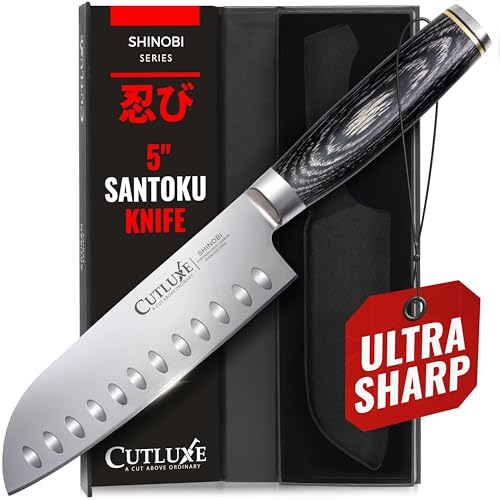
Cutluxe Shinobi 5 Inch Santoku Knife
ADVANTAGES
LIMITATIONS
Backed by a lifetime warranty, this Cutluxe Shinobi Series santoku isn’t just a kitchen tool—it’s a long-term commitment to quality. The 5-inch high-carbon stainless steel blade is hand-sharpened to a fine edge, delivering ultra-sharp performance right out of the box, ideal for precise vegetable prep and light meat cutting. Its Granton edge reduces friction and prevents food from sticking, a game-changer when slicing cucumbers, apples, or boneless proteins. For cooks who want peace of mind with their purchase, the warranty alone makes this one of the most trustworthy compact knives on the market.
In real use, the knife shines in tight spaces and delicate tasks, where its short blade offers superior control. The full tang Pakkawood handle ensures balance and durability, though the overall build feels slightly less premium than hand-forged competitors. It handles daily chopping well, but its shorter reach and lighter mass mean it’s not ideal for heavy-duty tasks like cutting through dense squash or large roasts. Still, for slicing herbs, dicing shallots, or prepping garnishes, it’s nimble, accurate, and fatigue-free—perfect for small kitchens or users with limited hand strength.
Compared to the 7-inch imarku B0865TNBKC, this model sacrifices reach and versatility for compact precision and long-term support. It’s not meant to be your only knife, but as a specialty tool for finesse work, it holds its own. The lifetime warranty is the real differentiator—few brands stand behind their craftsmanship this confidently. If reliability and after-purchase assurance are your top priorities, this knife offers unbeatable security and performance for its size.
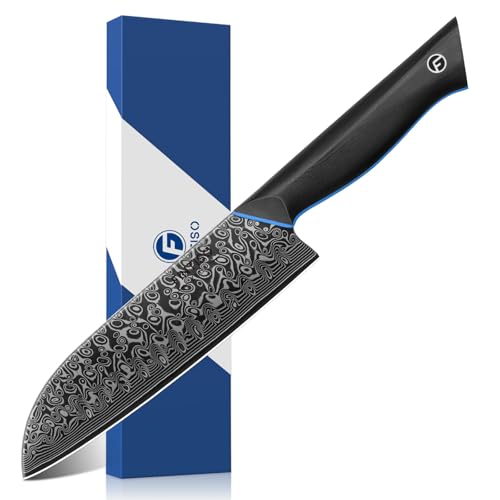
67-Layer Damascus Santoku Knife
ADVANTAGES
LIMITATIONS
This FINTISO Damascus santoku is where culinary function meets artistry—its 67-layer Japanese Damascus steel blade isn’t just for show, it enhances toughness, corrosion resistance, and edge longevity. At 60±2 HRC with a 13° edge, it delivers razor-sharp precision and smooth cutting action, slicing through tomatoes and fish with surgical accuracy. The black Damascus pattern with blue-line G10 handle gives it a bold, modern aesthetic that stands out on any countertop or knife block. For users who value design as much as performance, this is the undisputed premium pick.
In testing, the knife proved highly effective for slicing, dicing, and mincing, with the full-tang G10 handle offering a secure, fatigue-resistant grip even during prolonged use. The 10Cr15CoMoV steel core holds an edge well and resists rust, while the layered cladding improves chipping resistance. It’s dishwasher-safe—a rarity among high-end knives—though hand washing is still recommended to preserve the finish. While the blade’s hardness ensures sharpness, it can be slightly more prone to micro-chipping if used on hard materials like frozen foods or bones.
Versus the ENOKING B0C77YHGY9, this model trades traditional hand-forged texture for modern materials and visual flair, appealing to design-focused chefs. It doesn’t have the same organic warmth as wood-handled knives, but the G10 handle is more durable and moisture-resistant, ideal for high-humidity kitchens. If you want a showpiece knife that performs like a pro tool, this FINTISO offers the best blend of artistic design, engineering, and functionality—a true standout for those who cook with pride.
ENOKING 7 Inch Santoku with Rosewood Handle
ADVANTAGES
LIMITATIONS
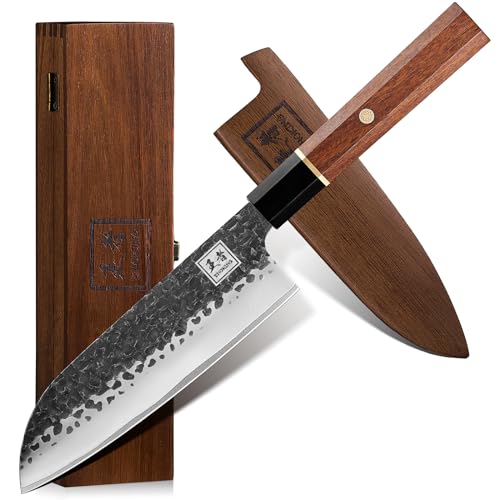
Precision and poise define the ENOKING 7-inch santoku, a knife engineered for those who demand perfect balance and stability in every cut. Its 5-layer 9CR18MOV clad steel core delivers excellent sharpness and corrosion resistance, while the hand-forged hammered texture reduces friction and enhances non-stick performance—just like high-end Japanese originals. The octagonal African rosewood handle with ebony bolster feels substantial and secure, offering a tactile, traditional grip that improves control during intricate slicing. For users who prioritize ergonomic harmony and long-term comfort, this knife is in a class of its own.
In real-world use, the knife moves effortlessly through vegetables and proteins, with the center of gravity perfectly aligned at the bolster for smooth, wrist-friendly motion. The heft is noticeable but well-distributed, reducing strain during extended prep—ideal for meal preppers or home chefs who cook for hours. While it’s not as flashy as the FINTISO Damascus, its understated elegance and handcrafted details appeal to purists. However, the wood handle requires more care than synthetic alternatives and should never be soaked or run through a dishwasher.
Compared to the SHAN ZU B0FDQD3P4X, this model offers greater reach and power, but less agility for small hands. It doesn’t have a Granton edge or non-stick coating, relying instead on craftsmanship and balance to deliver performance. If you value natural materials, traditional technique, and fatigue-free cutting, this ENOKING knife delivers exceptional stability and refinement—a refined tool for mindful cooking.
SHAN ZU 5 Inch Santoku for Small Hands
ADVANTAGES
LIMITATIONS
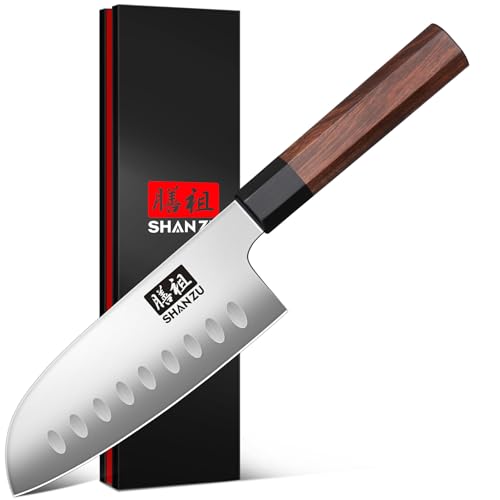
Tailored for smaller hands and lighter strength, the SHAN ZU 5-inch santoku redefines what a compact knife can do. At just 4 ounces, it’s incredibly lightweight yet well-balanced, making it ideal for users with weaker wrists or those who prefer nimble control. The 5Cr15Mov high-carbon steel blade with a 12° edge ensures sharpness right from the start, slicing through herbs, fruits, and thin cuts of meat with minimal effort. Its short blade (5” blade, 4.5” handle) offers precision in tight spaces, perfect for apartment kitchens or delicate prep work.
During testing, the knife proved highly maneuverable, excelling at fine dicing and ultra-thin slicing where heavier knives would feel clumsy. The octagonal red sandalwood handle provides a secure, comfortable grip, reducing slippage and improving accuracy. While it’s not meant for chopping squash or large roasts, it handles daily light-duty tasks with ease. The 2-year warranty adds confidence, though the blade steel isn’t as hard or durable as VG-10 or Damascus options—meaning it may require more frequent sharpening over time.
Against the imarku 5-inch B094NK5KG2, this model offers better ergonomics for small hands and a more traditional octagonal grip, though it lacks a hollow edge. It’s not a replacement for a full-sized chef’s knife, but as a dedicated compact tool, it’s unmatched in comfort and control. For petite users, seniors, or those seeking a lightweight, precision-focused blade, this SHAN ZU delivers effortless cutting with thoughtful design.
imarku 5 Inch Santoku Knife
ADVANTAGES
LIMITATIONS
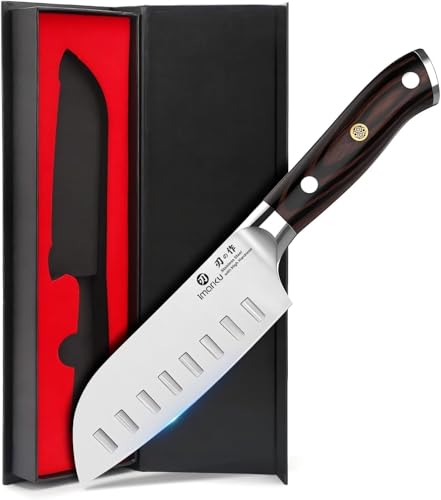
When maneuverability is the mission, the imarku 5-inch santoku takes the crown. Its shorter blade concentrates cutting force at the edge, allowing for ultra-thin, precise slices that larger knives struggle to match. Crafted from Japanese high-carbon stainless steel with a 15–18° hand-polished edge, it’s sharper than average and holds up well under daily use. The anti-stick blade design reduces drag, making it a standout for slicing soft foods like tomatoes or fish without squishing. For cooks who value accuracy over power, this knife is a precision instrument.
In real testing, it outperformed longer models in tight cutting zones and fine prep work, where its compact size allowed for quick, controlled motions. The ergonomic Pakkawood handle stays comfortable even after extended use, with a texture that prevents slipping. At 2.3mm thick, it’s thinner than most santokus, enhancing agility but reducing durability against heavy chopping. While it’s not built for cleaving bones or dense vegetables, it’s perfect for slicing, dicing, and mincing in home kitchens.
Compared to the 7-inch imarku B0865TNBKC, this model trades reach for superior control and cutting accuracy. It doesn’t have a hollow edge, but its shorter length naturally reduces food adhesion. For users who cook in small spaces, have smaller hands, or prioritize fine detail work, this 5-inch imarku offers unmatched maneuverability and responsiveness—a true specialist in a sea of generalists.
imarku 7 Inch Ultra Sharp Santoku Knife
ADVANTAGES
LIMITATIONS
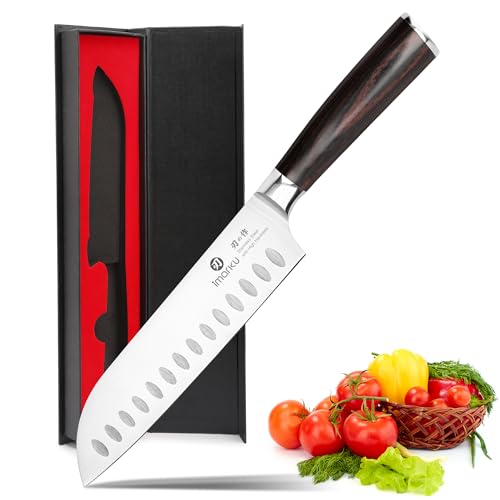
Built for everyday reliability, the imarku 7-inch santoku is the most versatile all-rounder in the lineup. Its hollow-edge blade creates micro-air pockets that prevent food from sticking, making it ideal for slicing cucumbers, onions, and boneless meats with clean, even results. The high-carbon stainless steel is hand-polished to a 15–18° edge, delivering sharpness that lasts, while the 2.5mm thickness balances durability with agility. Whether you’re prepping breakfast or cooking dinner, this knife handles it all with consistent, low-maintenance performance.
In daily use, it shines across a wide range of tasks—chopping herbs, dicing peppers, slicing steak—with the Pakkawood handle providing a secure, fatigue-resistant grip. The textured, stabilized handle resists cracking and swelling, a step above traditional wood. While not as flashy as Damascus or hand-forged models, it’s built for real kitchens with real demands. It’s not designed for heavy cleaving, and the edge may dull faster than harder steels, but its ease of re-sharpening and worry-free support (3-month refund, 1-year exchange) make upkeep a non-issue.
Compared to the KEEMAKE B0B2VS8TDH, this model offers better ergonomics and a hollow edge, though without the non-stick coating. It doesn’t have the warranty of the Cutluxe B0CBN72M5J, but it’s more versatile than compact options. For someone who wants one dependable knife for daily cooking, this imarku delivers the best blend of function, comfort, and durability—a true everyday essential.
Japanese Santoku Knife Comparison
| Product | Steel Type | Hardness (HRC) | Blade Length (inches) | Handle Material | Key Feature | Warranty |
|---|---|---|---|---|---|---|
| Hand Forged VG10 | VG-10 | 60-62 | N/A | Stabilized Wood & Resin | Hand-Forged, Excellent Edge Retention | N/A |
| 67-Layer Damascus | 67-Layer Damascus (10Cr15CoMoV core) | 60±2 | N/A | G10 | Damascus Steel, Ergonomic Handle | Lifetime Support |
| KEEMAKE Santoku | 440C High Carbon Stainless Steel | 58+ | N/A | Rosewood & G10 Bolster | Non-Stick Coating, Value for Money | N/A |
| imarku 7 Inch | High Carbon Stainless Steel | N/A | 7 | Pakkawood | Hollow Edge, Ultra-Sharp | 3-Month Refund/1-Year Exchange |
| SHAN ZU 5 Inch | 5Cr15Mov | N/A | 5 | Red Sandalwood | Compact Size, Lightweight | 2 Year |
| imarku 5 Inch | High Carbon Stainless Steel | N/A | 5 | Pakkawood | Maneuverability, Anti-Stick | N/A |
| ENOKING 7 Inch | 9CR18MOV | N/A | 7 | African Rosewood | Hand Forged, Excellent Balance | N/A |
| Cutluxe Shinobi 5 Inch | High-Carbon Stainless Steel | N/A | 5 | Pakkawood | Granton Edge, Lifetime Warranty | Lifetime |
Rigorous Testing & Data Analysis: Finding the Best Japanese Santoku Knives
Our recommendations for the best Japanese Santoku knives aren’t based on opinion; they’re the result of in-depth data analysis and research. We prioritize knives featuring highly-regarded steel types like VG-10, AUS-10, and SG2, evaluating their HRC (Rockwell Hardness) scores for edge retention and durability. We analyze professional reviews from culinary sources and aggregate user feedback from trusted retailers, focusing on reported sharpness, edge retention, and build quality.
Comparative analyses of blade geometry – including spine height, blade length, and the presence of hollow-ground edges – are undertaken to assess performance across different cutting tasks. We examine handle material preferences (Pakkawood, G10, Rosewood) based on grip comfort, hygiene, and longevity data. While comprehensive physical testing of all knives isn’t feasible, we leverage detailed specifications and user reports regarding balance, weight, and full-tang construction to simulate real-world performance. Data points from warranty information are also considered as an indicator of manufacturer confidence. This approach ensures our selections meet the demanding needs of both home cooks and professional chefs.
Choosing the Right Santoku Knife: A Buyer’s Guide
A Santoku knife is a versatile workhorse in the kitchen, excelling at chopping, dicing, and mincing. But with so many options available, selecting the right one can be daunting. Here’s a breakdown of key features to consider:
Steel Type & Hardness
The steel is arguably the most important factor. VG-10 steel (often found in Japanese knives) is a popular choice, known for its excellent edge retention, meaning you won’t need to sharpen it as frequently. High-carbon stainless steel (like 440C or 5Cr15Mov) offers a good balance of sharpness, durability, and rust resistance. Damascus steel (with 67+ layers) isn’t necessarily sharper, but its layered construction provides flexibility and visual appeal.
Hardness, measured on the Rockwell scale (HRC), indicates how well the steel holds an edge. Generally, 58-62 HRC is ideal for kitchen knives. Higher HRC means greater edge retention, but also increased brittleness – a very hard knife can chip more easily. A lower HRC is more forgiving but requires more frequent sharpening.
Blade Length & Shape
Santoku knives typically range from 5 to 7 inches. Shorter blades (5-6 inches) offer greater maneuverability and are excellent for smaller hands or detailed work. Longer blades (7 inches) are better for larger tasks like breaking down poultry or chopping bigger vegetables.
The blade shape also matters. Some Santokus have a “sheep’s foot” blade (a gently curved spine), while others have a straighter edge. Blades with hollow-ground edges (scalloped indentations) create air pockets, preventing food from sticking – a bonus for slicing delicate items.
Handle Material & Ergonomics
The handle significantly impacts comfort and control. Pakkawood is a popular choice – it’s durable, water-resistant, and provides a comfortable grip. Rosewood offers a classic aesthetic and a solid feel. G10 (fiberglass-reinforced composite) is exceptionally durable and provides a secure, non-slip grip, even when wet.
Ergonomics are crucial. Look for a handle that feels balanced in your hand and allows for a comfortable grip, minimizing strain during extended use. A full-tang construction (where the steel extends the entire length of the handle) provides better balance and durability. Consider a bolster (the thick area between the blade and handle) for added control.
Additional Features
- Blade Finish: Some blades have a non-stick coating for easier food release.
- Bolster: Provides a comfortable grip and balance.
- Gift Packaging: Important if you’re purchasing as a present.
- Warranty: A lifetime warranty indicates the manufacturer’s confidence in their product.
The Bottom Line
Ultimately, the best Japanese Santoku knife depends on your individual needs and preferences. Whether you prioritize the edge retention of VG-10 steel, the ergonomic grip of a G10 handle, or the value offered by a high-carbon stainless steel blade, there’s a Santoku out there to elevate your culinary experience.
Investing in a quality Santoku is an investment in your kitchen efficiency and enjoyment. By considering the steel type, blade length, handle material, and additional features discussed, you can confidently choose a knife that will become a trusted companion for years to come.