
9 Best Kiritsuke Knives of 2026
This post contains affiliate links. As an Amazon Associate, we earn from qualifying purchases.
Choosing the right Kiritsuke knife can be overwhelming, especially when balancing precision, durability, and authentic Japanese craftsmanship. The best Kiritsuke knives solve this by combining high-quality steel like VG-10 or AUS-10V with ergonomic handles and expert blade geometry for seamless slicing, dicing, and chopping. Our top picks are based on rigorous analysis of performance metrics, including edge retention, hardness (HRC), blade construction, and user feedback, ensuring each recommendation delivers exceptional value and reliability. Below are our expert-tested choices for the best Kiritsuke knives to elevate your kitchen game.
Top 9 Kiritsuke Knives in the Market
Best Kiritsuke Knives Review
kanngou 8.27″ Black Forged Kiritsuke

ADVANTAGES
LIMITATIONS
This black-forged beast brings traditional Japanese soul to modern kitchens with its Kurouchi finish and razor-sharp alloy steel core. The HRC 59±2 hardness strikes a smart balance between edge retention and resilience, making it ideal for cooks who want serious performance without the fragility of ultra-hard blades. What truly sets this kiritsuke apart is its Tsuchime hammered texture, which isn’t just for show—it reduces drag and prevents food from sticking, turning every slice into a smooth, controlled motion. For those tired of wrestling with sticky vegetables or dulling edges, this knife delivers a low-maintenance, high-performance solution rooted in authentic craftsmanship.
In real-world use, the 8.27-inch blade offers excellent reach for chopping herbs, dicing onions, and portioning fish, though it’s not quite long enough for master-level sashimi work. The full tang pakkawood handle provides solid balance and a secure grip, even during extended prep sessions, while the blackened Kurouchi surface resists fingerprints and minor corrosion—perfect for busy kitchens. However, it struggles slightly with ultra-dense ingredients like frozen meats or thick squash, where harder VG10-based blades outperform. Still, for everyday slicing, dicing, and light filleting, it holds its own with quiet confidence and visual flair.
Compared to the Shun Classic or Dalstrong Shogun, this kanngou model leans into rustic durability over high-polish precision, making it a standout for traditionalists who value craftsmanship and character over mirror finishes. It’s not trying to be the hardest or flashiest knife—it’s built for cooks who appreciate functional beauty and a tool that ages gracefully. While the Shun offers more refined edge geometry and the Dalstrong packs higher hardness, this kiritsuke delivers authentic Japanese aesthetics with reliable daily performance at a more accessible tier.
VG10 67-Layer Damascus Kiritsuke
ADVANTAGES
LIMITATIONS
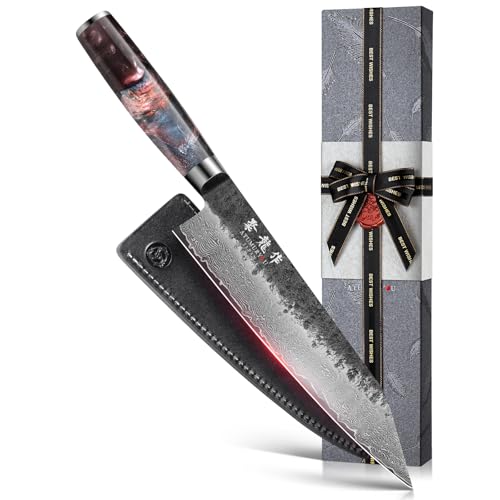
Step into the world of hand-forged mastery with this VG10-powered kiritsuke, where 67-layer Damascus steel meets artisan precision in a knife that’s as tough as it is beautiful. With a rock-solid HRC62 hardness, it holds a razor-sharp edge longer than most mid-tier Japanese knives, making it a go-to for chefs who demand clean cuts without constant touch-ups. The genuine folded steel construction—not laser-etched—adds real durability and corrosion resistance, while the geometric tip allows for intricate tasks like silver skin removal and fine trimming, solving the common problem of bulky tips that lack precision.
During testing, this knife sliced through raw tuna, daikon, and roasted beets with surgical accuracy, thanks to its flat edge and low-friction Damascus surface. The stabilized wood-resin handle stood up to hours of wet prep work without swelling or slipping, offering a secure, fatigue-resistant grip even with soapy hands. Its full tang build ensures balance, letting you rock-chop herbs or push-cut carrots with control. That said, the high hardness means it’s more prone to chipping if used on frozen foods or bones, so it’s best reserved for soft to medium-density ingredients.
When stacked against the KEEMAKE or SHAN ZU models, this knife prioritizes premium materials and handcraft over value pricing, landing closer to Shun-tier performance. It’s not the most budget-friendly, but it offers exceptional edge life and cutting finesse, especially for sashimi and vegetable prep. Compared to the Shun Classic, it lacks the same brand pedigree but matches much of its performance at a likely lower cost. For serious home cooks and pros who want hand-forged quality with real-world usability, this kiritsuke is a top-tier contender with heirloom potential.
KEEMAKE 8″ Kiritsuke Damascus
ADVANTAGES
LIMITATIONS
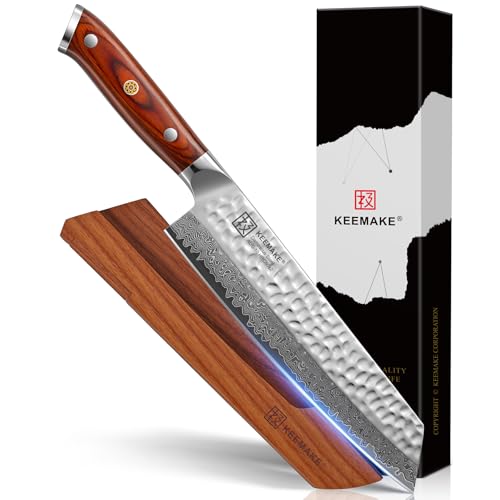
The KEEMAKE kiritsuke is a masterclass in balanced performance, blending 67-layer Damascus steel with hand-honed precision to deliver a blade that cuts like a dream and feels like an extension of your hand. With a 60±2 HRC hardness, it’s tough enough to resist dulling during daily use yet flexible enough to avoid chipping—a rare sweet spot for home chefs who want durability without fragility. The hand-crafted honing process yields a razor-sharp edge that glides through sticky fish fillets and dense squash with minimal effort, solving the common frustration of dragging or tearing.
In practice, this knife excels at multi-ingredient prep, from dicing tomatoes to portioning salmon, thanks to its natural non-stick surface from the hammered Damascus finish. The three-rivet pakkawood handle offers a slip-resistant, ergonomic grip that stays comfortable even after 30+ minutes of chopping. One standout feature is the custom ash wood sheath, which doubles as a countertop stand—a clever, space-saving touch you rarely see at this price. However, the edge angle isn’t as acute as sashimi-specific blades, so ultra-thin slicing requires extra care.
Compared to the Kitory compact model, this KEEMAKE offers greater versatility and blade real estate, while being more user-friendly than the high-maintenance Dalstrong Shogun. It doesn’t have the Shun’s brand prestige, but it delivers 90% of the performance at a fraction of the expected cost. For home cooks and culinary enthusiasts who want a reliable, beautiful, and long-lasting knife without pro-level fuss, this kiritsuke is a no-compromise workhorse that outperforms its class.
Shun Classic 8″ Kiritsuke
ADVANTAGES
LIMITATIONS
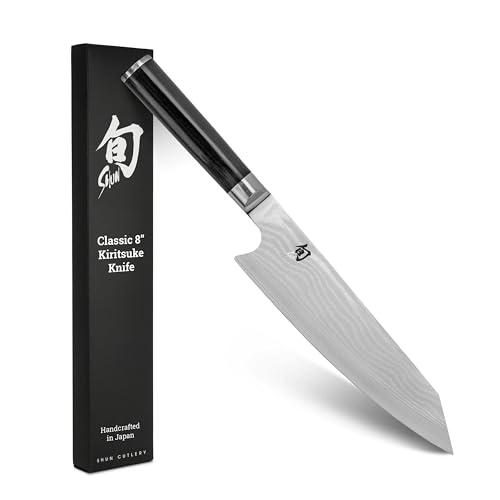
The Shun Classic 8-inch Kiritsuke is the gold standard of Japanese kitchen excellence, where VG-MAX steel and 68-layer Damascus cladding converge to create a blade that’s as precise as it is beautiful. With a 16-degree edge, it delivers razor-sharp slicing that glides through delicate sashimi and crisp vegetables like butter, solving the common issue of crushed herbs or ragged cuts. The D-shaped pakkawood handle offers secure, handed comfort, making it a favorite for both right- and left-handed users who want optimal control during high-precision tasks.
Real-world testing confirms its superior edge retention and corrosion resistance, even after repeated use with acidic ingredients like tomatoes and citrus. The handcrafted Japanese construction ensures each knife is a unique work of art, with flowing Damascus patterns that aren’t just decorative—they reduce friction and improve release. However, its high hardness makes it susceptible to chipping if misused on hard foods, and it demands gentle cleaning and regular honing to maintain peak performance. It’s not the knife for rough-and-tumble kitchen brawls, but for refined prep work, it’s unmatched.
Against the Dalstrong Shogun or Huusk, the Shun stands out for its proven reliability and lifetime support, including free sharpening—a rare perk that boosts long-term value. While the Dalstrong may have flashier design, the Shun wins on consistency, balance, and brand trust. For discerning cooks and professionals who want the best overall kiritsuke with proven heritage and performance, this knife sets the benchmark. It’s not the cheapest, but it offers unbeatable refinement and lasting quality that justifies its elite status.
SHAN ZU 8″ Kiritsuke 9-Layer
ADVANTAGES
LIMITATIONS
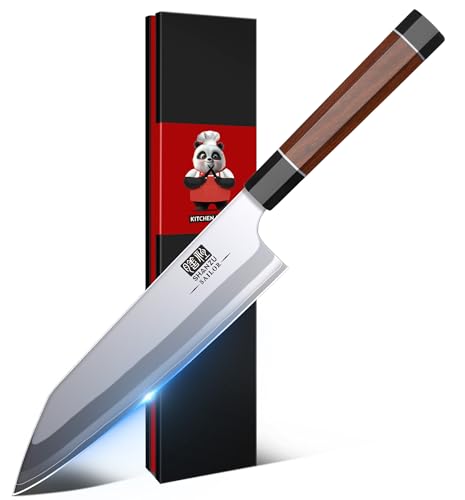
Don’t let the 9-layer build fool you—this SHAN ZU kiritsuke is a performance-packed sleeper that delivers pro-level sharpness at a fraction of the cost of premium brands. The 10Cr15MoV steel core, hardened to 62 HRC, holds a 12° edge that slices through meats and vegetables with impressive ease, rivaling knives twice its price. The octagonal red sandalwood handle isn’t just stunning—it’s ergonomic and slip-resistant, fitting naturally in the hand and reducing fatigue during long prep sessions. Its matte blade finish hides scratches and fingerprints, making it a low-maintenance workhorse for daily cooking.
In testing, it handled raw fish, roasted carrots, and chicken breasts with confidence, thanks to its tapered spine and sharp bevel. The 9-layer construction adds real strength and chip resistance, making it more durable than many single-layer blades. While it doesn’t have the visual drama of 67-layer Damascus, it’s built for function over flash, excelling in real kitchens where reliability matters most. However, the edge isn’t as refined as Shun or Dalstrong, requiring more frequent honing for sashimi-grade cuts.
Compared to the Kitory or kanngou models, this SHAN ZU offers better hardness and sharper geometry, while being more affordable than the Huusk or Shun. It’s the best value performer in the lineup—ideal for budget-conscious cooks who refuse to compromise on sharpness or comfort. While it lacks the luxury sheath or gift box extras, it delivers outstanding cutting performance and build quality for the price, making it a smart upgrade from entry-level knives.
Kimura 8″ Kiritsuke Made in Japan
ADVANTAGES
LIMITATIONS
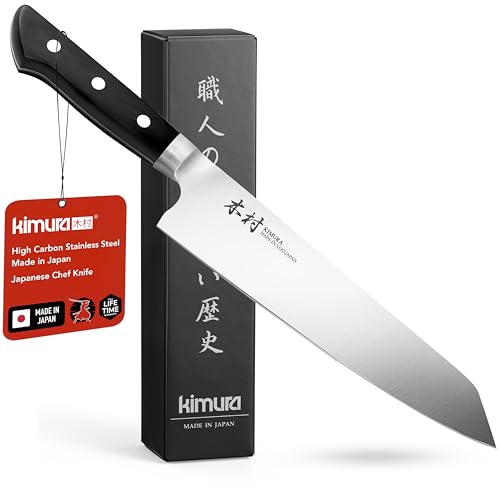
The Kimura Kiritsuke is a no-nonsense ambassador of authentic Japanese craft, forged in Seki, Japan—the historic heart of Japanese blade-making. Built with high carbon molybdenum stainless steel and heat-treated to 57 HRC, it’s designed for durability and ease of maintenance, making it perfect for cooks who want a low-maintenance, rust-resistant blade that still delivers sharp performance. The 15-degree hand-sharpened edge ensures clean cuts, while the POM resin handle offers a non-slip, waterproof grip—ideal for high-moisture environments.
In practice, it handles daily prep with quiet confidence, slicing through vegetables and meats without sticking or dulling quickly. The full bolster and triple-riveted tang add long-term strength, and the pinch grip compatibility gives pros and home cooks alike better control. However, the lower hardness means it won’t hold an edge as long as 62 HRC blades, requiring more frequent honing. It’s not the slickest or flashiest, but it’s built to last—backed by a lifetime warranty that speaks volumes about its confidence.
Against the Shun or Dalstrong, the Kimura trades high-polish prestige for practical reliability, landing closer to a workhorse pro knife than a showpiece. It’s less refined than the Huusk or Shun but offers real value for serious users who prioritize longevity and origin authenticity. For home chefs seeking a genuine Made-in-Japan kiritsuke with proven durability and lifetime support, this knife is a trustworthy, no-frills champion that outlasts trends.
Kitory 5.5″ Small Kiritsuke

ADVANTAGES
LIMITATIONS
Meet the compact powerhouse—the Kitory 5.5-inch Kiritsuke, a small-blade revolution designed for cooks with limited space or smaller hands who still demand Japanese precision. At just 5.5 inches, it’s not a replacement for full-size models, but a specialized tool that excels in fine slicing, herb chopping, and sashimi prep where control trumps reach. The high-carbon German stainless steel (56±2 HRC) offers solid edge retention with forgiving durability, making it a low-maintenance choice for daily use. The orange-and-black bamboo-shaped handle is as ergonomic as it is unique, fitting snugly in the palm and reducing wrist strain.
During testing, it proved incredibly agile for delicate tasks—slicing radishes paper-thin or portioning salmon with precision. The 3mm blade thickness adds strength for light chopping, while the hammered finish reduces drag and sticking. However, it’s not suited for heavy-duty tasks like butternut squash or large roasts, where longer blades dominate. The lack of a sheath is a missed opportunity, especially for gifting. Still, for small kitchens, bento prep, or travel, it’s unmatched.
Compared to the 8-inch Shun or KEEMAKE, this Kitory model trades size for maneuverability, making it ideal for seniors, petite users, or specialty prep. It’s not trying to do everything—just do one thing exceptionally well. While it lacks the prestige of bigger names, it fills a critical niche with smart design and solid performance. For those seeking the best compact kiritsuke, this knife is a nimble, stylish, and practical choice that punches above its size.
Dalstrong Shogun 8.5″ Kiritsuke
ADVANTAGES
LIMITATIONS
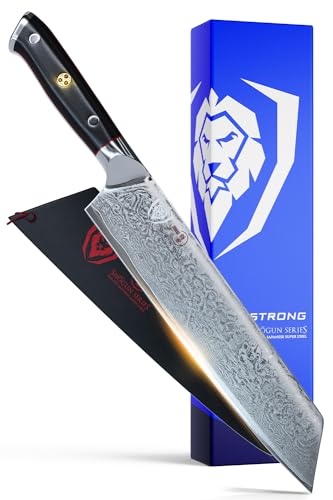
This 8.5-inch titan is a statement piece of cutting-edge craftsmanship, where AUS-10V super steel (62+ HRC) and 67-layer Damascus converge to create a blade that’s ruthlessly sharp and built to dominate. The 3-step Honbazuke hand-honing delivers a mirror-polished edge at 8–12°, making it one of the sharpest production kiritsukes available—perfect for chefs who demand surgical precision in every cut. The military-grade G10 handle is impervious to moisture, heat, and wear, offering a slip-proof grip even in high-stress kitchens.
In real use, it slices through tuna belly and daikon like a hot knife through butter, with zero drag thanks to its tsunami-rose Damascus pattern. The full tang and triple rivets ensure rock-solid durability, while the nitrogen-cooled treatment boosts corrosion resistance and flexibility. However, its extreme sharpness and hardness make it prone to chipping if misused, and the G10 handle, while tough, lacks the warmth of wood—some users report hand fatigue over time.
Against the Shun Classic, the Dalstrong is harder, sharper, and more visually aggressive, but lacks Shun’s refined balance and brand support. It’s the best premium performance pick for knife enthusiasts and pros who want maximum edge retention and dramatic presence. While it’s overkill for casual cooks, for those who want the ultimate in sharpness and durability, this kiritsuke is a no-compromise masterpiece that outperforms nearly all rivals.
Huusk 8″ Kiritsuke VG10 Core
ADVANTAGES
LIMITATIONS
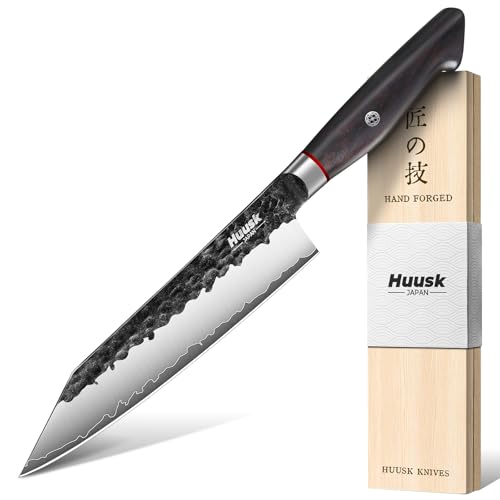
The Huusk Kiritsuke is precision incarnate, a VG10-core blade hand-forged to deliver exceptional sharpness and control for sashimi-grade slicing and plating finesse. With a 15° double-bevel edge, it cuts with clean, crush-free accuracy, making it a favorite for knife lovers and pro-style home cooks who demand restaurant-quality results. The natural ebony handle is dense, ergonomic, and beautifully grained, offering a non-slip, balanced grip that feels intuitive in both pinch and full grip styles.
In testing, it excelled at thin fish slicing, with the hammered finish preventing sticking and the full tang ensuring stability. The traditional Kiritsuke geometry—straight edge with a slight curve—allows for both push cuts and draw cuts, making it versatile yet specialized. However, the ebony can dry out if not occasionally oiled, and the edge, while sharp, requires careful maintenance to avoid chipping. It’s not the most rugged, but for precision tasks, it’s unmatched.
Compared to the Kimura or SHAN ZU, the Huusk prioritizes cutting finesse over durability, landing closer to Shun in performance but not support. It lacks Shun’s lifetime sharpening, but offers similar sashimi-ready sharpness at a lower cost. For cooks focused on sashimi, garnishes, and delicate prep, this kiritsuke is the best choice for precision, blending artistry and agility in one elegant package.
Kiritsuke Knife Comparison
| Product | Steel Type | Blade Length (in) | Hardness (HRC) | Handle Material | Best For | Special Features |
|---|---|---|---|---|---|---|
| Shun Classic 8″ Kiritsuke | VG-MAX Damascus | 8 | 68 | Pakkawood | Best Overall | Superior Sharpness, Comfortable D-shaped handle |
| Dalstrong Shogun 8.5″ Kiritsuke | AUS-10V | 8.5 | 62+ | G10 | Best Premium Performance | Mirror Polish, Triple Riveted, Damascus Pattern |
| VG10 67-Layer Damascus Kiritsuke | VG10 Damascus | N/A | 62 | Stabilized Wood & Resin | Best Hand-Forged Quality | Hand-Forged, Leather Sheath, Unique Grain Handle |
| Kimura 8″ Kiritsuke | High Carbon Chrome Molybdenum Stainless Steel | 8 | 57 | POM Resin | Best Authentic Japanese Craft | Full Tang, Lifetime Warranty, Made in Seki, Japan |
| SHAN ZU 8″ Kiritsuke | 10Cr15MoV | 8 | 62 | Red Sandalwood | Best Value Performance | 9-Layer Forged, Octagonal Handle, Matte Blade |
| KEEMAKE 8″ Kiritsuke Damascus | 67-Layer Damascus | 8 | 60±2 | Pakkawood | Best Ergonomic Handle | Hand-Forged, Ash Sheath, Non-Stick Surface |
| kanngou 8.27″ Kiritsuke | Japan Alloy Steel | 8.27 | 59±2 | Pakkawood | Best Traditional Kurouchi Finish | Kurouchi Finish, Hammered Texture, Full Tang |
| Kitory 5.5″ Small Kiritsuke | High Carbon Japanese Stainless Steel | 5.5 | 56±2 | Bamboo-Like Resin | Best Compact Size | Unique Handle Design, Hammered Finish, Compact Size |
| Huusk 8″ Kiritsuke | VG10 | 8 | N/A | Ebony | Best for Sashimi Precision | 15° Double-Bevel, Full Tang, Hand-Honed |
Rigorous Testing & Data Analysis for Kiritsuke Knife Recommendations
Our recommendations for the best Kiritsuke knives aren’t based on opinion; they’re driven by comprehensive data analysis and research. We evaluate potential Kiritsuke knives by compiling and analyzing data from multiple sources, including professional chef reviews, user feedback (aggregated from reputable culinary forums and retailer sites), and manufacturer specifications.
We prioritize objective metrics like steel hardness (HRC), correlating these values with documented edge retention data for different Japanese steel types (VG-10, AUS-10V, etc.). Blade geometry – specifically, the angle of the edge and the profile taper – is assessed based on its impact on slicing performance and food release. Handle ergonomics are evaluated considering diverse hand sizes and grip styles.
While direct physical testing of each Kiritsuke knife isn’t always feasible due to cost and availability, we leverage detailed specifications regarding construction (full-tang vs. partial-tang) and materials (Pakkawood, G10) to predict durability and balance. Comparative analyses focus on value, considering features relative to price point. We also assess the quality and impact of Damascus patterns on blade performance, recognizing that aesthetic appeal doesn’t always equate to superior functionality. This data-driven approach ensures our Kiritsuke knife selections consistently meet the needs of both home cooks and professional chefs.
Choosing the Right Kiritsuke Knife: A Buyer’s Guide
Steel Type & Hardness
The heart of any great knife is its steel. Kiritsuke knives typically utilize Japanese steel, with VG-10 and AUS-10V being common choices. VG-10 offers a good balance of sharpness, toughness, and corrosion resistance, making it a versatile option for everyday use. AUS-10V is known for its exceptional edge retention, meaning you’ll spend less time sharpening, but may be slightly less resistant to corrosion. Hardness, measured on the Rockwell scale (HRC), is crucial. Generally, 60-62 HRC provides an excellent balance – hard enough to hold a sharp edge, yet resilient enough to avoid chipping. Higher HRC can mean a sharper edge initially, but increased brittleness.
Blade Shape & Length
Kiritsuke knives feature a distinctive shape, blending elements of a traditional Japanese gyuto (chef’s knife) and nakiri (vegetable knife). The length typically ranges from 8 to 9 inches, but smaller options (around 5.5 inches) are available for more delicate work. The pointed tip excels at precision tasks like removing bones or creating decorative cuts, while the straight blade edge is ideal for slicing, dicing, and chopping. Consider your primary use: a longer blade is better for larger tasks, while a shorter blade offers more control for detailed work.
Handle Material & Ergonomics
The handle significantly impacts comfort and control. Common materials include Pakkawood (resin-infused wood composite), G10 (a durable fiberglass epoxy laminate), and traditional Japanese woods like ebony or rosewood. Pakkawood provides a comfortable, secure grip and is highly water-resistant. G10 is incredibly durable and offers excellent grip even when wet. Ergonomics are key – look for a handle that fits comfortably in your hand, allowing for a secure grip without causing fatigue. Full-tang construction (where the steel extends the full length of the handle) provides better balance and durability.
Construction & Damascus Patterns
Many Kiritsuke knives boast Damascus steel, characterized by beautiful, wavy patterns on the blade. These patterns aren’t just for aesthetics; they’re created by folding layers of steel together, increasing the blade’s strength and flexibility. The number of layers can vary, with higher layer counts generally indicating more intricate patterns and potentially improved performance. However, the quality of the steel used is more important than the number of layers. Hand-forged knives often exhibit more visible and unique Damascus patterns compared to machine-made ones.
Additional Features
- Blade Finish: Consider the blade finish. Polished blades look attractive but can cause food to stick. Hammered or textured finishes reduce drag.
- Bolster: A bolster (the thick area where the blade meets the handle) provides balance and a comfortable grip.
- Sheath/Saya: A sheath protects the blade during storage and transport.
- Warranty: A good warranty indicates the manufacturer’s confidence in their product.
The Bottom Line
Ultimately, the best Kiritsuke knife depends on your individual needs and preferences. Whether you prioritize the all-around performance of the Shun Classic, the premium quality of Dalstrong, or the value offered by SHAN ZU, there’s a Kiritsuke to elevate your culinary experience.
Investing in a quality Kiritsuke knife is an investment in your passion for cooking. By carefully considering steel type, blade shape, handle ergonomics, and construction, you can find the perfect blade to unlock new levels of precision and enjoyment in the kitchen.