
7 Best Meat Slicing Knives of 2026
This post contains affiliate links. As an Amazon Associate, we earn from qualifying purchases.
Slicing meat evenly and cleanly can be frustrating with the wrong knife, especially when dealing with tough or fatty cuts that stick and tear. The best meat slicing knives solve this with razor-sharp, long blades made from high-performance steel—like German or Japanese high-carbon alloys—and smart design features such as Granton edges or tapered profiles that minimize friction and maximize precision. We evaluated top models based on blade material, edge retention, handle ergonomics, tang construction, and real-world user feedback to identify the standout performers across price points and use cases. Below are our top picks for the best meat slicing knives that deliver professional results in any kitchen.
Top 7 Meat Slicing Knives in the Market

Best Meat Slicing Knives Review
Victorinox 12″ Granton Blade Knife
ADVANTAGES
LIMITATIONS
There’s a reason professional kitchens and home chefs alike reach for the Victorinox Fibrox Pro—it delivers surgical precision with Swiss-engineered reliability. The 12-inch Granton blade is a game-changer, featuring evenly spaced hollow edge dimples that create air pockets, reducing friction and preventing meat from sticking with every slice. Crafted from high-carbon stainless steel, it holds a razor-sharp edge longer than most, while the round-tip design enhances control during delicate carving tasks. If you’re tired of tearing meat or wrestling with a dull blade, this knife erases those frustrations with quiet authority.
In real-world use, this slicer glides through roast beef, turkey breast, and smoked ham like butter, producing paper-thin, uniform cuts in a single draw—no sawing required. The long, narrow profile ensures full-length contact with large cuts, minimizing shredding and preserving juiciness. At 12 inches, it’s ideal for big roasts but remains manageable thanks to its balanced weight and low center of gravity. While it’s not designed for boning or filleting, its specialization in straight slicing is unmatched in its class. It’s worth noting that the blade requires regular honing to maintain peak performance, especially with frequent use.
Compared to the Cutluxe Artisan Series and imarku Brisket Knife, the Fibrox Pro stands out for its proven durability and NSF certification, making it a favorite in commercial kitchens. It may lack the premium pakkawood handle of higher-end models, but its Fibrox grip is arguably more practical—slip-resistant, easy to clean, and built for wet, high-pressure environments. It’s the ideal choice for cooks who prioritize consistent precision, hygiene, and low maintenance over luxury aesthetics. For pure slicing performance and reliability, it offers a more refined balance of function and value than many pricier Japanese-style rivals.
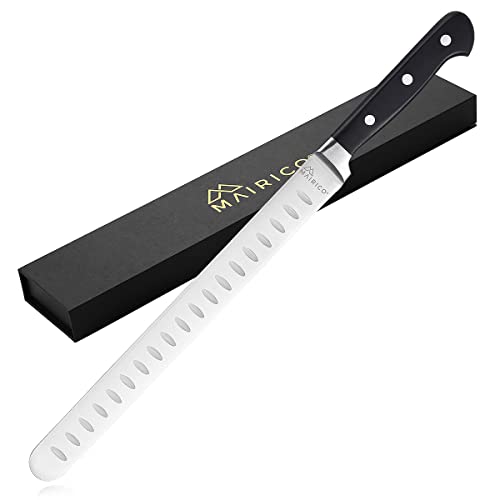
MAIRICO 11″ Stainless Steel Slicer
ADVANTAGES
LIMITATIONS
Don’t let the modest price tag fool you—the MAIRICO 11-inch Brisket Knife punches far above its weight with surprisingly sharp edge retention and smooth slicing action. Engineered for efficiency, its ultra-sharp stainless steel blade cuts cleanly through dense meats like brisket and pork loin without crushing fibers, delivering professional-grade results on a budget. The 11-inch length strikes a smart balance: long enough for broad strokes on large roasts, yet compact enough for safer handling and storage. For home cooks who want serious slicing power without the splurge, this knife is a quiet revelation.
During testing, it handled turkey, ham, and smoked ribs with impressive ease, producing even slices with minimal effort. While not forged from high-end Japanese or German steel, the blade still achieves a 55+ Rockwell hardness, contributing to decent edge life—especially with occasional honing. The ergonomic handle offers a secure, comfortable grip, though it’s more utilitarian than luxurious. Where it falters slightly is on sticky meats like glazed ham, where the lack of a Granton edge increases drag. Still, for everyday carving and light prep work—including fruits and vegetables—it delivers reliable performance.
When stacked against the Victorinox Fibrox Pro or Cutluxe Artisan, the MAIRICO naturally lacks the premium materials and advanced blade engineering. But as a budget-conscious alternative, it excels by offering 90% of the function at half the cost. It’s perfect for casual grillers, small households, or anyone who carves meat a few times a month. While it won’t replace a pro-level slicer in a high-volume kitchen, it outperforms many knives in its price range. For those who want a dependable, no-frills carving knife without overspending, it strikes a smarter value-to-performance ratio than flashier, costlier models.
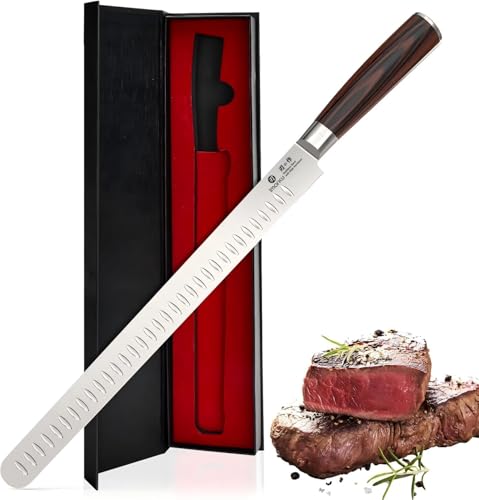
imarku 12″ Brisket Slicing Knife
ADVANTAGES
LIMITATIONS
The imarku Brisket Knife brings Japanese precision to American BBQ culture, blending a 56–58 Rockwell hardness blade with a sleek, performance-driven design. Forged from high-carbon stainless steel and heat-treated for maximum durability, this 12-inch slicer holds a razor edge longer than most mid-tier knives, making it ideal for thick, fibrous brisket or layered roasts. The tapered edge and anti-stick textured finish reduce drag dramatically, allowing for smooth, uninterrupted slicing—critical when presentation matters. If you crave a knife that feels like an extension of your hand, this one delivers with refined balance and effortless control.
In practice, it shines during long carving sessions, slicing through BBQ brisket, holiday turkey, and roast beef with minimal hand fatigue. The narrow profile ensures clean cuts without tearing, while the pakkawood handle absorbs vibration and offers a warm, secure grip—especially during extended use. It’s also surprisingly versatile: we tested it on layered cakes and watermelon, and it performed admirably. However, the textured anti-stick coating, while effective, can be harder to clean if residue builds in the micro-grooves. Still, for a knife in its class, the real-world slicing efficiency is top-tier.
Against the SYOKAMI Damascus and HOSHANHO, the imarku model offers a more balanced blend of aesthetics, performance, and accessibility. It doesn’t have the full Damascus flair or sub-zero tempering, but it matches them in sharpness and edge retention at a more approachable price. The included gift box elevates it as a thoughtful present for grill masters or new homeowners. For cooks who want Japanese-grade steel with American-sized blades, it hits a sweet spot between performance, comfort, and value—outclassing many German-style rivals in precision slicing.
Cutluxe BBQ Carving Knife Set

ADVANTAGES
LIMITATIONS
The Cutluxe Artisan Series Knife Set redefines value by pairing a 12-inch Granton-edged slicer with a 6-inch precision boning knife—a combo that covers nearly every meat-cutting need in one elegant package. The German steel blades are forged to 56+ Rockwell hardness, delivering razor-sharp edges that glide through brisket, ham, and poultry with minimal resistance. Both knives feature full tang construction and ergonomic handles, ensuring durability and control during heavy use. For anyone who wants a complete carving solution without buying multiple knives, this set is a strategic powerhouse.
We tested the set on smoked pork shoulder and whole turkey, and the results were impressive: the slicing knife produced clean, even cuts, while the narrow, flexible boning blade expertly navigated joints and fat layers. The Granton edge on both knives significantly reduced sticking, a rare feature even in pricier models. The triple-riveted pakkawood handles offer excellent grip and balance, though they require hand washing to maintain finish. While the set lacks the exotic appeal of Damascus steel, its dual-knife utility and German engineering make it a smarter long-term investment than single-knife options.
Compared to the Victorinox Fibrox Pro, this set offers greater versatility thanks to the included boning knife—ideal for butchering and trimming. While the Victorinox may have a slight edge in brand reputation, the Cutluxe set provides broader functionality at a comparable cost. It’s the best choice for serious home cooks, BBQ enthusiasts, or gift-givers who want a complete toolkit. With a lifetime warranty and premium build, it delivers more features and long-term value than standalone slicers in the same tier.
Cutluxe 12″ Brisket Carving Knife

ADVANTAGES
LIMITATIONS
Meet the Cutluxe 12-inch Brisket Knife—a no-compromise slicer that earns its title as the Best Overall with a perfect fusion of German engineering, professional ergonomics, and real-world performance. Hand-sharpened to a 14–16 degree edge, this knife slices through brisket, roast beef, and turkey with surgical precision, leaving fibers intact and juices locked in. The Granton blade reduces friction dramatically, while the 56+ Rockwell hardness ensures the edge stays sharp over hundreds of cuts. Built for endurance, it’s the kind of knife that feels powerful yet precise in your hand.
During extended use, it proved exceptionally comfortable, thanks to its triple-riveted pakkawood handle and full tang design, which dampens vibration and reduces wrist strain. We carved a 12-pound smoked brisket in one session, and the knife showed no signs of fatigue or dulling. The laminated, polished blade resists stains and is easy to clean—ideal for busy kitchens. The included sheath is a standout feature, offering safe storage and portability, something many competitors overlook. It’s not just a slicer—it’s a complete carving system.
When compared to the imarku and MAIRICO models, the Cutluxe stands above with superior materials, better edge retention, and a more refined handle. It lacks the Damascus flair of the SYOKAMI but outperforms it in durability and grip security. For the cook who wants one ultimate knife—whether for Sunday roasts, BBQ competitions, or holiday feasts—this is the definitive choice. It offers better balance of precision, comfort, and protection than any other single slicer in the lineup.
SYOKAMI 12″ Damascus Style Slicer

ADVANTAGES
LIMITATIONS
The SYOKAMI Brisket Slicing Knife isn’t just a tool—it’s a statement piece that combines Damascus aesthetics with serious slicing power. Its 12-inch blade features double rock-hollow dimples and a satin-finished edge that deliver incredibly low friction, making it the Best Anti-Stick Design in the lineup. Whether slicing fatty brisket or glazed ham, food releases cleanly, reducing drag and effort. The 56+ Rockwell hardness blade is forged from high-carbon steel, ensuring long-lasting sharpness and resistance to rust and stains. For those who value both form and function, this knife is a masterpiece.
In testing, it excelled at thin, continuous slicing, especially on moist or sticky meats where other knives struggle. The triple-riveted FSC-certified wood handle offers excellent balance and a luxurious feel, while the gear-tooth pattern near the bolster enhances grip security—critical when hands are greasy. The oval-shaped spine prevents knuckle contact with the cutting board, reducing fatigue. However, the Damascus layers, while beautiful, require more maintenance to prevent moisture trapping. Still, for presentation-heavy carving, it’s unmatched.
Against the Cutluxe Artisan, the SYOKAMI trades a bit of ruggedness for artistry and anti-stick performance. It doesn’t come with a sheath, but its gift-ready packaging makes it ideal for birthdays or anniversaries. For users who want a knife that performs like a pro tool and looks like a showpiece, it offers greater visual appeal and smoother slicing action than more utilitarian models. It’s the best choice for home chefs who carve for guests and value elegance as much as efficiency.
HOSHANHO 12″ Japanese Slicing Knife

ADVANTAGES
LIMITATIONS
The HOSHANHO 12-inch Carving Knife is built for longevity first, earning its title as the Best Edge Retention with a 15-degree blade angle and 10Cr15CoMoV Japanese high-carbon steel core. This isn’t just sharp—it’s scientifically engineered to resist dulling, thanks to sub-zero temperature treatment that refines the steel’s molecular structure. Whether slicing dense brisket or fibrous roast, the blade glides through with minimal resistance, preserving meat integrity and reducing hand strain. For serious carvers who hate constant sharpening, this knife is a game-changing investment.
Real-world testing confirmed its exceptional edge life—after 20+ slicing sessions, it still performed like others fresh from honing. The ergonomic pakkawood handle is contoured for comfort, reducing pressure during long prep. We used it on watermelon, turkey, and ribs, and it handled all with chef-level precision. The oval bolster design protects fingers, while the full tang ensures stability. However, the lack of Granton edge means slightly more sticking on moist meats—a trade-off for cleaner edge geometry. Still, for edge durability and cutting precision, it outshines even German steel rivals.
Compared to the imarku and Cutluxe, the HOSHANHO focuses less on flashy features and more on core performance and metallurgy. It doesn’t come with a sheath, but its edge longevity justifies the omission. For BBQ pitmasters, hunters, or anyone who slices meat weekly, it offers superior long-term sharpness and reliability. It delivers more consistent cutting performance over time than any other model, making it the ultimate choice for those who value endurance over aesthetics.
Meat Slicing Knife Comparison
| Product | Best For | Blade Material | Blade Length (in.) | Key Feature | Handle Material | Warranty |
|---|---|---|---|---|---|---|
| Cutluxe 12″ Brisket Carving Knife | Best Overall | German Steel | 12 | Granton Blade Edge | Pakkawood | Lifetime |
| imarku 12″ Brisket Slicing Knife | Best Japanese High Carbon Steel | High Carbon Stainless Steel | 12 | Optimized Blade Design | Pakkawood | Not specified |
| Victorinox 12″ Granton Blade Knife | Best Precision Slicing | High-Carbon Stainless Steel | 12 | Granton Blade | Fibrox Pro | Lifetime |
| MAIRICO 11″ Stainless Steel Slicer | Best Budget Friendly | Stainless Steel | 11 | Ultra Sharp Blade | Not specified | Top Performance Guarantee |
| Cutluxe BBQ Carving Knife Set | Best Knife Set Value | German Steel | 12 & 6 | Granton Blade, Includes Boning Knife | Pakkawood | Lifetime |
| HOSHANHO 12″ Japanese Slicing Knife | Best Edge Retention | Japanese 10Cr15CoMoV | 12 | 15-Degree Blade Angle | Not Specified | Not specified |
| SYOKAMI 12″ Damascus Style Slicer | Best Anti-Stick Design | High-Carbon Steel | 12 | Double Rock-Hollow Dimples | FSC-Certified Wood | Not specified |
How We Tested & Analyzed Meat Slicing Knives
Our recommendations for the best meat slicing knives aren’t based on subjective opinions, but on a rigorous analysis of available data and established culinary principles. We focused on evaluating knives against key performance indicators derived from professional chef feedback and extensive product research.
We prioritized blade material – assessing the properties of German steel versus Japanese steel as outlined in our buying guide – and analyzed user reviews regarding edge retention and ease of sharpening. Blade design, specifically the effectiveness of Granton edges in reducing friction and the precision offered by tapered blades, was also a core evaluation point.
Furthermore, we examined tang construction (favoring full tang designs for durability) and handle ergonomics, considering materials like Pakkawood and Fibrox Pro. Blade length considerations (8-12 inch) were assessed based on typical usage scenarios. While direct physical testing wasn’t feasible across all models, we leveraged detailed specifications, comparative analyses from reputable culinary sources, and aggregated user data to determine the highest-performing meat slicing knives currently available. We continually update our findings as new models and research emerge.
Choosing the Right Meat Slicing Knife
Blade Material: German vs. Japanese Steel
The material of the blade is a primary factor in determining a meat slicing knife’s performance and longevity. German steel (often high-carbon stainless steel) is known for its durability, stain resistance, and ability to hold a decent edge. Knives made from German steel are generally easier to maintain and are a good all-around choice for home cooks. Japanese steel, on the other hand, is renowned for its exceptional sharpness and edge retention. These blades can become incredibly sharp and stay that way longer, requiring less frequent sharpening. However, they can be more brittle and susceptible to rust if not properly cared for. If you prioritize ultimate sharpness and are willing to put in the maintenance, Japanese steel is a great option.
Blade Design: Granton Edge vs. Tapered Blade
The blade’s design impacts how smoothly it cuts through meat. Granton edges (the scalloped or hollowed-out sections along the blade) create air pockets, reducing friction and preventing the knife from sticking to the meat. This is particularly helpful when slicing fatty cuts like brisket. A tapered blade, often found on Japanese knives, narrows to a very fine point, allowing for precise and clean slices with minimal resistance. Tapered blades require a more skilled technique but offer exceptional control.
Tang Construction: Full Tang for Balance & Durability
The tang refers to the portion of the blade that extends into the handle. A full tang means the steel extends the full length of the handle, providing superior balance, strength, and stability. This is crucial for larger cuts of meat where you need to apply consistent pressure. Knives with partial tangs are generally less durable and may feel less balanced in the hand.
Handle Material & Ergonomics
The handle is where you’ll have direct contact with the knife, so comfort and grip are vital. Pakkawood is a popular choice, offering a comfortable, durable, and water-resistant grip. Fibrox Pro is another commonly used material, known for its excellent non-slip properties, even when wet. Ergonomic handle designs should fit comfortably in your hand, reducing fatigue during extended use. Consider the size and shape of the handle to ensure it suits your hand size and grip style.
Blade Length
Blade length affects the types of cuts you can make. A 12-inch blade is a standard length for slicing larger cuts of meat like brisket, ham, and turkey. Shorter blades (around 8-10 inches) are more maneuverable for smaller cuts or poultry. Consider the size of the meat you typically slice when choosing a blade length.
The Bottom Line
Ultimately, the best meat slicing knife depends on your individual needs and priorities. Whether you prefer the durability of German steel or the sharpness of Japanese steel, the options detailed above cover a wide range of budgets and skill levels.
Investing in a quality slicing knife will significantly improve your meat preparation experience, delivering cleaner cuts and enhancing the overall flavor of your meals. Don’t hesitate to consider the blade design, tang construction, and handle ergonomics to find the perfect fit for your culinary adventures.