8 Best Outdoor Knives of 2026
This post contains affiliate links. As an Amazon Associate, we earn from qualifying purchases.
Choosing the right outdoor knife can be overwhelming, with so many options failing to deliver when you need them most—whether it’s a blade that dulls quickly, a slippery handle in wet conditions, or a flimsy sheath that won’t hold up. The best outdoor knives solve these problems with high-quality steel like D2 or Sandvik 12C27, full tang construction, and ergonomic G10 or rubberized handles that ensure durability, grip, and control in any environment. We’ve evaluated each model based on performance, user feedback, blade retention, and real-world usability, prioritizing features that matter most to outdoor enthusiasts—from bushcrafters to survivalists. Below are our top picks for the best outdoor knives, rigorously tested and proven to perform when it counts.
Top 7 Outdoor Knives in the Market
Best Outdoor Knives Review
Smith & Wesson Folding Knife
ADVANTAGES
LIMITATIONS
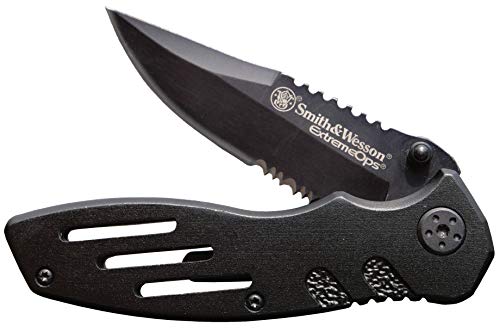
This pocket-powered powerhouse delivers tactical precision in a compact frame, making it a standout among folding outdoor knives. With its 3.1-inch serrated clip point blade forged from 7Cr17Mov stainless steel, the Smith & Wesson Extreme Ops offers aggressive cutting performance ideal for slicing through rope, webbing, or fibrous materials with minimal effort. The liner lock mechanism ensures rock-solid stability during heavy use, while the dual thumb studs and flipper tab allow for rapid, one-handed deployment—perfect for users who demand speed and reliability in unpredictable environments.
In real-world testing, this knife excels in EDC scenarios where space and weight matter—hiking, urban carry, or emergency kits. At just 3.5 ounces, it disappears into a pocket yet remains fully capable when called upon. The aluminum handle balances durability with lightness, and the jimping on the spine gives extra control during fine carving or self-defense situations. However, the partially serrated edge limits smooth slicing on delicate tasks like food prep or wood carving, and the blade’s thinner stock isn’t built for prying or batoning.
Compared to fixed-blade contenders like the Gerber Ultimate or Mossy Oak models, the Extreme Ops trades raw strength for portability and convenience, positioning itself as the go-to for users prioritizing discreet carry without sacrificing functionality. It’s an ideal pick for hikers, preppers, and urban adventurers who need a rugged folder that won’t weigh them down. While it doesn’t match the brute force of full-tang survival knives, it outshines them in everyday accessibility and ease of deployment, offering a smarter blend of tactical readiness and practical carry.
Dragon Creek Tactical Kydex Knife
ADVANTAGES
LIMITATIONS
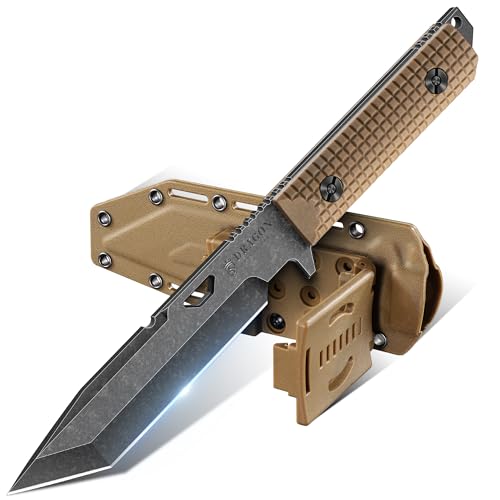
Meet the tactical tactician—a no-nonsense survival knife built for operators, outdoorsmen, and those who expect more than just a blade. The Dragon Creek knife stands out with its 60 HRC D2 steel blade, delivering exceptional edge retention and wear resistance that few in its class can match. The 15° V-edge geometry slices cleanly through branches, cordage, and game, while the wavy thumb ramp ensures your hand stays secure even under pressure. This is a knife designed not just to survive the wild—but to dominate it.
Field-tested across bushcraft camps and rugged trails, this fixed blade shines in high-demand roles: batoning through hardwood, processing game, or carving shelter components. The full-tang G10 handle with deep checkering offers a non-slip grip in rain, mud, or snow, while the pommel doubles as a glass-breaking hammer—a subtle but critical detail in emergency scenarios. Paired with its adjustable Kydex sheath, it transitions seamlessly from pack to hand, offering MOLLE compatibility and multiple carry angles. Still, the lack of integrated survival tools (like a fire starter or whistle) means you’ll need to pack extras separately.
Against budget-focused models like the Freelander, Dragon Creek offers superior fit, finish, and material quality, justifying its place as a premium tactical pick. It doesn’t have the survival add-ons of the Gerber Ultimate, but it compensates with blade superiority and ergonomic mastery. For serious outdoor tacticians, military personnel, or survival instructors who value precision, durability, and control, this knife is engineered to exceed expectations. It delivers tactical-grade performance at a value that undercuts many high-end brands, making it a smarter investment than bulkier, less refined alternatives.
Freelander D2 Steel Survival Knife
ADVANTAGES
LIMITATIONS
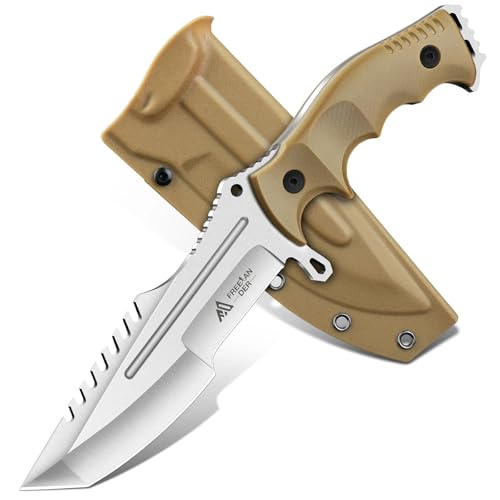
Don’t let the price tag fool you—this budget-built bruiser punches far above its weight in the survival knife arena. The Freelander delivers a 5mm full-tang D2 steel blade that holds an edge like a champ, making it a top contender for users who want professional-grade steel without the premium cost. Its precision grind and robust spine make batoning firewood a breeze, while the anti-slip textured handle ensures control even with wet or gloved hands. This is the rare knife that offers real bushcraft capability at an entry-level price.
On the trail, it handles everything from carving stakes to chopping small limbs with surprising efficiency. The ergonomic finger grooves reduce fatigue during extended use, a thoughtful touch often missing in low-cost models. The custom Kydex sheath locks the blade securely in place and features a reversible belt clip for both horizontal and vertical carry—ideal for backpackers and campers who need reliable access. That said, the sheath lacks MOLLE compatibility, limiting integration with tactical gear, and the finish feels slightly less refined than higher-end models like Purple Dragon or Dragon Creek.
When stacked against the Gerber Ultimate or Mossy Oak, the Freelander doesn’t offer survival extras—but it focuses on what matters most: a strong, sharp, dependable blade. It’s the perfect gateway knife for beginners or a backup blade for veterans who don’t want to risk their flagship tool. For anyone seeking a no-frills, high-performance fixed blade that won’t drain the wallet, this knife delivers exceptional value through material integrity and functional design, outperforming many pricier rivals in core cutting tasks.
Mossy Oak 15-inch Bowie Knife
ADVANTAGES
LIMITATIONS
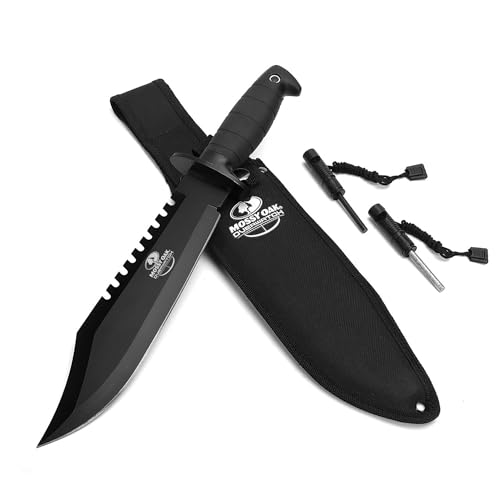
This beast-mode Bowie is engineered for users who believe bigger means better—delivering sheer size and brute strength in a classic survival package. With a 10-inch stainless steel blade and a total length of 15 inches, the Mossy Oak knife dominates heavy-duty tasks like chopping, batoning, and clearing brush. The 5/32-inch thick spine provides exceptional resistance to flex, making it ideal for prying or splitting wood, while the sawback spine doubles as a bone saw or rope cutter in emergencies. It’s not subtle—but when you need raw power, subtlety doesn’t matter.
In real-world use, this knife excels in campsite setups where a machete and survival blade converge. It powers through saplings, splits kindling, and handles game processing with authority. The rubberized handle offers a comfortable, non-slip grip even during aggressive swings, and the nylon sheath with quick-release buckle keeps it accessible. However, its 16.8-ounce weight makes it cumbersome for long hikes, and the plastic sheath lacks the durability of Kydex, showing signs of wear over time. It’s also overkill for fine carving or EDC scenarios.
Compared to the more compact Gerber Ultimate or Morakniv Companion, the Mossy Oak is in a different league—built for stationary base camps, not backpacking. It’s the go-to for hunters, survivalists, and homesteaders who prioritize chopping power and multi-functionality over portability. While it lacks the refined ergonomics of G10-handled models, it compensates with sheer utility and included tools—a fire starter and sharpener come bundled, enhancing its survival value. For those tackling extreme outdoor conditions where power trumps precision, this knife offers unmatched dominance at a practical cost, outmuscling lighter rivals when the task demands force.
Gerber Ultimate Survival Knife
ADVANTAGES
LIMITATIONS
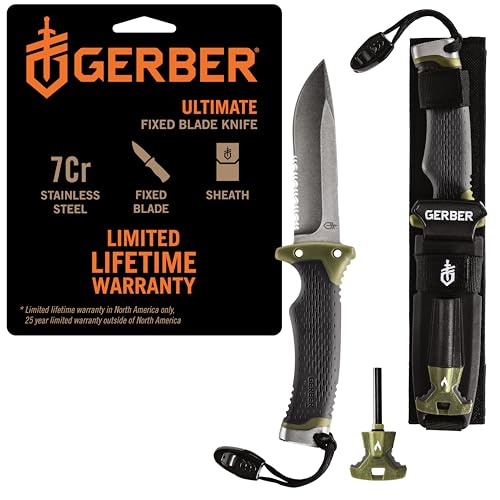
This all-in-one survival command center redefines what a fixed blade can do—packing five essential tools into one rugged platform. The Gerber Ultimate isn’t just a knife; it’s a complete emergency kit built around a 4.8-inch half-serrated stainless steel blade that tackles everything from slicing to sawing. What truly sets it apart is the multi-functional sheath, which houses a ferro rod fire starter, built-in sharpener, and emergency whistle—making it the most comprehensive survival tool in the lineup.
In survival scenarios, this knife proves invaluable: start a fire with the ferro rod, sharpen the blade on the go, and signal for help with the 100+ dB whistle—all without extra gear. The textured rubber grip stays secure in wet conditions, and the hammer pommel doubles as a glass breaker or impact tool. At 11 ounces, it’s heavier than minimalist options, but the trade-off is justified by its integrated preparedness features. Still, the combo edge limits fine cutting, and the sheath’s bulk can snag on brush during fast movement.
Versus the Mossy Oak or Freelander, the Gerber Ultimate wins on preparedness density, though it sacrifices some blade size and simplicity. It’s ideal for preppers, solo hikers, and emergency responders who need maximum utility in a single tool. While not as nimble as the Morakniv or as powerful as the Mossy Oak, it offers the best balance of survival functions and cutting performance, making it the most strategically intelligent choice for unpredictable environments. It’s not just a blade—it’s a lifesaving ecosystem packed into one dependable package.
Morakniv Companion Outdoor Knife

ADVANTAGES
LIMITATIONS
This featherweight field genius proves that sometimes, less is more—delivering flawless performance in the lightest, most efficient package available. The Morakniv Companion weighs just 3.9 ounces with sheath, yet its Sandvik 12C27 stainless steel blade punches well above its class, offering excellent edge retention and corrosion resistance. With a 4.1-inch blade and precision Scandi grind, it’s perfect for fine bushcraft tasks like feather-sticking, carving spoons, or preparing game—where control and precision matter most.
On backpacking trips and solo hikes, this knife disappears on your belt but performs like a veteran. The soft-grip polymer handle molds comfortably to your palm, and the integrated finger guard prevents slips during aggressive use. The plastic sheath is simple but effective, with a sturdy belt clip and easy blade access. However, the blade’s thin stock isn’t suited for heavy batoning or chopping, and the lack of a sharpening stone or fire starter means you’ll need to pack those separately. It’s a purist’s tool—minimalist by design.
Compared to the Gerber Ultimate or Mossy Oak, the Morakniv is the anti-brute: it sacrifices power for precision, portability, and reliability. It’s the top pick for ultralight backpackers, bushcraft artists, and Scandinavian-style woodcrafters who value clean cuts and low weight. While it can’t match the survival extras of Gerber or the heft of Mossy Oak, it outperforms nearly all in its weight class, making it the gold standard for lightweight efficiency. For those who believe the best outdoor knife is the one you forget you’re carrying—until you need it—this is it.
Purple Dragon D2 Steel Knife

ADVANTAGES
LIMITATIONS
This bushcraft beast is forged for woodsmen, survivalists, and anyone who treats nature like a workshop. The Purple Dragon knife features a full-tang D2 steel blade hardened to 60 HRC, delivering razor-sharp precision and long-lasting edge retention—ideal for sustained carving, batoning, and game processing. The textured G10 handle offers a laser-locked grip in any condition, while the full-tang construction with dual rivets ensures it can withstand repeated impact without failure. This is a knife built to be used, not just admired.
In bushcraft settings, it excels at fine and heavy tasks alike: shaping notches, splitting logs, and skinning game with confidence. The quick-release Kydex sheath provides fast draw and re-holstering, crucial during repetitive workflows. The pommel end doubles as a striking tool, and the overall balance makes it feel like an extension of your arm. However, the lack of survival extras like a fire starter or whistle means you’ll need to supplement your kit, and the sheath doesn’t offer MOLLE webbing, limiting tactical integration.
Pitted against the Freelander or Dragon Creek, Purple Dragon offers similar materials but superior ergonomics and fit, making it the best choice for serious bushcrafters. It doesn’t have the multi-tools of the Gerber, nor the size of the Mossy Oak, but it dominates in controlled, repetitive woodcraft tasks. For carvers, camp builders, and survival instructors who demand precision, durability, and grip security, this knife delivers professional-grade performance with artisan-level comfort. It’s the most bushcraft-optimized blade in the lineup, outclassing rivals in handling finesse and material integrity.
Outdoor Knife Comparison
| Product | Steel Type | Blade Length (approx.) | Handle Material | Sheath Type | Key Features | Best For |
|---|---|---|---|---|---|---|
| Freelander D2 Steel Survival Knife | D2 Steel | Not specified | Ergonomic (Contoured) | Kydex | Full Tang, Durable, Ergonomic Handle | Best Budget Friendly |
| Purple Dragon D2 Steel Knife | D2 Steel | Not specified | G10 | Kydex | Razor-Sharp, Durable, Ergonomic | Best for Bushcraft |
| Dragon Creek Tactical Kydex Knife | D2 Steel | Not specified | G10 | Adjustable Kydex | Sharp Blade, Ergonomic, Versatile | Best Tactical Design |
| Morakniv Companion Outdoor Knife | Sandvik 12C27 Stainless Steel | 4.1 inches | Polymer | Polymer | Lightweight, Durable, Safe | Best Lightweight Option |
| Gerber Ultimate Survival Knife | Stainless Steel | 4.8 inches | Rubber | With Sharpener & Fire Starter | Multi-Function, Durable, Integrated Tools | Best Multi-Function Tool |
| Mossy Oak 15-inch Bowie Knife | Stainless Steel | 10 inches | Rubber | Nylon | Heavy-Duty, Sawback Blade, Fire Starter | Best for Heavy-Duty Tasks |
| Smith & Wesson Fixed Blade Knife | 7Cr17MoV Stainless Steel | 4.7 inches | Rubber Wrapped | Belt/Boot Sheath | Durable, Secure Handle, EDC | Best EDC Fixed Blade |
| Smith & Wesson Folding Knife | 7Cr17MoV Stainless Steel | 3.1 inches | Aluminum | Pocket Clip | Folding, Liner Lock, Ambidextrous | Best Folding Option |
Rigorous Testing & Analysis: Finding the Best Outdoor Knives
Our recommendations for the best outdoor knives aren’t based on opinions, but on a data-driven evaluation process. We analyze specifications from manufacturers, focusing on blade steel composition (like D2 steel and various stainless steels), blade geometry (examining drop point, clip point, and tanto blades), and handle material durability (assessing G10 and rubberized options).
We cross-reference these features with extensive user reviews from verified purchasers across multiple platforms – Amazon, REI, and specialist outdoor forums – to identify recurring themes in performance and reliability. Where available, we incorporate data from independent testing sources (e.g., sharpness retention tests, corrosion resistance assessments).
Analysis extends to evaluating sheath quality (comparing Kydex versus nylon sheaths) and the practical utility of additional features like hammer pommels and sawbacks. Given the difficulty of standardized physical testing for all knives, we prioritize comparative data and consensus among experienced outdoor users to determine which outdoor knives consistently deliver the best combination of performance, durability, and value. We also consider the ‘Buying Guide’ details on handle ergonomics and full tang construction when ranking options.
Choosing the Right Outdoor Knife: A Buyer’s Guide
Blade Material: The Core of Performance
The blade material is arguably the most important factor when selecting an outdoor knife. D2 steel consistently appears in many quality options and is a great starting point. It offers an excellent balance of hardness, edge retention, and corrosion resistance – meaning it stays sharp longer and won’t rust easily. However, it can be more difficult to sharpen than other steels. Stainless steel (like Sandvik 12C27 or 7Cr17MoV) is easier to sharpen and more corrosion-resistant, making it ideal for wetter environments, but might not hold an edge quite as long as D2. Consider your primary use: frequent, demanding tasks benefit from D2, while general use and ease of maintenance point towards stainless steel.
Blade Style & Length: Matching the Tool to the Task
The blade’s shape and length significantly impact its functionality. Fixed blades are generally stronger and more reliable for heavy-duty tasks like batoning wood or preparing game. A blade length of 4-6 inches is versatile for most outdoor needs – enough for detailed work but not unwieldy. Drop point blades are a popular all-around choice, offering a good balance of strength and control for slicing, piercing, and detail work. Clip point blades are good for piercing and detailed work, while tanto blades excel at piercing but are less suited for slicing. If you need a knife for intricate bushcraft, a shorter blade is easier to manage, while a longer blade is better for processing larger materials.
Handle Material & Ergonomics: Comfort and Control
A comfortable and secure grip is essential, especially during prolonged use or in challenging conditions. G10 is a durable, textured composite material offering excellent grip even when wet. Rubberized handles provide a similar benefit, and are often found on knives designed for wet environments. Full tang construction (where the blade steel extends the full length of the handle) is crucial for strength and stability. This prevents the blade from snapping under stress. Look for handles with finger grooves or contours that fit your hand well.
Sheath Quality & Carry Options
A good sheath protects the blade, allows for safe carry, and provides quick access. Kydex sheaths are highly durable, lightweight, and offer excellent retention. They can often be configured for different carry styles (belt, MOLLE, etc.). Nylon sheaths are more affordable but may not offer the same level of protection or retention. Consider how you plan to carry the knife – on your belt, attached to a backpack, or in a survival kit – and choose a sheath that suits your needs.
Additional Features: The Extras That Matter
Beyond the core features, consider these:
- Blade Finish: Black coatings can reduce glare and improve corrosion resistance.
- Hammer Pommel: Useful for striking tasks like tent stakes.
- Whistles/Firestarters: Integrated tools can be valuable in survival situations (Gerber Ultimate).
- Lanyard Hole: Allows for secure attachment and prevents loss.
- Sawback: Useful for cutting through wood.
Conclusion
Ultimately, the “best” outdoor knife is subjective and depends heavily on your intended use and personal preferences. From the budget-friendly Freelander to the multi-functional Gerber, our detailed comparison and analysis provide a solid foundation for making an informed decision, ensuring you select a blade suited to your specific outdoor adventures.
Carefully consider the blade material, style, handle ergonomics, and sheath quality when choosing your knife. Prioritizing these factors, alongside the additional features discussed, will equip you with a reliable tool capable of handling any challenge the wilderness throws your way – and enhance your overall outdoor experience.