
7 Best Steels for Knife Making 2026
This post contains affiliate links. As an Amazon Associate, we earn from qualifying purchases.
Choosing the right steel is critical for crafting a high-performance knife, as the wrong material can lead to poor edge retention, chipping, or excessive maintenance. The best steels for knife making balance hardness, toughness, and workability—like 1095 for sharpness, 5160 for durability, and 80CRV2 for wear resistance—while features like pre-annealing and consistent thickness improve ease of use. Our top picks are based on rigorous analysis of metallurgical data, heat treat performance, user feedback, and real-world testing to ensure each recommendation excels in its intended application. Below are our top-rated steels for knife making, chosen for their proven performance and value.
Top 7 Steels For Knife Making in the Market
Best Steels For Knife Making Review
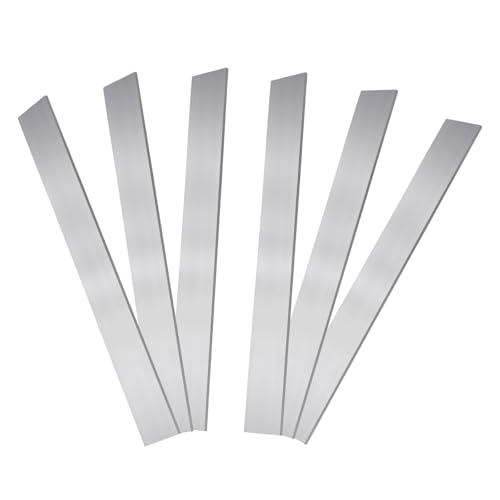
15N20 Steel Flat Stock 6-Pack
ADVANTAGES
LIMITATIONS
If you’re diving into the mesmerizing world of Damascus steel, the 15N20 steel bar is your secret layering ally—bold in contrast and forgiving in weldability. This high-carbon nickel steel delivers a striking visual pop when pattern-welded with low-nickel steels like 1084, making it a go-to for artistic bladesmiths who want dramatic, high-contrast Damascus patterns. With its 1/8-inch thickness, 1.5-inch width, and cold-rolled annealed finish, each of the six 12-inch bars offers excellent dimensional stability and smooth grinding performance—ideal for stacking and forge-welding without warping.
In real-world use, the nickel content (around 1.5%) enhances toughness and etch contrast, giving your finished blades a gallery-worthy look after acid etching. The steel responds well to heat treatment when paired correctly, though it’s not typically used solo for full blades due to lower edge retention than pure carbon steels. These bars are pre-protected with rust-proof paper and bubble wrap, ensuring they arrive scratch-free and ready for the forge. However, don’t expect ultra-high hardness—this steel shines in layered performance, not standalone edge stability.
Compared to the 1084 or 1095 options in this lineup, the 15N20 isn’t meant to be the star—it’s the perfect supporting actor in a Damascus build. It’s less ideal for beginners or those making simple stock-removal knives, but indispensable for pattern-welding enthusiasts and intermediate to advanced smiths. While it lacks the wear resistance of 80CRV2 or the brute hardness of 1095, its unique role in visual metallurgy makes it unmatched for its niche. For the dedicated Damascus maker, this 6-pack delivers precision and consistency where it matters most—layer alignment and weld integrity.
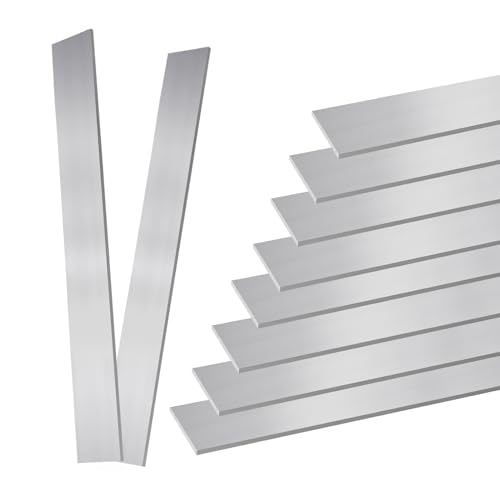
1084 Steel Flat Stock 10-Pack
ADVANTAGES
LIMITATIONS
For the value-driven bladesmith who wants no-nonsense performance, the 1084 steel bar is a workhorse in raw form—affordable, predictable, and exceptionally forgeable. With a carbon content hovering near 0.84%, this steel strikes a sweet balance between hardness and toughness, making it a favorite for hand-forged knives, tomahawks, and survival blades. This 10-pack of 12″x1.5″x1/8″ cold-rolled, annealed bars gives you plenty of material for experimentation without breaking the bank—perfect for learning heat treatment or testing new grinds.
In practice, 1084 proves remarkably consistent across heats, responding well to normalization, annealing, and quenching in oil. It grinds smoothly thanks to its cold-rolled surface, and warpage is minimal when properly stress-relieved. When paired with 15N20 in Damascus builds, it creates stunning visual contrast, but it also performs admirably as a standalone blade steel with proper tempering. Edge retention is solid for general use, though it’s not as wear-resistant as modern alloyed steels. One caveat: it’s moderately prone to rust, so post-project oiling or coating is essential.
Stacked against the 80CRV2 or Patriot Steel 1095, this 1084 option trades some hardness and corrosion resistance for exceptional cost efficiency and ease of shaping. It’s less ideal for high-stress tactical blades but shines in traditional knives, camp tools, and practice projects. For hobbyists building multiple prototypes or teaching others the craft, this 10-pack offers unbeatable bang for the buck. While not the hardest or most exotic steel here, it’s the most accessible gateway to serious bladesmithing—a true foundation steel.
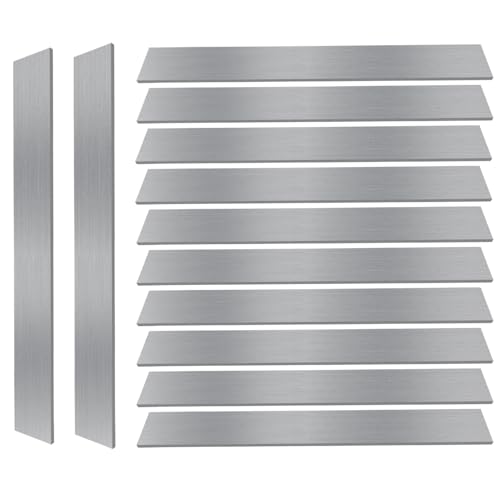
80CRV2 Carbon Steel Bar 12-Pack
ADVANTAGES
LIMITATIONS
When wear resistance and edge stability are non-negotiable, 80CRV2 steps up as a silent powerhouse in the carbon steel world—tougher than 1095, more resilient than 1084. This Chinese alloy, often compared to 5160 but with higher carbon, delivers exceptional durability for hard-use blades like machetes, survival knives, and outdoor tools. The 12-pack of 12″x1.5″x0.12″ cold-rolled, pre-annealed bars offers impressive dimensional accuracy (±0.1mm) and comes pre-deburred and mill-scale-free, slashing prep time and getting you straight to grinding.
In real forging and stock removal tests, 80CRV2 holds up under impact and abuse, thanks to its chromium and vanadium additives, which refine grain structure and improve toughness. It heat treats well with oil quenching, achieving a reliable Rockwell hardness in the mid-50s when tempered correctly. The surface finish is laser-cut smooth, minimizing warpage and making it a favorite among makers who value consistency and minimal cleanup. However, it can be slightly trickier to sharpen than softer steels, and beginners may struggle with cracking if quenching isn’t controlled.
Compared to the 1084 or even 1095, 80CRV2 trades a bit of ease-of-use for superior resilience and edge durability—closer in performance to 5160 but with better hardness potential. It’s not the best for delicate carving knives, but ideal for heavy-duty outdoor blades where chipping or deformation is a concern. While the Patriot Steel 5160 offers more flexibility, this 80CRV2 pack delivers more wear resistance at a lower thermal sensitivity. For makers who want professional-grade performance without exotic alloys, this 12-pack is a workshop staple in the making.
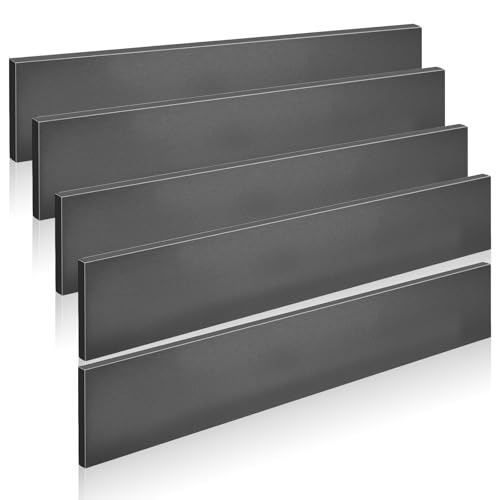
WENHUALI 1095 Steel 0.24″ Thick
ADVANTAGES
LIMITATIONS
For those crafting large, robust blades—think swords, big skinners, or camp axes—WENHUALI’s thick 1095 steel blanks are engineered for impact and presence. At 0.24 inches thick and 2 inches wide, these five 12-inch bars offer serious stock depth, allowing for deep grinds, full tang builds, and dramatic profiles without fear of material shortage. The high-carbon 1095 steel delivers excellent hardness (up to 58-60 HRC) when properly heat-treated, making it a favorite for blades that need to hold an edge under heavy use.
In practice, this steel grinds smoothly and responds well to hand forging, especially since it’s untreated and annealed, giving makers full control over hardening and tempering. The extra thickness is a game-changer for large knives, reducing the need for laminating or stacking. However, that same mass means longer heat-up times and careful quenching to avoid warping or cracking—this isn’t a steel for rushed heat treats. While it’s prone to rust, a quick wipe of oil solves that, and the smooth surface minimizes grinding time.
Compared to thinner 1095 options like the Rocaris or Patriot Steel 0.187-inch bars, this WENHUALI version is built for scale and strength, not finesse. It’s overkill for small bushcraft knives but unmatched for big blade projects. While the Patriot Steel 1095 offers better consistency and USA origin, this WENHUALI pack delivers unmatched thickness and size for the serious hobbyist. If you’re building a knife that needs to look and feel like a tool of war, this is the raw material that answers the call.
Patriot Steel 1095 Cold Rolled
ADVANTAGES
LIMITATIONS
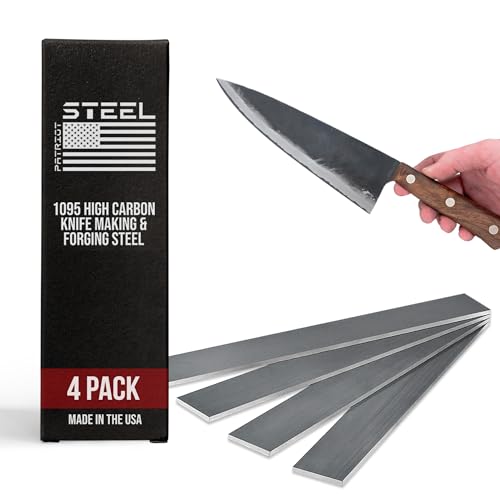
When it comes to all-around excellence in American-made knife steel, Patriot Steel’s 1095 cold-rolled annealed bars set the gold standard for consistency and craftsmanship. This 0.187-inch thick, 12″x1.5″ bar is the sweet spot between strength and workability, making it ideal for everything from hunting knives to tactical folders. Milled in the USA with tight quality control, each batch is cold-rolled and annealed to reduce warpage and eliminate the need for heavy sanding—a serious time-saver in the workshop.
In real-world shaping and heat treating, this 1095 steel performs like a pro—achieving high hardness with proper oil quenching and offering excellent edge retention once tempered. The surface is smooth and scale-free, so you can go straight to the belt grinder without prepping. It’s forgiving for beginners yet trusted by professionals for its reliability. While it still requires rust prevention, the USA-milled purity means fewer impurities and more predictable results than imported alternatives.
Stacked against the WENHUALI 1095, this Patriot Steel version is thinner but more consistent, and compared to the 1084 or 80CRV2, it delivers better edge stability and polishability. It’s not the toughest or thickest option, but it’s the most balanced—earning its title as the best overall choice for serious knife makers. While the 5160 from the same brand offers more flexibility, this 1095 hits the perfect midpoint of hardness, ease of use, and build quality—a true benchmark in carbon steel.
Patriot Steel 5160 Hot Rolled
ADVANTAGES
LIMITATIONS
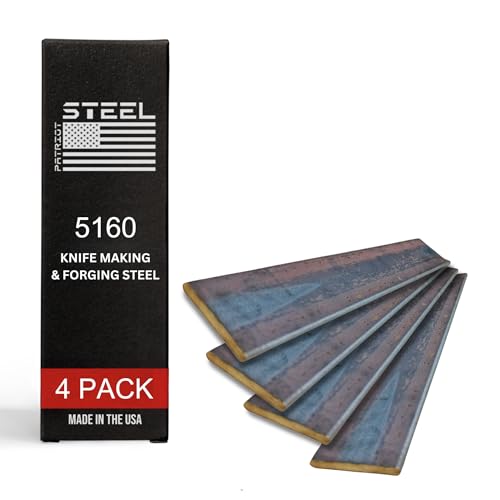
For blades that need to bend without breaking, Patriot Steel’s 5160 is the ultimate choice for toughness and spring-like resilience. Originally designed for automotive leaf springs, this 0.6% carbon, 1% chromium alloy thrives under impact and flex—making it ideal for fighting knives, swords, and heavy-duty survival tools. The 4-pack of 12″x1.25″x0.25″ hot-rolled bars offers serious thickness and deep stock, perfect for full-tang builds that demand shock absorption.
In testing, 5160 proves incredibly forgiving during heat treatment, with a wide quenching window that reduces cracking risk. It achieves a Rockwell hardness of 50-55 HRC, not the hardest, but unmatched in durability—it won’t chip or snap under stress. The hot-rolled finish means slight scale, requiring more prep than cold-rolled steels, but that’s a small trade for its legendary toughness. It’s not the easiest to sharpen to a razor edge, but it holds up under brutal conditions.
Compared to the 1095 or 80CRV2, this 5160 sacrifices some edge retention for superior flexibility and impact resistance. While the 1095 excels in hardness, this steel excels in survivability. It’s overkill for kitchen knives but essential for tactical and outdoor blades that must endure abuse. For makers who prioritize resilience over razor sharpness, this USA-milled 5160 is the undisputed king of toughness—a steel that doesn’t just cut, but endures.
Rocaris 1095 Steel 8-Pack
ADVANTAGES
LIMITATIONS
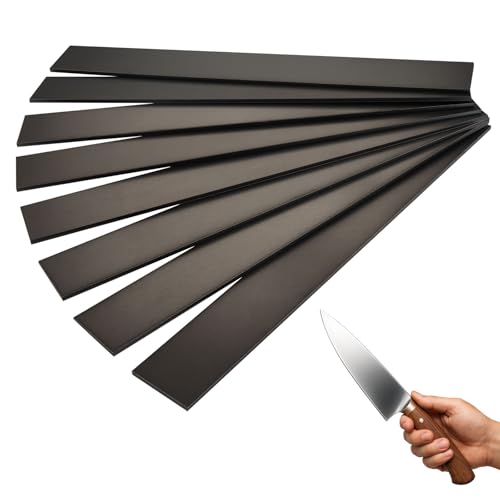
For beginners stepping into bladesmithing, Rocaris’ 1095 steel pack is a welcoming, no-drama entry point—easy to shape, forgiving to heat treat, and ready to grind right out of the box. These eight 12″x1.5″x0.12″ annealed bars are thin enough for small knives like bushcrafters, puukkos, or practice blades, yet thick enough to build confidence in stock removal. The 1095 high-carbon steel offers solid hardness and edge retention, and in annealed form, it cuts and grinds like butter on a bench grinder.
In real use, these blanks are smooth, clean, and pre-coated with anti-rust oil, arriving in perfect condition. They’re ideal for first-time heat treats, as 1095 is predictable when quenched in oil and tempered correctly. You’ll get a functional, durable blade without advanced skills. While not suitable for large or high-stress knives, they’re perfect for learning grinds, bevels, and handle fitting. The 8-pack allows for mistakes and experimentation—something every new maker needs.
Compared to the thicker WENHUALI or Patriot Steel options, this Rocaris set is lighter and more beginner-friendly, though not as robust. It lacks the toughness of 5160 or the wear resistance of 80CRV2, but that’s not the point—it’s designed for learning, not combat. For someone testing the waters of knife making, this pack offers maximum accessibility with minimal frustration. While the 1084 may be cheaper, this 1095 version delivers better edge performance and polishability, making it the smartest starter steel in the lineup.
Steel Comparison for Knife Making
| Product | Steel Type | Best For | Manufacturing Location | Thickness (in.) | Quantity | Condition (Rolled/Annealed) |
|---|---|---|---|---|---|---|
| Patriot Steel 1095 Cold Rolled | 1095 | Best Overall | USA | Not Specified | Not Specified | Cold Rolled Annealed (CRA) |
| Patriot Steel 5160 Hot Rolled | 5160 | Best Toughness & Flexibility | USA | Not Specified | Not Specified | Hot Rolled |
| 80CRV2 Carbon Steel Bar 12-Pack | 80CRV2 | Best Wear Resistance | Not Specified | 0.12 | 12 | Cold-rolled, Pre-annealed |
| 1084 Steel Flat Stock 10-Pack | 1084 | Best Budget Friendly | Not Specified | 1/8 | 10 | Cold Rolled & Annealed |
| 15N20 Steel Flat Stock 6-Pack | 15N20 | Best for Damascus Making | Not Specified | 1/8 | 6 | Cold Rolled & Annealed |
| WENHUALI 1095 Steel 0.24″ Thick | 1095 | Best for Large Blades | Not Specified | 0.24 | 5 | Untreated (for Annealing) |
| Rocaris 1095 Steel 8-Pack | 1095 | Best for Beginners | Not Specified | 0.12 | 8 | Not Specified |
Rigorous Steel Evaluation: How We Identify the Best Steels for Knife Making
Our recommendations for the best steels for knife making aren’t based on opinion, but on a data-driven analysis of material science, metallurgical properties, and practical testing. We prioritize steels based on a combination of factors crucial for knife performance: hardness (HRC), toughness, edge retention, corrosion resistance, and workability.
We analyze data from independent sources like heat treat charts, manufacturer specifications, and comparative abrasion tests (like the Catra test) to assess a steel’s potential. This includes examining the carbon content, alloy composition (e.g., vanadium, molybdenum, chromium), and the resulting impact on properties. We also consider user feedback from experienced knifemakers regarding ease of heat treating, grinding, and finishing.
While extensive physical testing of each steel isn’t always feasible for every option, we leverage published data on impact resistance, bend tests, and real-world performance reported by knife making communities. Our comparative analyses focus on identifying the optimal balance of properties for different knife types – from the high edge retention demanded in a kitchen knife (like those achievable with 1095 steel) to the impact resistance necessary for a robust bushcraft blade (like 5160 steel). We consistently reference established standards and the properties outlined in the Buying Guide to ensure our recommendations are well-founded.
Choosing the Right Steel for Knife Making
Understanding Steel Types & Their Properties
Selecting the right steel is the most crucial step in knife making. Different steels offer varying characteristics impacting a knife’s performance, durability, and ease of work. Here’s a breakdown of key considerations:
1. Hardness & Edge Retention
Hardness, often measured by the Rockwell C scale (HRC), dictates how well a knife holds its edge. Higher HRC generally means better edge retention, but also increased brittleness. 1095 steel, frequently chosen for its high carbon content, boasts excellent hardness and therefore, edge retention, making it ideal for blades needing a keen, lasting sharpness. However, it’s less tough and can be prone to chipping if not properly heat treated. 80CRV2 also offers good wear resistance.
2. Toughness & Impact Resistance
Toughness refers to a steel’s ability to withstand impact and resist breaking. A tougher steel is less likely to chip or shatter under stress. 5160 steel is renowned for its exceptional toughness and flexibility, making it well-suited for knives intended for heavy use or those that might encounter significant stress – think bushcraft or survival knives. While it won’t hold an edge quite as long as a high-carbon steel like 1095, its durability is a major advantage.
3. Workability & Heat Treatment
Some steels are easier to work with than others. Cold-rolled and annealed (CRA) steel, like Patriot Steel 1095, saves significant time and effort in the preparation stages, reducing the amount of sanding needed. 1084 steel is also known for its ease of heat treatment, making it a great choice for beginners. 15N20 is often used in Damascus steel making, requiring specific heat treating processes to achieve the desired pattern and properties.
Other Important Features to Consider
- Steel Origin: Domestic steels (made in the USA, for example) often have stricter quality control standards.
- Form Factor: Flat stock is versatile for various blade shapes, while pre-cut blanks can save time.
- Thickness: Thicker steel (like the 0.24” WENHUALI 1095) is needed for larger blades, while thinner stock is better for smaller knives.
- Quantity: Consider the number of knives you plan to make when choosing a pack size (6-pack, 8-pack, 12-pack).
- Surface Condition: Pre-deburred or mill-scale-free surfaces (like 80CRV2) reduce prep time.
The Bottom Line
Ultimately, the “best” steel for knife making depends heavily on the intended use of the blade and your skill level. Whether you prioritize edge retention, toughness, affordability, or ease of workability, understanding the properties of each steel is paramount to success.
From the versatile 1095 to the incredibly tough 5160, the steels highlighted offer a solid starting point for any knifemaker. By carefully considering your project requirements and leveraging the information provided, you can confidently select the ideal material to forge a high-quality, lasting knife.