
How To Master The Claw Grip For Safer Cutting
This post contains affiliate links. As an Amazon Associate, we earn from qualifying purchases.
To master the claw grip for safer cutting, curl your fingertips inward, tucking them under your knuckles, while holding the knife handle firmly but comfortably. Keeping your wrist straight enhances control as you chop. Practice with easy vegetables like celery and zucchini for about 20 minutes at a time. Correct finger positioning and avoiding excessive pressure are essential for success. More detailed explanations and tips will follow to help you build confidence with each cut.
Essential Facts in 30 Seconds
- Curl fingertips inward and tuck under knuckles to protect against cuts and maintain control.
- Grip knife handle firmly but avoid excessive pressure to prevent hand fatigue.
- Keep elbow out for improved control and comfortable wrist angle while cutting.
- Focus on one vegetable type at a time to build confidence and enhance skills.
- Practice for about 20 minutes regularly to develop muscle memory for uniform cuts and better grip.
Understanding the Basics of the Claw Grip
Using the claw grip makes cutting safer and easier. This technique keeps your fingertips tucked inward. Your thumb and index finger hold the food securely.
By lifting your knuckles, you protect your fingers from the knife. Tucked fingertips help prevent accidental cuts. This grip gives you more control while chopping.
Each finger helps stabilize the food for even cuts. Keeping your wrist straight makes cutting more comfortable. Mastering the claw grip is important for everyone, as it improves knife skills and creates a safer kitchen, especially when combined with proper cutting techniques.
Importance of the Claw Grip in Cooking

Mastering the claw grip is essential for safe and effective cooking. This technique keeps fingers curled away from the blade. It helps prevent cuts and promotes better knife control. With practice, the claw grip becomes second nature.
Many benefits come from using the claw grip:
- It boosts safety in the kitchen.
- It leads to consistent and even cuts.
- It increases efficiency during food prep.
- It builds confidence when using a sharp knife.
- It improves the overall look of dishes.
Using the claw grip makes cooking easier and more enjoyable. It’s a simple skill that every cook should learn. Proper hand positioning ensures that your fingers remain safe while you cut.
Stay safe and cook with confidence!
Common Mistakes and How to Avoid Them
The claw grip is key for safe cooking. Many people make mistakes that can lead to accidents. One common mistake isn’t curling fingers into a claw shape. This can increase the risk of cuts.
Grip the knife firmly, but not too tight. Too much pressure can cause slippage. Too little pressure can make cuts uneven. Keep your elbow out to improve control. This helps avoid awkward wrist angles.
Use your sense of touch, not just your eyes. This skill helps with precision. Focus on one vegetable type at a time. This method builds your knife skills. Additionally, practicing proper grip technique will enhance your confidence and control while cutting.
Strong knife skills are essential for all home cooks. They make your cutting technique better and safer.
Tips for Beginners
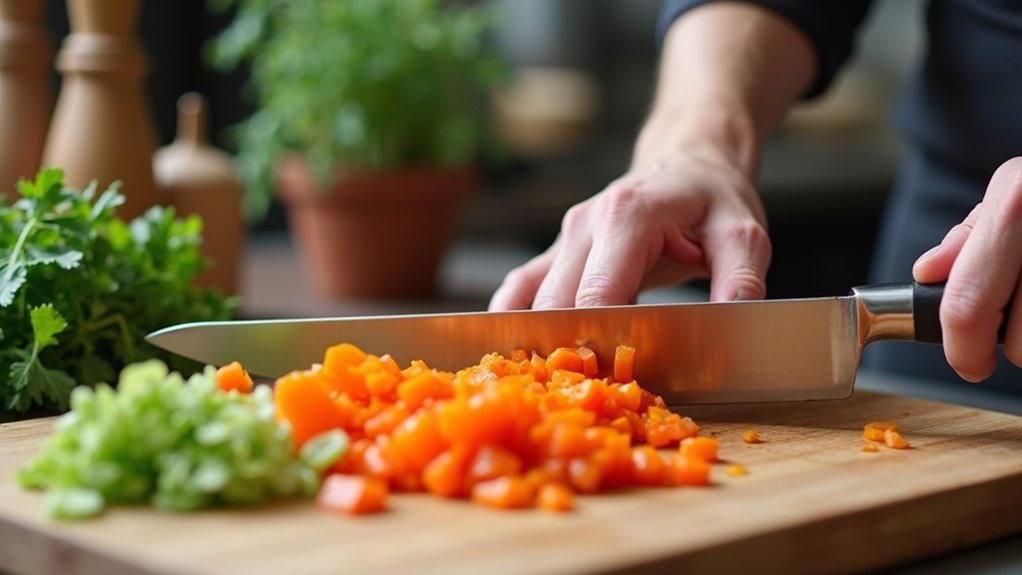
Starting with the claw grip might seem tough, but it becomes easier with practice. Here are some helpful tips for beginners:
- Use easy vegetables like celery and zucchini. They’re simple to cut.
- Curl your fingertips inward. Keep them tucked under your knuckles.
- Hold the knife handle firmly. This helps prevent tired hands.
- Keep your wrist straight. This allows for smooth knife movement.
- Practice for 20 minutes at a time. Focus on cutting the same vegetable.
With these tips, you’ll improve quickly. Remember, a sharp chef’s knife is crucial for effective cutting and minimizes the risk of accidents. Happy cooking!
Embrace the Power of the Claw Grip
Embrace the power of the claw grip. This grip not only makes your kitchen safer but also boosts your cutting skills.
Tuck your fingers around the knife handle. Keep your wrist relaxed for better control. Your thumb should support the grip firmly. Keep your fingertips tucked in to avoid cuts.
This position helps you feel more confident while cooking. Regular practice develops muscle memory. With muscle memory, you make uniform cuts that enhance your cooking.
Avoid mistakes like incorrect finger positioning or pressing too hard. Over time, you’ll master the claw grip. This makes food prep safer and faster. Additionally, a solid grip enhances control over the knife, contributing to overall safety.
Enjoy cooking with confidence!
Frequently Asked Questions
Can the Claw Grip Be Used With All Types of Knives?
The claw grip works well with many types of knives. It helps you cut safely and effectively. This grip keeps your fingers away from the blade. It also gives you better control while cutting. You can use it with chef’s knives, paring knives, and more. The claw grip can make your kitchen tasks easier and more comfortable. It’s all about safety and efficiency. Give it a try and see how it improves your cooking!
How Long Does It Take to Master the Claw Grip?
Mastering the claw grip takes one to three hours of focused practice. This time helps you build muscle memory. It also boosts your cutting speed. You gain better knife control and improve safety while cooking. Practice regularly for the best results. The claw grip is important for keeping fingers safe. It makes slicing and dicing easier. You’ll feel more confident in the kitchen. Keep practicing, and you’ll notice the difference.
Is the Claw Grip Safe for Children to Learn?
The claw grip is a great technique for kids. It helps them stay safe while learning to use knives. With adult supervision, children can practice cutting skills. This practice offers more than just safety. It builds their confidence in the kitchen. Kids learn important skills and have fun too. It’s a hands-on way for them to explore cooking. Overall, the claw grip is a smart choice for young chefs.
What Vegetables Are Easiest for Practicing the Claw Grip?
Cucumber slices, zucchini rounds, and carrot sticks are perfect for practicing the claw grip. They are easy to hold and cut. Bell peppers and potato chunks also work well. They provide good grip and stability. Avoid onion wedges for now. They can be slippery and tricky until you gain more confidence. Stick to the simpler vegetables to build your skills. Enjoy the process and have fun while learning!
Are There Alternatives to the Claw Grip for Cutting?
Alternatives to the claw grip exist, but they may not be as safe or precise. Other grips can include the pinch grip or the flat grip. The pinch grip uses your thumb and fingers to hold the food. It’s good for small items like herbs or garlic. The flat grip lays your fingers flat on the food. This helps to stabilize larger items, like vegetables.
Each grip has its pros and cons. The claw grip keeps fingers safe from the knife. It allows for better control while cutting. The other grips may lead to finger injuries if not careful.
Practice is key. Try different grips to see what feels best. Learning good knife skills helps in the kitchen. Always remember to cut away from your body. This keeps you safe while you cook.
Conclusion
Master the claw grip for safe and efficient cutting. This technique helps you avoid accidents and improves your knife skills. Keep your fingers curled and your thumb tucked away. This protects your hands while you chop.
Practice this grip regularly. Over time, you will feel more confident in the kitchen. Embrace the claw grip. Cooking becomes safer and more enjoyable. Happy chopping!