
Santoku Vs. Nakiri: Japanese Knife Traditions Compared
This post contains affiliate links. As an Amazon Associate, we earn from qualifying purchases.
The Santoku and Nakiri knives serve different culinary purposes, with the Santoku designed for versatile cutting tasks and the Nakiri specifically tailored for chopping vegetables. The Santoku features a slightly curved blade ideal for slicing, dicing, and mincing, while the Nakiri boasts a straight blade that excels in precision vegetable cutting. Both knives generally range from 5 to 7 inches in length, but they differ in width and edge style. For those interested in a deeper understanding of their advantages and uses, further details will follow in the article.
Essential Facts in 30 Seconds
- The Santoku knife features a versatile curved blade; the Nakiri has a straight blade for vegetable chopping.
- Both knives range from 5 to 7 inches in length; Nakiri’s wider blade offers stability for precise cuts.
- Santoku is ideal for slicing, dicing, and mincing; Nakiri specializes in quick, uniform vegetable preparation.
- The Santoku may include a Granton edge for enhanced slicing; Nakiri focuses on achieving clean, straight cuts.
- Both knife types exemplify Japanese culinary craftsmanship, reflecting traditional techniques and artistry.
What Is a Santoku Knife?
The Santoku knife is a popular kitchen tool known for its special design and many uses.
It’s called the knife of “three virtues” because it’s great at slicing, dicing, and mincing. The blade is usually 5 to 7 inches long, shorter than a typical Western chef’s knife.
Its sheepsfoot blade has a flat edge and a slight curve at the tip. This shape allows for an easy rocking motion when cutting.
Many Santoku knives also have a Granton edge. This feature helps keep food from sticking to the blade.
Weighing between 155 and 227 grams, this knife is lightweight. It’s easy to handle for both professional cooks and home chefs.
The Santoku knife is an essential tool in any kitchen, embodying the Japanese philosophy of “monozukuri” that emphasizes craftsmanship and quality.
What Is a Nakiri Knife?

A Nakiri knife, known as 菜切り包丁 in Japanese, is perfect for chopping vegetables. Its blade is straight and measures between 5 to 7 inches long. This design helps with precise cuts and offers great stability while slicing.
The Nakiri knife isn’t just a tool; it has a rich history in Japanese cooking. Many chefs prefer it for its ability to enhance cutting techniques. This knife is a must-have for anyone who loves to cook vegetables. It makes meal prep easier and more enjoyable.
Blade Design and Shape
The Nakiri knife stands out in Japanese cooking. It is specially made for preparing vegetables. The blade is rectangular and has a straight edge. This design helps with precise cuts. The blade usually ranges from 5 to 7 inches long. This size is perfect for cutting various vegetables.
The Nakiri knife has a squared-off tip. This feature increases knuckle clearance. It also makes chopping safer. Additionally, the Nakiri knife reflects the culinary craftsmanship that is celebrated in Japanese knife traditions.
Here’s a quick look at the Nakiri compared to other knives:
| Feature | Nakiri Knife |
|---|---|
| Blade Shape | Rectangular |
| Edge Type | Straight edge |
| Ideal Use | Vegetable preparation |
| Cutting Motion | Push-cutting |
| Thickness | Thinner than a chef’s knife |
The Nakiri knife allows for quick, efficient cutting. It makes vegetable prep faster and easier.
Cutting Techniques and Uses
Using a Nakiri knife can make cutting vegetables easier and faster. This knife is special for chopping and slicing.
Here are three great reasons to use a Nakiri knife:
- Precise Cuts: The straight blade helps you make even and accurate cuts.
- Safety and Control: The flat tip keeps your knuckles safe while you chop.
- Lightweight Design: It’s lighter than a Santoku knife, making it easy to handle.
With a blade length between 5 to 7 inches, you can easily cut different vegetables. Additionally, using a Nakiri knife can enhance your enjoyment of natural flavors in your dishes.
This knife makes kitchen tasks quicker and more fun. Enjoy cooking with a Nakiri knife!
Historical Significance in Cuisine
Japanese culinary traditions highlight the Nakiri knife‘s important role in vegetable preparation. This knife, dating back to the Edo period, has a straight, flat blade that’s usually 5 to 7 inches long. Its unique shape allows for clean and precise cuts.
The Nakiri knife excels at slicing and dicing vegetables. It uses a push-cutting technique. This makes chopping quick and uniform. Using a Nakiri enriches the flavors of vegetables while keeping their integrity.
Crafted mainly in the Sakai region, Nakiri knives are highly valued. They’ve deep historical significance in Japanese cooking. Using a Nakiri connects you to these culinary traditions. This culinary heritage enhances your cooking experience, making it more enjoyable and efficient. Enjoy the art of vegetable preparation with a Nakiri knife!
Key Differences Between Santoku and Nakiri Knives

Understanding the differences between Santoku and Nakiri knives is essential.
The Santoku knife has a slightly curved blade. This shape helps with rocking motions while chopping. It’s great for slicing, dicing, and mincing.
On the other hand, the Nakiri knife has a straight blade. This design allows for precise, vertical cuts. It’s perfect for chopping vegetables quickly and evenly.
Both knives serve different purposes in the kitchen.
Picking the right knife can make cooking easier and more enjoyable. Consider what you cook most often. This will help you choose the best knife for your needs.
Blade Design Comparison
Understanding blade design helps you pick the right knife for your kitchen. Here’s a simple comparison of Santoku and Nakiri knives:
1. Blade Shape: Santoku knives have a curved edge. This is good for rocking motions.
Nakiri knives have a straight edge. They’re great for chopping vegetables.
2. Blade Width: Nakiri blades are wider and have a squared tip. This gives them more stability.
Santoku blades are thinner with a sheepsfoot tip. This makes them versatile.
3. Surface Features: Santoku knives often have a Granton edge. This keeps food from sticking.
Nakiri knives focus on making clean cuts. They don’t need rocking.
Both knife types have double bevel edges.
Santoku knives are thicker for different cooking tasks. Choose based on what you cook most!
Cutting Techniques Differences
Both Santoku and Nakiri knives are great for the kitchen, but they’ve different strengths.
The Nakiri knife has a straight edge. This design makes it excellent for push-cutting. It’s perfect for slicing vegetables. You can make clean, precise cuts without rocking the knife.
On the other hand, the Santoku knife has a slightly curved edge. This shape helps with various cutting styles. You can slice, dice, and mince with ease. The Granton edge on a Santoku knife stops food from sticking. This feature boosts your cutting speed.
Chefs enjoy both knives for vegetable tasks. The Nakiri is best for veggies. The Santoku works well for many kitchen jobs, including meat and fish preparation. Chef’s knife is considered the workhorse of the kitchen, providing versatility in various culinary tasks.
Choose the knife that fits your cutting needs best!
Advantages of Using a Santoku Knife
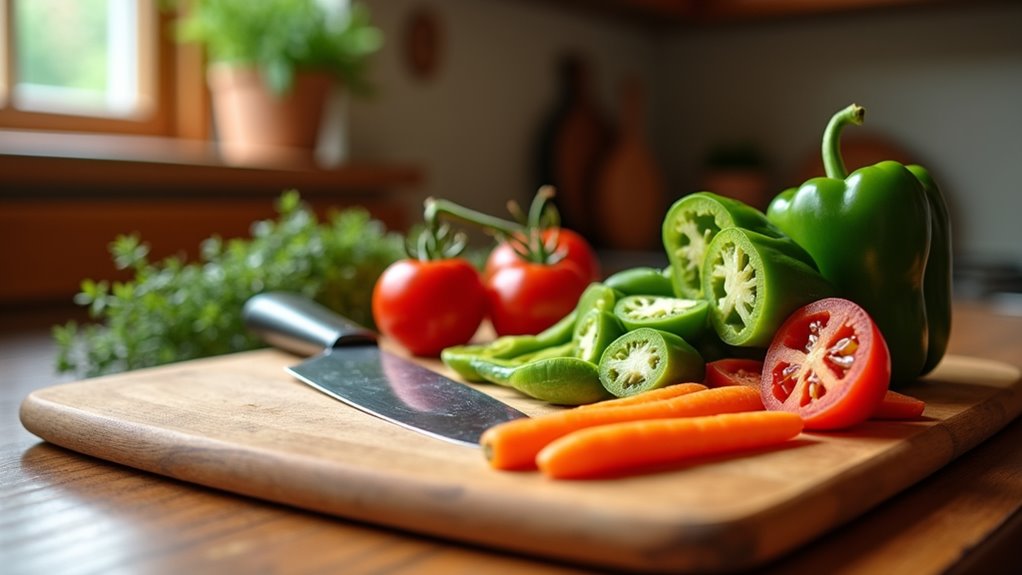
The Santoku knife is a must-have in your kitchen. It has many advantages for daily cooking. Here are three main benefits:
- Versatile Design: The sheepsfoot tip and flat edge make it easy to use. You can rock, chop, or slice with ease.
- Slicing Efficiency: This knife has special indentations. They stop food from sticking, making slicing vegetables, meats, and fish smoother.
- Balanced Weight: Weighing between 155 to 227 grams, it feels good in your hand. This balance gives you control, whether you’re new to cooking or a pro.
The Santoku knife blends traditional Japanese craftsmanship with modern use.
It’s not just practical; it adds style to your kitchen too.
Advantages of Using a Nakiri Knife

A Nakiri knife is perfect for cooking with fresh vegetables. This Japanese knife has a straight edge, making it easy to slice vegetables precisely. The blade is rectangular, which gives you good knuckle clearance. This means you can chop safely and with control.
Nakiri knives usually measure between 5 to 7 inches. This size makes them easy to handle for everyone, from beginners to experts. They’re lightweight, weighing around 4 to 6 ounces. This design helps reduce fatigue during long cooking sessions.
The Nakiri knife uses vertical cutting techniques. This helps you create even slices. Uniform slices make your salads and stir-fries look great. Your dishes won’t only taste good but also look appealing.
The craftsmanship involved in creating a Nakiri knife reflects the artistry behind the bladesmithing process, showcasing the dedication of the bladesmith.
Enjoy cooking with a Nakiri knife!
Which Knife Should You Choose?

Choosing the right knife for your kitchen is important. It can change how you cook. Let’s compare the Nakiri knife and the Santoku knife.
The Nakiri knife is perfect for vegetables. Its straight edge and squared tip make dicing and mincing easy. This knife helps you prepare fresh veggies quickly.
The Santoku knife offers more versatility. Use it for slicing, dicing, and mincing different foods. Its curved blade works well for many tasks in the kitchen.
Think about your kitchen space. The Santoku knife is great for small spaces. It can do many jobs. The Nakiri knife is more specialized for vegetables. Consider that both knives are designed for control and precision, which enhances your culinary skills.
Consider how you cook. Choose the knife that fits your needs best!
Exploring Knife Care and Maintenance

Taking care of your Nakiri and Santoku knives is important. Keep them sharp by using a whetstone or honing rod. This helps maintain their cutting performance.
Clean them right after use with warm, soapy water and a soft cloth. Avoid abrasive sponges and dishwashers. They can harm the blade.
Store your knives in a knife block, on a magnetic strip, or with blade guards. This protects their sharpness and keeps you safe.
For knives with wooden handles, use food-safe mineral oil. This helps the wood last longer and prevents cracking.
Check your knives regularly for chips or damage. Fix any problems quickly to keep them safe and effective. Additionally, remember to apply a thin layer of oil to protect against rust and corrosion, especially in humid climates.
Proper knife care makes cooking easier and more enjoyable. Keep your knives in great shape!
Frequently Asked Questions
Can Santoku and Nakiri Knives Be Used Interchangeably?
Santoku and Nakiri knives can be used for similar tasks. Both are great for chopping and slicing. However, they have different designs that suit different foods.
The Santoku knife has a shorter, wider blade. It works well for meat, fish, and vegetables. The Nakiri knife has a straight blade, perfect for cutting vegetables.
Using them interchangeably can work, but it might affect how well you chop. If you chop a lot of veggies, the Nakiri knife is better. For a mix of foods, the Santoku knife is a good choice.
Choose based on what you cook most. Each knife has its strengths. Consider your cooking style to find the best fit.
How Do I Sharpen a Santoku or Nakiri Knife?
Sharp knives are safe knives. To sharpen your Santoku or Nakiri, use a whetstone. Keep the right angle while sharpening. This helps avoid mistakes. Honing steel is great for regular maintenance. It keeps your knives in top shape. Sharpening regularly ensures great performance. If needed, find a professional service for help. Enjoy cooking with your sharp knives!
What Materials Are Best for Santoku and Nakiri Knife Blades?
Santoku and Nakiri knives perform best with high-carbon stainless steel. This material keeps the edge sharp and resists rust. VG-10 steel is a popular choice. It offers great strength and looks beautiful. Damascus steel has a unique pattern and is also strong.
The handle matters too. Look for materials that provide a good grip. Wood, plastic, or metal can work well. A balanced handle makes the knife easy to use. Comfort matters when cutting food. Choose a knife that feels good in your hand.
With the right materials, Santoku and Nakiri knives can make cooking easier and more enjoyable.
Are There Specific Brands Known for High-Quality Santoku and Nakiri Knives?
Miyabi Santoku and Shun Nakiri knives are top choices for cooks. Global, Tojiro, and Masamoto also make amazing knives. Kikuichi and Wüsthof offer precision and style. These brands create tools that help you cook like a pro. Their knives are sharp, strong, and comfortable to hold. Great knives can change your cooking game. Invest in quality knives for better meals. You’ll enjoy cooking more with the right tools.
How Do I Determine the Right Size for My Knife?
Choose the right knife size by thinking about a few key factors. First, look at your hand size. A knife should feel comfortable in your grip. Next, consider your cutting style. Some people chop, while others slice. Your technique matters in choosing the blade length and width.
Also, think about the types of food you cut. Larger foods may need a bigger blade. Smaller foods may work better with a smaller knife. Always balance your comfort with your kitchen space. A knife should fit well in your drawer or knife block.
A good knife helps you cook better. Finding the right size will make cooking more enjoyable. Remember, a well-sized knife can improve your kitchen experience.
Conclusion
Choosing between a santoku and nakiri knife depends on your cooking needs. The nakiri knife has a straight edge. This makes it perfect for chopping vegetables and herbs with precision. It is great for those who focus on plant-based meals.
The santoku knife offers more versatility. It is excellent for slicing, dicing, and mincing. This knife is ideal for stir-fries, where you need to quickly cut meat and vegetables.
Both knives require proper care. Keeping them sharp and clean will make them last for years. Think about your cooking style and pick the knife that fits you best. Enjoy your time in the kitchen with the right tool!