
Cleaver Knives: History, Design, And Practical Uses
This post contains affiliate links. As an Amazon Associate, we earn from qualifying purchases.
Cleaver knives are essential kitchen tools known for their broad, rectangular blades that excel at heavy-duty tasks like chopping meat and vegetables. Various types, including Western, Chinese, and Japanese cleavers, cater to specific culinary needs. Their design enhances stability and efficiency, simplifying meal preparation. This article will delve into the rich history and cultural significance of cleaver knives, as well as tips on maintenance and practical uses for those seeking a deeper understanding.
Essential Facts in 30 Seconds
- Cleaver knives have a broad, rectangular blade made from high-quality stainless steel, suitable for heavy-duty tasks.
- Western cleavers are thick for butchering, while Chinese cleavers are lighter for precision slicing.
- They originated as ancient tools and have evolved into essential instruments in various culinary traditions.
- Cleavers are versatile, effective for cutting meat, chopping vegetables, and handling tough foods.
- Regular maintenance, including cleaning and sharpening, is essential for safety and optimal performance.
Definition and Anatomy of a Cleaver Knife
A cleaver knife features a broad, rectangular blade that makes it stand out in any kitchen. This knife is built for heavy-duty tasks, which is why many chefs love it.
Usually made from high-quality stainless steel, the blade is strong and durable. Its wide design offers stability, crucial for slicing, chopping, and deboning.
There are different types of cleaver knives for various tasks. The Chinese cleaver is great for delicate slicing. The Western cleaver works well for butchering larger pieces of meat.
This unique design blends precision with power. A cleaver knife is essential in both professional kitchens and home cooking. Additionally, understanding the importance of butcher knives can enhance your appreciation for the versatility and functionality of cleaver knives.
Importance and Versatility of Cleaver Knives
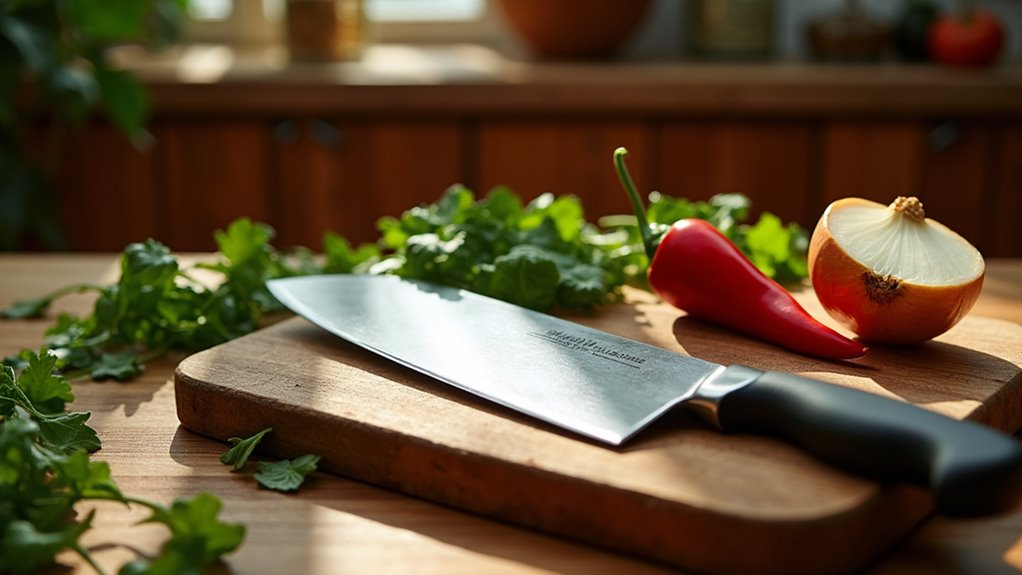
Cleaver knives are essential tools for every kitchen. Their strong design makes them perfect for cutting meat and chopping vegetables. You can slice, dice, mince, or crush ingredients easily. This boosts your efficiency while cooking.
Cleavers work well with tough foods, like root vegetables and soft bones. They’re useful in many cooking styles around the world.
Both professional chefs and home cooks can use cleavers. These knives make everyday cooking simpler. Whether making a hearty stew or a fresh salad, a cleaver adapts to your needs.
Adding this important tool to your kitchen will enhance your cooking experience. It makes meal prep easier and faster. A cleaver is a must-have in your cooking tools.
History and Cultural Significance
Cleaver knives have a long and rich history. They date back to ancient times and show how food preparation tools have changed. Early cleavers were made from stone and bone. Over time, they evolved into strong metal blades. This change improved their stability and control.
Cleaver knives are important in many cultures. In Asian cuisines, they hold special significance. For example, in Chinese cooking, the Chukabocho is essential for many tasks. It helps with chopping meat, vegetables, and more.
Japanese cleavers focus on precision. They’re perfect for presenting food beautifully. These knives reflect different cooking styles around the world. They adapt to meet various cooking needs.
With their flat, wide blades, cleavers can chop, slice, and dice easily. This makes them a must-have in modern kitchens. The craftsmanship of cleaver knives often showcases the dedication and passion of the artisans who create them.
Understanding the history and cultural importance of cleaver knives helps you appreciate them more. They’re more than just tools; they’re a part of culinary art.
Types of Cleaver Knives

Cleaver knives come in different types. Knowing about them helps you pick the best one for your cooking.
There are three main types: Western, Chinese, and Japanese cleavers.
Western cleavers are heavy and thick. They’re great for tough butchering tasks.
Chinese cleavers, also called Chukabocho, are lighter and thinner. These knives are good for slicing vegetables and meats.
Japanese cleavers focus on precision. The Nakiri is perfect for slicing vegetables. The Usuba is made for delicate tasks.
Each cleaver type matches a specific cooking style. Think about what you cook most.
Choose a cleaver that fits your cooking needs. This way, you get the best tool for your kitchen.
Maintenance and Safety Tips
Keeping your cleaver knife in top shape is vital for safe cooking. Regular maintenance is important. Clean your knife with mild soap and warm water. Always dry it well to prevent rust. Sharpen it frequently with a sharpening stone. This keeps it ready for heavy tasks. Store your cleaver in a knife block or a protective sheath. This helps maintain its edge. Always hold it securely. Stay focused while cutting. Additionally, applying a thin layer of food-safe mineral oil after drying can further enhance rust resistance.
| Task | Importance | Tips |
|---|---|---|
| Cleaning | Prevent rust | Use mild soap |
| Sharpening | Keep it effective | Use honing steel |
| Storage | Protect the blade | Knife block preferred |
With proper care, your cleaver knife will be a valuable tool in your kitchen!
Frequently Asked Questions
Can Cleaver Knives Be Used for Vegetables and Herbs?
Cleaver knives work great for chopping vegetables and mincing herbs. Their wide blade helps with slicing and dicing. This makes them very useful in the kitchen. You can cut through tough vegetables easily.
Using a cleaver can save time while cooking. It also improves safety. A good, sharp cleaver can reduce the risk of accidents. Plus, food looks better when cut neatly.
Whether you are cooking stir-fries or salads, a cleaver is a handy tool. It can help you prepare ingredients quickly. Enjoy cooking with confidence using a cleaver knife!
What Materials Are Commonly Used for Cleaver Knife Blades?
Cleaver blades come from different materials. Each type has its own strengths.
Stainless steel is popular. It resists rust and stains. This makes it easy to care for and lasts a long time.
Carbon steel is another good choice. It sharpens easily and holds an edge well. Many chefs prefer it for its performance.
High carbon options offer even more strength. They are tough and suitable for heavy-duty tasks.
Damascus steel is known for its unique patterns. This steel combines beauty and strength. It is also very sharp.
Titanium alloy is lightweight and strong. It resists corrosion, making it a great option too.
Some cleavers use hybrid materials. These blends give the benefits of different steels.
Cleaver design matters too. Forged cleavers are strong and durable. Stamped cleavers are lighter and easier to handle.
Choosing the right material depends on your needs. Consider how you plan to use the cleaver. Each material can help you in the kitchen.
How Do I Choose the Right Cleaver Knife for My Needs?
Choosing the right cleaver knife is important for your kitchen tasks. Think about what you will use it for. Will it be for butchering meat or cutting vegetables?
Next, check the blade weight. A heavier blade can chop through tough meat easily. The handle should feel comfortable in your hand. A good grip makes cutting safer and easier.
Consider the size of the knife. A larger cleaver can handle bigger tasks, but a smaller one may be better for delicate work.
Set a budget before you shop. You can find good options at different price points. Look for well-known brands. They often have better quality and reliability.
Read user reviews for tips on maintenance and cutting techniques. A little research helps you make the best choice. Find a cleaver that fits your needs, skills, and budget. Happy cooking!
Are There Specific Brands Known for High-Quality Cleaver Knives?
High-quality cleaver brands include Shun and Wüsthof. They blend traditional designs with modern features. Dalstrong and Victorinox offer budget-friendly options. Their knives come with ergonomic handles for comfort. Always check user reviews. Look for tips on maintenance. Pay attention to blade thickness and weight distribution. A good cleaver makes cooking easier and more enjoyable. Choose wisely!
Can Cleaver Knives Be Sharpened at Home?
You can sharpen cleaver knives at home. Use a whetstone for best results. Aim for a 15 to 20-degree angle while sharpening. Regularly hone the blade with honing steel. This keeps your cleaver sharp and ready to use. Sharp knives make cooking easier and safer. Enjoy better meal prep with a well-maintained cleaver!
Conclusion
Cleaver knives are essential tools in any kitchen. They chop, crush, and tackle tough ingredients with ease. Their heavy blades make them powerful for cutting through meat and smashing garlic. Use them wisely to avoid accidents. A slip could turn a great meal into a disaster.
Embrace the strength of the cleaver. It helps you prepare delicious dishes. Keep your fingers safe while using it. Mastering this tool can elevate your cooking skills. With practice, you’ll feel confident and ready to create culinary wonders. Enjoy the process and have fun in the kitchen!