
Understanding Fillet Knives And Their Role In Food Prep
This post contains affiliate links. As an Amazon Associate, we earn from qualifying purchases.
Fillet knives are essential for fish preparation, featuring long, thin, flexible blades that simplify the removal of skin and bones. Maintaining a sharp blade ensures clean cuts, and pairing your knife with a sturdy cutting board and protective gloves enhances safety. As you practice, your filleting skills will improve, making your dishes appear more professional. For those interested in a deeper understanding, further tips and advanced techniques will be discussed later in the article.
Essential Facts in 30 Seconds
- Fillet knives have long, flexible blades for precise cuts on various fish sizes, enhancing food prep efficiency.
- High-carbon stainless steel blades provide strength, flexibility, and rust resistance for sharpness and performance.
- Maintaining a 12-15 degree knife angle during filleting ensures clean cuts and reduces waste.
- Regular sharpening and cleaning are essential for the longevity and optimal performance of fillet knives.
- Fillet knives are also versatile for slicing boneless meats and delicate fruits, improving cooking skills and presentation.
Anatomy of a Fillet Knife
Filleting fish requires a good fillet knife. This knife has a long, thin, and flexible blade. Blade lengths vary from 4 to 11 inches. Longer blades help you make clean cuts around bones.
High-carbon stainless steel makes the knife strong and resistant to rust. This is important for preparing seafood. The handle is shaped for comfort and a firm grip. This design helps you control the knife better.
The blade tapers to a fine point. This point helps with skinning fish and removing pin bones. You can do this without wasting any meat. A well-chosen knife is crucial for successful filleting techniques that enhance your overall results.
Understanding these features can make you a better fish filer.
Types of Fillet Knives
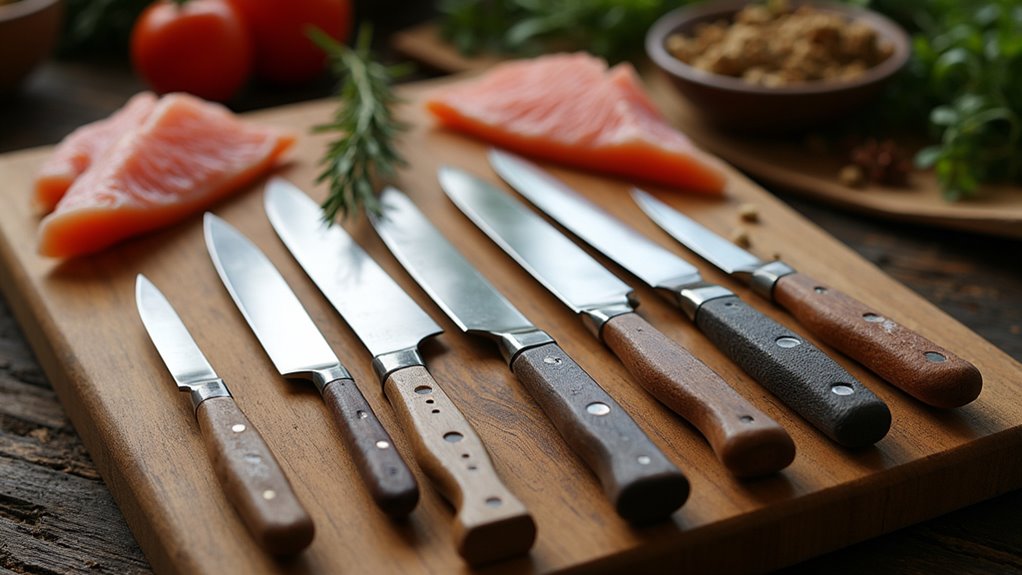
Choosing the right fillet knife is important. Blade length and flexibility matter a lot.
For small fish, a 4-6 inch blade works best. Medium fish need a 7-8 inch blade. Large fish require a blade that’s 9-11 inches long.
A flexible blade helps you move around bones easily. This makes filleting smoother and more precise.
Good fillet knives can help you enjoy your fishing experience more.
Blade Length Variations
Fillet knives have different blade lengths, ranging from 4 to 11 inches. Each length serves a purpose based on the size of the fish.
Short blades, 4 to 6 inches, work best for small fish like panfish. They allow for precision in tight spots.
Medium blades, around 7 to 8 inches, are versatile. They balance control and flexibility for standard fish sizes.
For larger fish, longer blades from 9 to 11 inches are ideal. They let you make smooth, long strokes for efficient filleting.
Blade flexibility is also important. More flexible blades bend easily around bones, making them great for delicate work.
Stiffer blades give better control for larger cuts. It’s essential to choose the right knife based on what you need in the kitchen.
Flexibility and Design
The right fillet knife makes cooking easier. Flexibility and design are very important. A flexible blade helps you move around bones. This means cleaner cuts.
Fillet knives come in different lengths, usually from 4 to 11 inches. Short blades work best for small fish. Longer blades are great for big fish. Some knives have special designs, like rounded tips for delicate tasks. Most blades use high-carbon stainless steel. This material resists rust and stays sharp.
Handle design is also important. You can find handles made of wood, plastic, or rubber. A good handle helps you grip the knife better. This makes food prep easier and more enjoyable. A chef’s knife is another essential tool that complements the fillet knife in the kitchen.
Choose a knife that feels comfortable in your hand. Enjoy cooking with the right tools!
Choosing the Right Fillet Knife
Selecting the right fillet knife enhances your cooking experience. Here are key points to consider:
| Feature | Recommendation |
|---|---|
| Blade Length | 4-11 inches, depending on fish size |
| Blade Flexibility | Choose flexible blades for precise cuts |
| Material | High-carbon stainless steel for strength |
| Handle Material | Wood, plastic, or rubber for comfort |
A good fillet knife feels balanced in your hand. A comfortable grip is important. It helps with control while filleting. Different fish species need different blade lengths. Think about what fish you usually prepare. A suitable fillet knife boosts your efficiency and makes cooking fun.
Essential Tools and Equipment
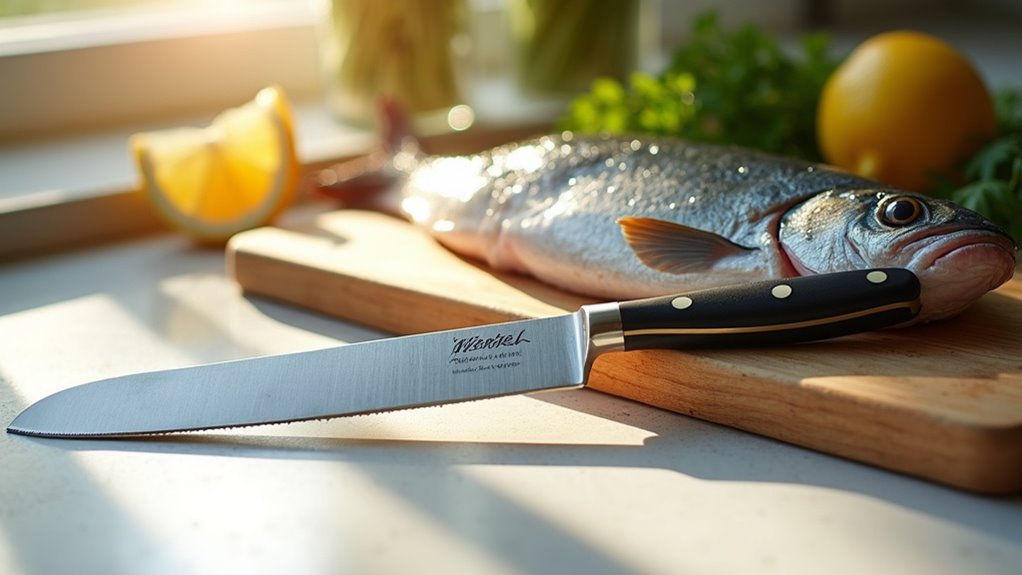
Having the right tools makes fish preparation easier. A sharp, flexible fillet knife is key for precision. Look for a blade that’s 6 to 11 inches long.
A sturdy cutting board is also important. Choose between polyethylene or wood for safety. Cut-resistant fillet gloves protect your hands from sharp knives. A good knife sharpener keeps your fillet knife in great shape.
Here’s a quick list of important tools:
- Flexible fillet knife
- Nonslip cutting board
- Cut-resistant fillet gloves
- Knife sharpener
An organized workspace helps everything run smoothly. It boosts your efficiency, just like in professional kitchens. Additionally, a sharp knife enhances your overall cooking experience by making cuts easier and more precise.
Proper Filleting Techniques
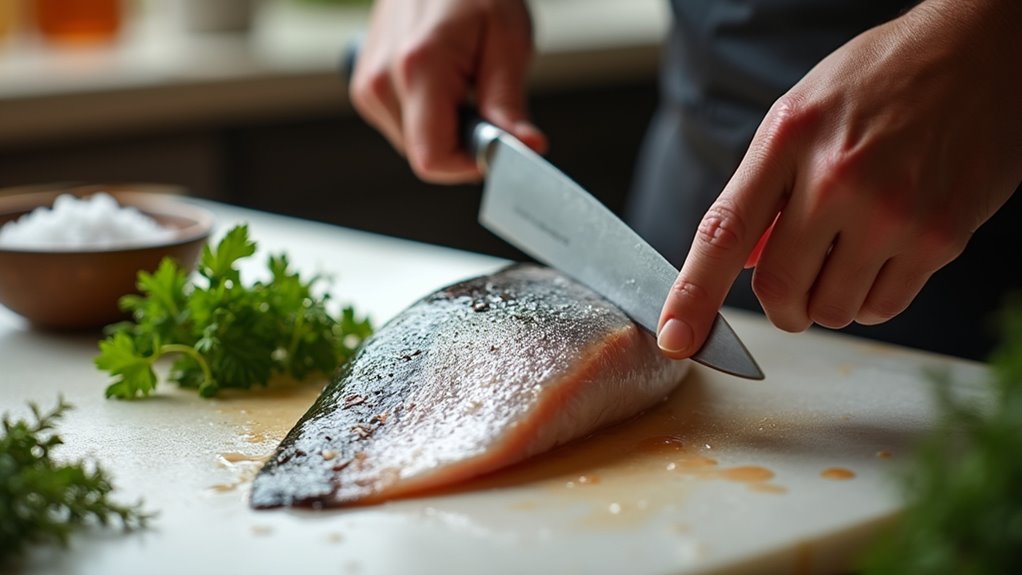
Filleting a fish requires good grip and the right knife angle. Keep your knife at a 12-15 degree angle. This helps you make smooth cuts along the backbone.
After you separate the fillet, it’s time to skin it. Use the knife to carefully remove the skin. Don’t forget to check for bones. Removing them makes for a clean meal.
Practice makes perfect. The more you fillet, the better you’ll become. Enjoy your fresh fish!
Grip and Blade Angle
Filleting fish requires a good grip and the right knife angle. Hold the knife firmly. Place your thumb and index finger on opposite sides of the blade. Wrap your other fingers around the handle. This grip gives you better control.
Keep the blade angle between 12 and 15 degrees. This angle helps you make clean cuts. Start your cut behind the gills to reach the backbone. This technique allows for smooth slicing.
Use steady motions to follow the fish’s shape. This technique reduces waste and makes each cut more efficient. A good grip and consistent angle lead to the best results. Enjoy your filleting!
Skinning and Bone Removal
Skinning and removing bones from a fish fillet is easier than it seems. Start by using a fillet knife. Insert the blade between the flesh and skin at the tail end. Make smooth, controlled sawing motions. Keep the blade pressed against the skin for a clean removal.
Next, focus on bone removal. Run your fingers gently along the fillet to find pin bones. Use pliers to pull them out carefully.
Each fish species has its own filleting techniques. For round fish, make diagonal cuts along the backbone. Flat fish can be filleted from either the head or tail.
Grip the fish firmly. Keep the blade at a 12-15 degree angle for best results.
With practice, you’ll become skilled at skinning and deboning fish. Enjoy your cooking!
Advanced Filleting Techniques
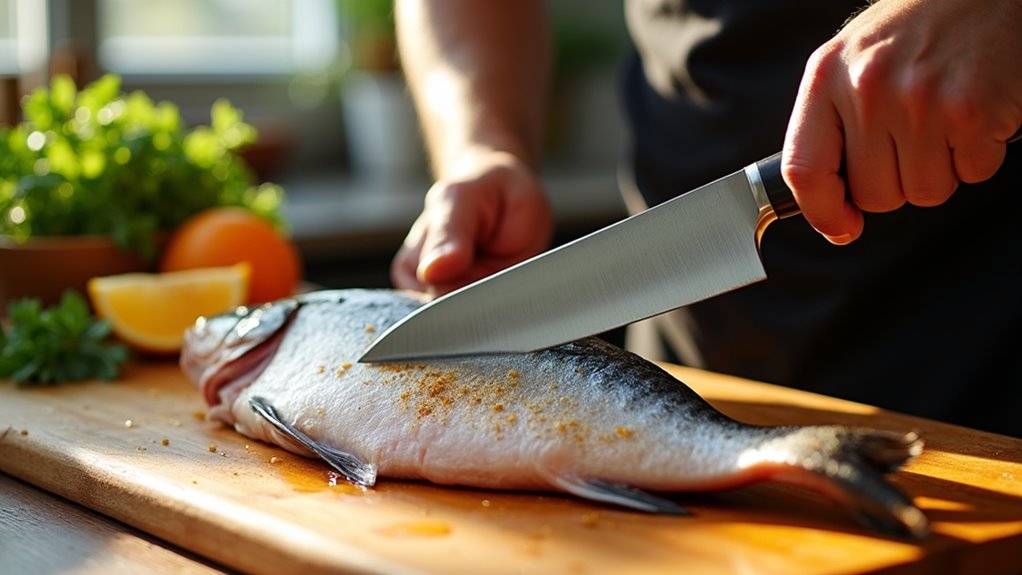
Advanced filleting techniques can greatly improve your fish preparation skills.
Begin by making a careful cut behind the gills. Cut down to the backbone, but don’t cut through it. This method helps separate the fillet from the fish smoothly.
For skinning, start at the tail end. Use controlled sawing motions to remove the skin cleanly.
To find pin bones, gently run your fingers along the fillet. Use pliers to pull them out without damaging the fillet.
Different fish species need specific methods for filleting. Knowing these differences can make a big difference in your results.
Mastering these techniques boosts your efficiency and improves the look and quality of your fish fillets. Your fish preparation will impress everyone!
Maintenance and Care of Fillet Knives
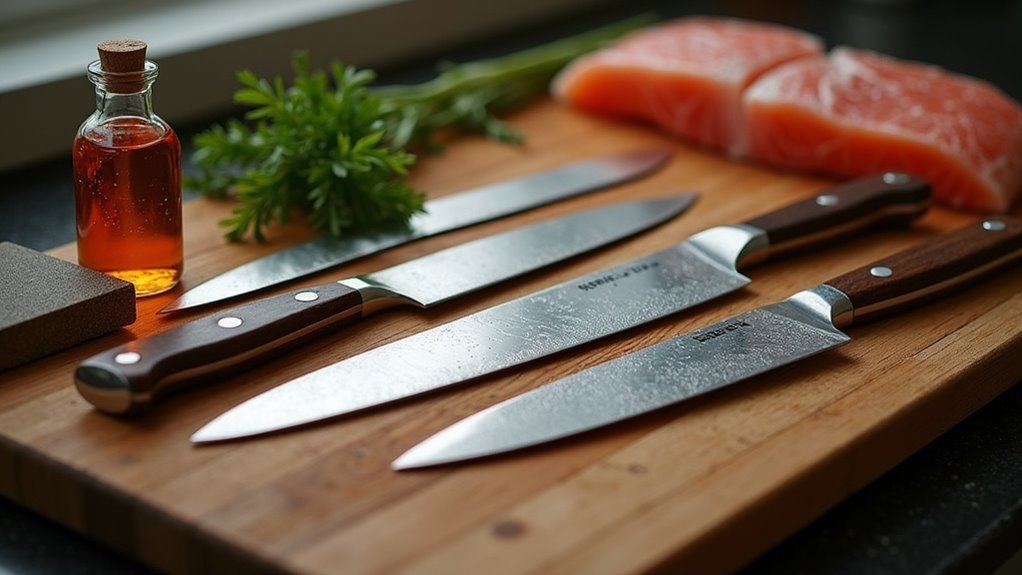
Caring for fillet knives is key to keeping them sharp and ready. Regular maintenance boosts performance and helps them last longer. Here’s a simple guide:
| Task | Frequency |
|---|---|
| Sharpen the blade angle | Every few uses |
| Clean with warm soapy water | After each use |
| Apply food-grade mineral oil | After cleaning |
Use a soft cutting board. This protects the knife edge from damage. High-carbon stainless steel can rust if it stays wet. Always dry your knives right away.
Store fillet knives in a protective sheath or on a magnetic strip. This keeps them safe from humidity. With these care tips, your fillet knives will serve you well for many years!
Versatility of Fillet Knives in the Kitchen
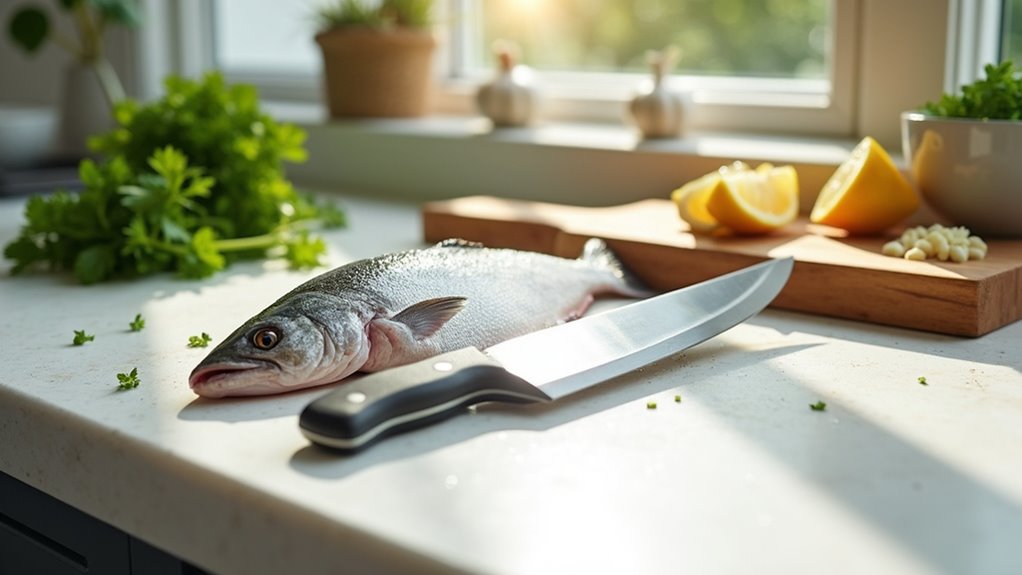
Caring for your fillet knives keeps them sharp and effective. These knives are versatile tools in the kitchen. A fillet knife has a thin, flexible blade. This design allows for many uses:
- Slice boneless poultry for quick meals.
- Cut delicate fruits like citrus for refreshing desserts.
- Remove skin and bones from fish with minimal waste.
- Make intricate cuts for beautiful food presentations.
The blade length usually ranges from 4 to 11 inches. This range helps with different tasks. Their flexibility and sharp edges make them essential for any cook. The importance of keeping the blade sharp and clean ensures optimal performance in your culinary endeavors.
Using fillet knives can boost your cooking skills. They help take your dishes to new heights!
Frequently Asked Questions
Can I Use a Fillet Knife for Meat and Poultry?
A fillet knife works well for cutting meat and poultry. It offers great precision for making clean cuts. This knife is also versatile, making it useful in many cooking tasks. Keep the knife sharp and clean for best results. Avoid cutting through bones to prevent damage to the blade. Check the size of the fillet knife to find one that feels comfortable in your hand. This helps with control and safety during food preparation. Use a fillet knife to enhance your cooking skills. Enjoy the process of preparing your meals!
How Do I Sharpen a Fillet Knife Effectively?
Sharpening a fillet knife is easy. Use water stones at a 12-15 degree angle. This helps create a sharp edge. Use honing steel to maintain that edge. Avoid pressing too hard. Uneven pressure can damage the blade. Electric sharpeners offer a quick way to keep your knife in shape. Remember to clean the blade after sharpening. A clean knife cuts better and lasts longer. Keep your fillet knife sharp for the best results!
What Materials Are Fillet Knife Blades Made From?
Most fillet knives have blades made from high-carbon stainless steel. This material is strong and resists rust. It also holds an edge well, making cutting easier. Some knives use ceramic blades. These are lightweight and very sharp. They offer great flexibility for smooth filleting. Certain knives come with special coatings. These coatings improve grip and help with maneuverability. The right blade can make filleting fish simple and quick. Choose a knife that feels comfortable in your hand. A good fillet knife can enhance your fishing experience.
Are There Fillet Knives Specifically Designed for Beginners?
Beginner fillet knives have special features. They often have ergonomic handles. This makes them comfortable to hold. Flexible blades help with smooth cuts. Safety tips are included to prevent accidents.
Many brands provide training resources. These resources can boost your filleting skills. They also help build confidence. Maintenance techniques are useful too. Keeping your knife sharp is important. A sharp knife makes filleting easier and safer.
Consider looking for beginner sets. They usually come with everything you need. This includes knives and guides. With the right tools, anyone can learn to fillet fish. Enjoy the process and have fun!
How Should I Store My Fillet Knife Safely?
Store your fillet knife safely. Use a knife sheath or magnetic strips. These protect the blade and keep it sharp. Avoid using drawers with inserts. They can hide the knife and cause accidents. Wall-mounted racks are a great option. They keep the knife visible and easy to reach. Always keep the knife out of children’s reach. Safe handling is key. Remember, a safe knife is a happy knife!
Conclusion
A good fillet knife makes cooking easier. Its thin, flexible blade cuts through fish smoothly. This knife helps you make clean and precise cuts. Picking the right knife is important. It can improve your food prep skills. Keep your knife sharp and clean. A well-maintained knife is always ready for action. Fillet knives are versatile tools. They can help you become better in the kitchen. Enjoy the process and watch your skills grow.