
The Complete Guide To Kitchen Knife Types And Their Uses
This post contains affiliate links. As an Amazon Associate, we earn from qualifying purchases.
Understanding kitchen knife types is essential for efficient cooking. A chef’s knife (8 to 10 inches) serves as a versatile tool for chopping, while a paring knife (3.5 to 4 inches) is ideal for peeling. Additionally, a utility knife can handle various tasks. Specialty knives, such as fillet knives for fish and cleavers for bones, enhance precision for specific jobs. Proper maintenance, including regular sharpening and safe storage, will extend the life of your knives. For those interested in a more in-depth exploration of selecting the perfect knife for your needs, further details will follow in this article.
Essential Facts in 30 Seconds
- Chef’s knives are essential for 80% of kitchen tasks, excelling in chopping vegetables and meats.
- Specialty knives, such as fillet and boning knives, provide precision for specific tasks like fish preparation and deboning.
- Regular maintenance of knife sharpness is important; sharpen knives at least once or twice a year and use honing steel frequently.
- Proper storage methods, including knife blocks or magnetic strips, help prevent damage and rust, enhancing longevity and safety.
- Selecting the right knife should consider cooking style, starting with essential types like chef, utility, and paring knives for foundational skills.
Understanding Kitchen Knife Basics
Understanding kitchen knives can greatly improve your cooking. Each knife has a unique purpose.
The chef’s knife is 8 to 10 inches long. It works best for chopping vegetables and meats. A paring knife is small and ideal for peeling or detailed cutting. The utility knife is versatile for various tasks.
For bread, use a serrated bread knife. It cuts through crusty loaves without squishing them. A boning knife helps remove bones from meat easily.
Blade shapes and materials matter too. High-grade German and Japanese knives are popular for their quality. Choosing between carbon steel vs. stainless steel can affect your knife’s performance and maintenance needs.
Knife care is crucial. Regular honing keeps blades sharp. Sharpening is needed from time to time.
Proper maintenance ensures knives work well and last longer. This makes cooking more enjoyable and efficient.
The Versatile Chef Knife
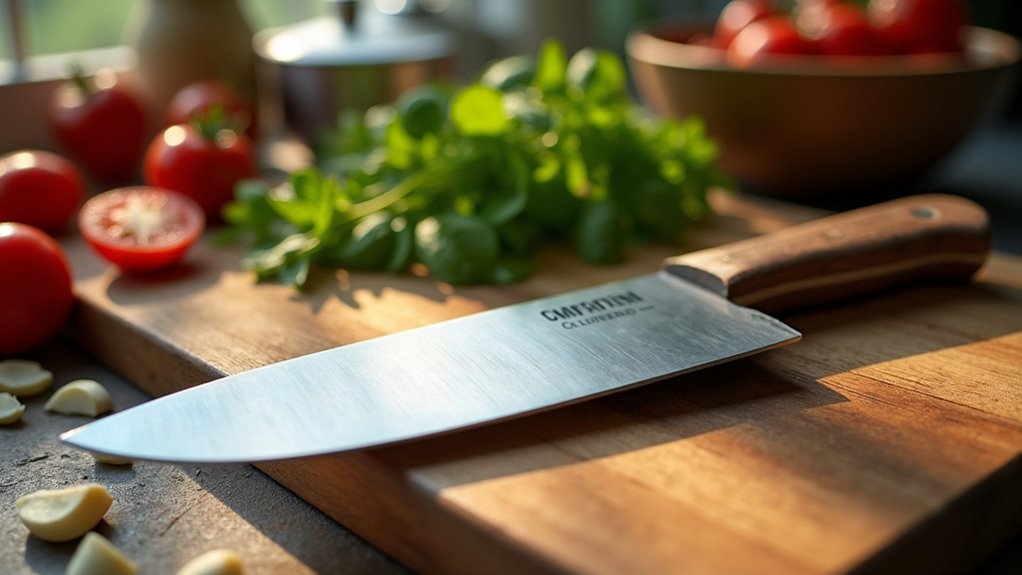
The chef’s knife is essential in any kitchen. It usually measures between 8 and 10 inches. This knife is great for slicing, dicing, and chopping many ingredients. It handles about 80% of kitchen cutting tasks. Both professional chefs and home cooks love it.
Its wide, triangular blade and curved edge make chopping easier. The rocking motion helps you cut faster and more efficiently. Pay attention to the knife’s weight and balance. It should feel good in your hand.
A good chef’s knife can last a lifetime with proper care. It’s a smart investment for anyone serious about cooking. This tool is powerful and useful in the kitchen! Additionally, the versatility of the Asian cleaver showcases the diverse applications of chef’s knives across cultures.
Specialty Knives and Their Functions
A chef’s knife is great for many kitchen tasks. Yet, specialty knives make cooking easier. Each one has a special job.
Boning knives have long, flexible blades. They help remove bones from meat and fish easily. Fillet knives are thin and perfect for making delicate fish fillets.
Cleavers are heavy and thick. They can cut through bones and crush garlic. Slicing and carving knives are longer and narrower. They work well for slicing roasts or turkey.
The Nakiri knife is a Japanese tool. It has a flat edge for chopping vegetables. This design helps make even slices and reduces bruising. Using these specialty knives can improve your cooking experience and enhance your culinary skills. Each knife makes tasks quicker and more precise.
Essential Utility Knives

Utility knives are essential tools in every kitchen. They fill the gap between paring and chef knives. Their sizes range from 4 to 7 inches. This makes them perfect for many cutting tasks. Use them to slice small to medium-sized vegetables and meats.
Here are some practical uses for utility knives:
- Slicing sandwiches
- Peeling fruits and vegetables
- Cutting fresh herbs
- Opening packaging
- General food preparation
Utility knives may not handle tough meats well. Still, their versatility makes them favorites for home cooks and professional chefs. Their ergonomic grip enhances control and comfort during extended use, making them ideal for various kitchen tasks.
Choose between serrated or straight edges. Both options offer control and ease for various kitchen tasks. Utility knives are key tools for efficient food prep.
Precision Tools: Paring and Boning Knives
Precision tools like paring and boning knives make cooking easier.
A paring knife is short, usually 3.5 to 4 inches long. It helps you peel and trim fruits and vegetables accurately. You can control it well, which is great for small tasks.
A boning knife is different. It has a long, thin blade. This design helps you debone meat and fillet fish with ease. You waste less material this way.
Both knives are essential for any kitchen. They help you prepare food quickly and efficiently. Use them for better results in your cooking! Additionally, the importance of paring knives in everyday cooking tasks cannot be overstated, as they significantly enhance your culinary experience.
Paring Knife Functions
A paring knife is a must-have in your kitchen. Its blade is usually 3.5 to 4 inches long, making it perfect for small tasks.
You can use it for:
- Peeling fruits and vegetables
- Trimming fat from meat
- Coring fruits
- Deveining shrimp
- Scoring or garnishing
This knife is great for precise cuts. It handles jobs that larger knives can’t manage. A paring knife helps improve the look and taste of your dishes. Knife skills are essential for enhancing culinary precision and elevating the overall dining experience.
While a boning knife is best for deboning, a paring knife excels at those tiny details that make your cooking special.
Boning Knife Applications
The boning knife is essential for any kitchen, especially for preparing meat. Its flexible blade helps you move easily around bones and cartilage. This makes removing bones quick and simple. The ideal length is between 5 to 7 inches, providing great control for precise cuts.
This knife isn’t just for meat. You can also use it for peeling and cutting fruits and vegetables.
Keeping your boning knife sharp is important. Regular sharpening and honing will keep it effective. A sharp knife gives you clean cuts, making cooking easier. Regular honing maintains knife sharpness and enhances overall performance, ensuring your boning knife works efficiently.
For home chefs wanting to improve, a boning knife is key. It simplifies tricky tasks and boosts your skills. This knife is a must-have in your kitchen tools.
Slicing and Carving Knives
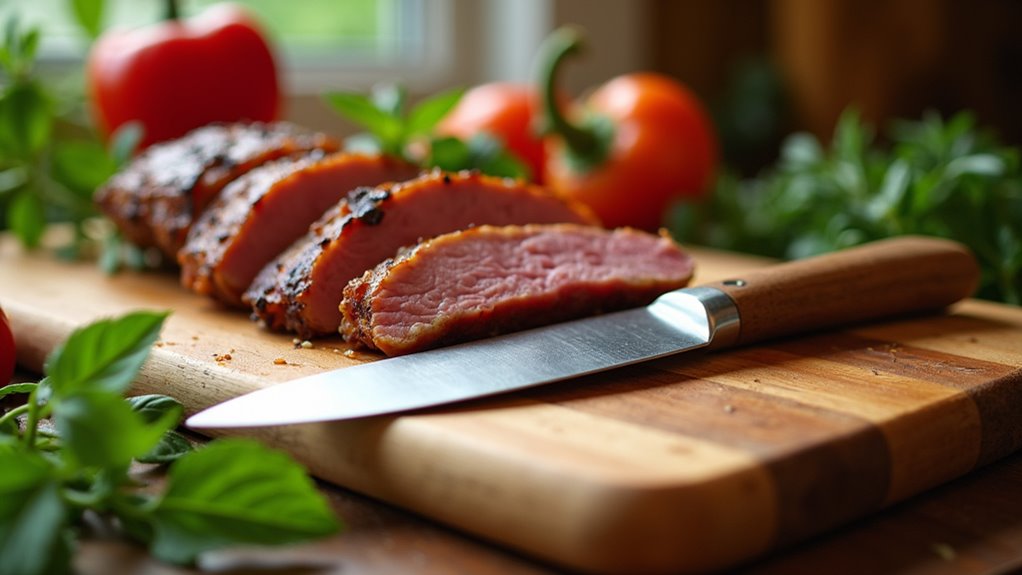
Slicing and carving knives are essential in any kitchen. They’re especially useful for special occasions. These knives help you make clean cuts. This improves how your dishes look.
Slicing knives have long, narrow blades. They usually range from 8 to 14 inches. Carving knives have pointed tips and rounded edges. This design allows for precise slicing. Both types of knives stay sharp. A sharp edge helps you cut evenly.
Slicing knives often have straight blades. Carving knives may have small grooves. These grooves help food slide off easily. Use them for cutting roasts, hams, fruits, and vegetables. They help you showcase your cooking skills. Understanding cutting techniques is crucial for achieving the best results with these knives.
Investing in good slicing and carving knives will enhance your meal presentations. Your guests will be impressed.
Maintaining Your Knives
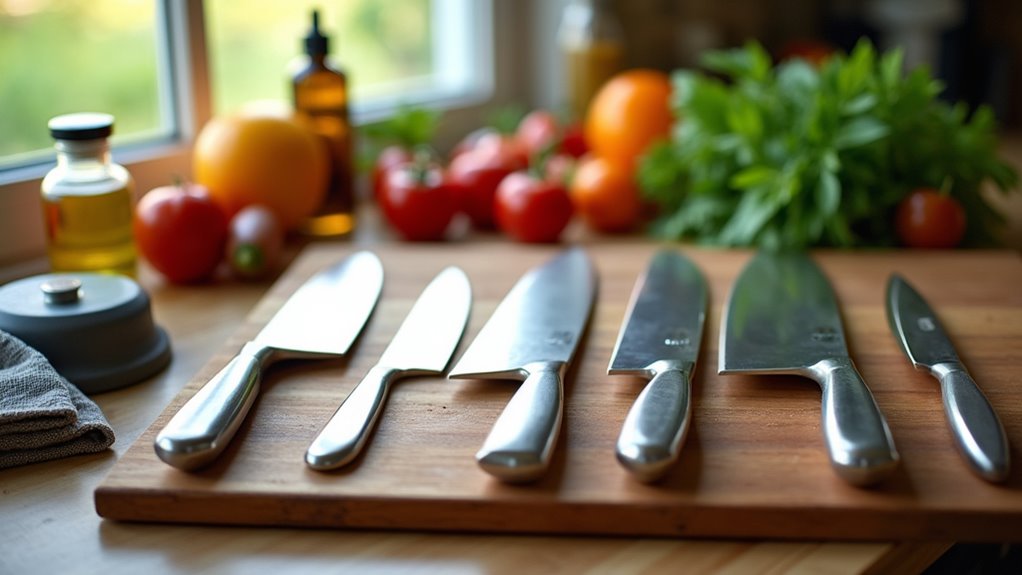
To keep your knives sharp and safe, focus on two main things: sharpening and storage. Sharpen your knives at least once or twice each year. Use a honing steel to keep the edge nice and sharp between sharpenings.
Storing knives properly is just as important. Use a knife block or a magnetic strip. These help protect the blades and keep your kitchen safe from accidents.
Taking care of your knives will make cooking easier and more enjoyable. A sharp knife cuts better and is safer to use. Regularly check for rust prevention to ensure your knives remain in optimal condition.
Keep your knives in good shape, and they’ll serve you well for years.
Sharpening Techniques
Keeping kitchen knives sharp is easy and important for safe cooking. Here are some simple techniques to maintain your knives:
- Hone your knife with a honing steel before and after each use. This helps keep the edge sharp.
- Sharpen knives once or twice a year using sharpening stones or manual sharpeners.
- Maintain a 20-degree angle when sharpening. This improves cutting power.
- Use electric sharpeners for quick fixes, but be careful. They can remove too much material.
- Always clean and dry your knives after sharpening. This prevents rust and keeps them working well.
- Regularly assess your knife condition to determine if honing or sharpening is needed, ensuring optimal performance.
With these tips, your knives will stay in great shape for all your cooking needs!
Proper Storage Methods
After sharpening your kitchen knives, store them properly. Use a knife block, magnetic strip, or an in-drawer organizer. These methods keep your knives safe and sharp.
Avoid loose storage in drawers. Knives can bump into other utensils and get damaged. If you use a drawer, add blade guards for extra safety.
Always clean and dry your knives before putting them away. This helps prevent rust. Rust can hurt the knife’s lifespan.
Make sure blades aren’t touching each other. This stops nicks and scratches.
Check your knives often for wear. Sharpen them when needed. These steps help your knives stay sharp and work well.
Proper storage and care keep your kitchen tools in great shape.
Choosing the Right Knife for Your Needs
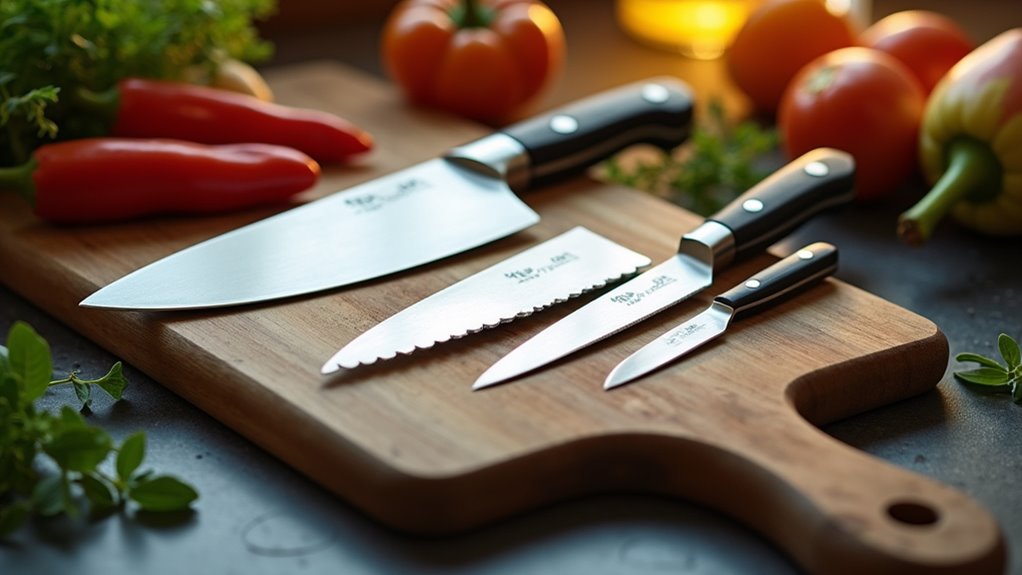
Choosing the right kitchen knife is important for your cooking. Start by thinking about your cooking style and the dishes you prepare. For most tasks, a chef knife (8 inches) works well for chopping. A paring knife (3.5 inches) is best for detailed work. Utility knives are versatile for many cutting needs.
Here are some tips to help you choose:
- Know which types of kitchen knives you need.
- Look for good materials, like German or Japanese steel.
- A comfortable handle is key for easy use.
- Begin with essential knives: chef, utility, and paring.
- Add more knives as you discover your preferences.
These choices will boost your knife skills.
Whether you’re cutting meat or slicing bread, the right knife makes a big difference.
Frequently Asked Questions
What Materials Are Kitchen Knife Blades Typically Made From?
A chef needs the right tools. Kitchen knife blades come in several materials. These include stainless steel, carbon steel, ceramic, Damascus steel, high carbon stainless steel, and titanium alloys.
Stainless steel resists rust and stains. It stays sharp for a long time. Carbon steel is strong and can get very sharp. It may rust, so it needs care.
Ceramic blades are lightweight and stay sharp longer. They don’t rust but can break easily. Damascus steel has beautiful patterns. It combines strength and sharpness.
High carbon stainless steel is a mix of both. It offers strength without rusting. Titanium alloys are strong and lightweight. They resist corrosion well.
Special metals and coatings help keep the edge sharp. This means your cuts are clean and precise. Choose the right blade for your kitchen tasks. Happy cooking!
How Can I Tell if a Knife Is High Quality?
A high-quality knife shows certain signs. First, check the blade sharpness. A sharp blade cuts easily and smoothly. Next, feel the handle. It should be comfortable and easy to grip. Balance is also important. A well-balanced knife feels good in your hand.
Look at the metal quality. High-quality knives often use stainless steel or high-carbon steel. These materials stay sharp longer and resist rust. Brand reputation matters too. Well-known brands often produce reliable knives.
Read user reviews. They can tell you about real experiences with the knife. Consider the manufacturing process. Hand-forged knives usually offer better quality than mass-produced ones.
Think about maintenance requirements. A good knife needs proper care to last. Finally, consider the design. A knife should look good and feel right for you.
Are Expensive Knives Worth the Investment?
Expensive knives are a smart investment. They last longer than cheap ones. A good knife can make cooking easier and more enjoyable. Brands with a strong reputation often deliver better performance.
These knives can improve your kitchen’s look too. Many chefs recommend them for their quality. You can also resell them later if needed. Overall, the benefits of expensive knives usually outweigh the cost.
Can I Use a Kitchen Knife for Non-Food Tasks?
Using a kitchen knife for non-food tasks is possible. Just remember to prioritize safety. Always handle the knife carefully to avoid accidents.
Kitchen knives are sharp and can easily cut through materials like paper, rope, or cardboard. They can help open packages or cut through tape. Keep in mind, using a knife for non-food tasks can dull the blade.
Regular maintenance is key. Clean the knife after each use. Store it safely to protect the blade and yourself. A good knife lasts longer with proper care.
Explore different ways to use your kitchen knife. Just be smart about it. Stay safe and keep your knife in top shape.
How Often Should I Replace My Kitchen Knives?
Replace your kitchen knives every 5 to 10 years. This time frame depends on how well you care for them. Watch for signs of dullness. A dull knife can be unsafe and hard to use. Sharpen your knives regularly to keep them in good shape.
Storage matters too. Use a knife block or magnetic strip to protect your blades. This helps them last longer.
Budget-friendly options exist. Brands vary in price, so compare them. Quality knives can make cooking easier and more enjoyable. Take care of your knives, and they will serve you well for years.
Conclusion
You now understand kitchen knife types and their uses. This knowledge helps you cook like a pro. Each knife has a special job. A chef knife is great for many tasks. A paring knife is perfect for detailed work. The right knife makes cooking easier and faster. Keep your knives sharp and clean. This way, you’ll always be ready for your next meal. Enjoy your time in the kitchen! Happy chopping!