
Why Regular Honing Is Essential For Knife Performance
This post contains affiliate links. As an Amazon Associate, we earn from qualifying purchases.
Regular honing is crucial for optimal knife performance, as it realigns the blade’s edge to ensure clean and precise cuts without removing metal. To maintain effectiveness and safety, it’s recommended to hone your knife after every four to five uses. Using a honing rod at the appropriate angle—20 degrees for Western knives and 15 for Japanese ones—helps preserve sharpness and extends the time between professional sharpenings. This practice not only enhances your cooking experience but also keeps your knives in excellent condition. For those interested in a deeper understanding, further explanation and techniques will be provided later in the article.
Essential Facts in 30 Seconds
- Regular honing realigns the knife edge, improving cutting precision and extending intervals between sharpening.
- Well-honed knives require less effort to cut, lowering injury risk during food prep.
- Consistent honing preserves blade shape, leading to smoother cuts and better knife performance.
- Dull knives exhibit signs like tearing through food, signaling the need for honing to regain efficiency.
- Honing after every four to five uses enhances knife longevity and maintains optimal performance.
Understanding the Honing Process
Keeping your knife sharp is important for good cooking. Honing is a simple way to maintain your knife. This process realigns the tiny teeth on the blade without taking off metal. A sharper edge lasts longer.
To hone your knife, use a honing steel or rod. This tool fixes small bends that happen over time. Professional chefs should hone their knives daily. Home cooks can do this after every fourth or fifth use.
Using the right honing technique helps keep the blade shape. This makes your cuts smoother and more accurate. Regular honing will make your knife last longer and work better, as it helps maintain sharpness of the knife.
Benefits of Regular Honing

Regular honing keeps your knife’s edge straight. This improves cutting precision.
Make honing part of your routine. It helps your knives last longer by extending the time between sharpenings. A well-honed knife cuts easily and requires less force. This reduces the risk of injury. Regular honing, along with professional sharpening, ensures your knives maintain optimal performance over time.
Enjoy safer cooking with a sharper knife. Regular honing is simple and effective. You’ll notice the difference every time you use your knife.
Take care of your tools, and they’ll take care of you.
Enhanced Cutting Precision
Honing your knife often boosts cutting precision in the kitchen. This simple process realigns the tiny teeth on the blade’s edge. It helps you cut through food smoothly and easily. A well-honed knife makes clean slices, reducing jagged cuts. You’ll notice it takes less force to cut, which means it’s safer to use. Regular honing also keeps your knife sharp for longer, so you sharpen it less often. Maintaining the correct edge angle during honing is crucial for optimal performance.
| Benefit | Description | Outcome |
|---|---|---|
| Enhanced Precision | Realigns tiny teeth on the edge | Clean, smooth slices |
| Improved Control | Supports careful cutting | Greater accuracy |
| Increased Safety | Cuts with less force | Fewer accidents |
Prolonged Knife Lifespan
Keeping your knife sharp is important for its lifespan. Regular honing helps realign the blade. This keeps your knife sharp and prevents damage.
With regular maintenance, you won’t need to sharpen as often. This saves valuable steel and keeps the knife’s shape. Less sharpening reduces the risk of changing the blade’s geometry.
A well-honed knife lasts longer and cuts better. Sharp blades are also safer. You won’t have to use too much force when cutting.
Adding honing to your routine is smart. It benefits your knives and improves your cooking. Regular honing also enhances performance by allowing for optimal cutting efficiency during peak usage seasons.
Techniques for Effective Honing
Honing your knife is important for keeping it sharp. Focus on two key techniques: angle alignment and pressure control.
For Western-style knives, hold the blade at a 20-degree angle. Japanese knives need a 15-degree angle for best results.
Apply steady pressure while honing. Aim for about 3 to 5 pounds of pressure. Draw the blade along the honing rod smoothly. This helps realign the knife’s edge without changing its shape. Regular sharpening technique is essential to maintain the overall performance of your knife.
Keep practicing these techniques. They’ll help your knife stay sharp longer. A sharp knife makes cooking easier and safer. Enjoy honing your knife!
Proper Angle Alignment
Honing a knife properly is crucial for sharpness. For German-style knives, use a 20-degree angle. Japanese knives require a sharper 15-degree angle. Secure the knife’s heel at the top of the honing rod. This position helps realign the blade’s micro serrations evenly.
Focus on keeping a steady angle. It matters more than how much pressure you apply.
Choose a honing rod that’s at least 2 inches longer than your largest knife. This length makes honing easier and safer.
After honing, check the sharpness. Feel for resistance or notice if cuts are uneven. Adjust your technique if needed. Proper honing and angle alignment lead to the best knife performance. Additionally, the choice between carbon steel blades and stainless steel blades can influence how often you need to hone, as carbon steel tends to require more frequent maintenance for optimal performance.
Pressure Control Techniques
After mastering the angle for honing, focus on pressure control. Applying the right pressure is key to honing knives well. Here are some helpful tips:
- Use 3 to 5 pounds of pressure. This aligns the knife’s edge without causing harm.
- Keep a steady angle. Use 20 degrees for German knives and 15 degrees for Japanese ones.
- Always use a cutting board. It keeps your knife stable and helps you control it better.
- Don’t press too hard or move jerkily. This can misalign the blade or hurt the edge.
Regular honing keeps your knife sharp, as the edge angle and sharpness significantly affect cutting efficiency. Check the blade’s sharpness often.
If cutting feels tough, change your technique or pressure for better results.
Choosing the Right Honing Equipment

Choosing the right honing equipment for your kitchen is important. First, think about the type of knives you own. Softer steel knives work well with a steel honing rod. High-carbon blades, on the other hand, do better with a ceramic rod. Ceramic is gentler and helps keep blades sharp.
Make sure your honing rod is at least 2 inches longer than your largest knife. This ensures proper alignment. Western-style knives usually benefit from steel rods. Japanese knives perform best with ceramic options.
Avoid diamond-coated rods for regular home use. They can dull blades over time. A sturdy handle is essential for control. Look for a balanced weight and a safety guard to prevent accidents. Regular maintenance, including honing, is key to extending the lifespan of your knives.
With the right honing equipment, your knives will stay sharp and last longer.
Maintaining Knife Performance Between Sharpenings
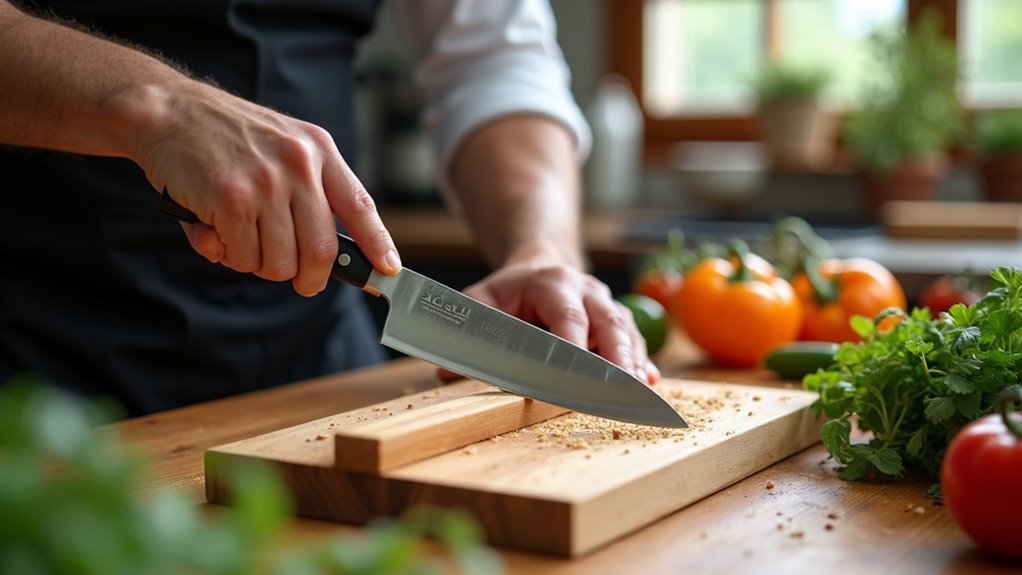
To keep your knives sharp between sharpenings, regular honing is important. Honing helps in several ways:
- It realigns the blade’s edge without taking off metal. This keeps the knife sharp longer.
- Honing lets you use your knife for months before you need to sharpen it.
- Do this after every fourth or fifth use. Professionals should hone daily for better results.
- Sharp knives are safer. They need less force to cut, which lowers the chance of injury.
Additionally, maintaining knife sharpness through regular honing contributes to overall culinary efficiency.
Taking care of your knives will make cooking easier and more enjoyable.
Signs It’s Time to Hone Your Knife

Knowing when to hone your knife is crucial for good cooking. Look for signs that your knife needs attention. If it tears through soft foods instead of slicing cleanly, grab your honing rod.
Struggling to make precise cuts, like chopping vegetables, means the blade needs realignment. Feel resistance when cutting ripe tomatoes? That’s a clear sign your knife is dull. A drop in performance, like needing more force to cut, also shows it’s time to hone.
Regular honing keeps your knife sharp and is essential for maintaining blade performance. Aim to do this after every four to five uses. If it’s been longer, give your knife some care. This will help restore its sharpness and effectiveness.
Frequently Asked Questions
How Often Should I Hone My Knives?
Honing knives keeps them sharp and ready for use. Do this every fourth or fifth use. If you cook often, hone your knives daily. Use a honing steel for best results. Hold the steel firmly and slide the knife against it at a slight angle. This helps keep the blade aligned. Regular honing makes cooking easier and safer. A sharp knife cuts better and helps prevent accidents. Take care of your knives, and they will serve you well.
Can I Hone My Knife With a Stone?
Honing a knife with a stone is not effective. It’s like trying to fix a bent nail with a hammer. Instead, use proper honing tools. They help keep your knife sharp and effective.
Honing tools come in many forms. Some are simple rods, while others are more advanced. Each tool has its own method. Find the right one for you and practice.
A sharp knife is safer and works better. It cuts through food easily and saves time. Take care of your knife. Regular honing keeps it in great shape.
What Is the Difference Between Honing and Sharpening?
Honing and sharpening are both important for keeping your knives in great shape. Honing realigns the knife’s edge. This helps maintain sharpness. You do this often, like every few uses. It keeps the blade ready without taking away material.
Sharpening reshapes the blade. It removes some metal to make the edge sharp again. You should sharpen less often, maybe every few months, depending on use. Both methods are key for good knife care. Remember, honing is about keeping the edge aligned. Sharpening is about making the edge sharp again. Use both techniques for the best results.
Is Honing Necessary for All Knife Types?
Honing is important for all knife types. It helps keep the blade sharp and ready for use. Regular honing can make your cuts smoother and easier. It aligns the edge of the knife, which prevents problems when cutting. A well-maintained knife lasts longer and works better.
Use a honing rod or steel to keep your knife in shape. Just a few strokes can make a big difference. Make this a part of your knife care routine. A little effort goes a long way. Enjoy the benefits of a sharp, reliable knife.
Can Honing Damage My Knife Blade?
Honing is safe for your knife blade. It acts like a gentle massage, helping to keep the blade sharp. Use the right techniques and maintain a good angle. This way, you protect the blade and ensure it lasts longer. Regular honing helps you maintain your knife’s performance. You’ll notice better cuts and easier slicing. It’s a simple task that makes a big difference. Keep honing, and your knives will thank you!
Conclusion
Regular honing keeps your knife sharp and ready to use. A well-honed knife needs 50% less force to cut food compared to a dull one. Honing your knife every few uses helps maintain its edge and performance. It only takes a few minutes to do. This small effort makes a big difference in the kitchen. Grab your honing tool and make it a habit. Your cooking will become easier and more enjoyable.