
Cutting Meat: Knife Techniques For Different Cuts
This post contains affiliate links. As an Amazon Associate, we earn from qualifying purchases.
Cutting meat effectively involves understanding the different cuts and utilizing the proper knife techniques. For tender cuts like tenderloin, slice against the grain into 1/4 to 1/2 inch pieces at a 45-degree angle using a chef’s knife or carving knife for precision. For tougher cuts such as brisket, a sharp knife is essential to navigate through the fibers. Always allow your meat to rest for 10 to 30 minutes before slicing to enhance its flavor and juiciness. For those interested in a deeper understanding, further tips and explanations will follow.
Essential Facts in 30 Seconds
- Use a sharp chef’s knife for tender cuts; use a boning knife for tougher cuts.
- Cut against the grain to improve tenderness and shorten muscle fibers.
- Use a slicing motion rather than chopping to preserve the meat’s integrity.
- Allow meat to rest for 10 to 30 minutes after cooking for juice redistribution.
- Regularly hone and sharpen knives for efficiency and safe, clean cuts.
Understanding Different Meat Cuts
Understanding different cuts of meat is essential for cooking tasty meals. Each cut, like ribeye, sirloin, or tenderloin, has its own flavor and texture. Where the cut comes from on the animal affects how tender it is. Tough cuts, such as chuck or brisket, are best for slow cooking. Tender cuts, like filet mignon, cook well with quick methods.
Cuts of meat fall into primal categories, such as chuck, rib, loin, and round. Within these, there are subprimal cuts. Knowing how to butcher meat properly is very important. Trimming and deboning meat can make it look better and cook evenly. Proper knife selection is crucial for achieving the best results when preparing different cuts.
Learning terms like “cross-cut” and “butterflying” helps with meat preparation. This knowledge improves cooking and gives great results.
Enjoy cooking with different meat cuts!
Tools of the Trade: Choosing the Right Knife
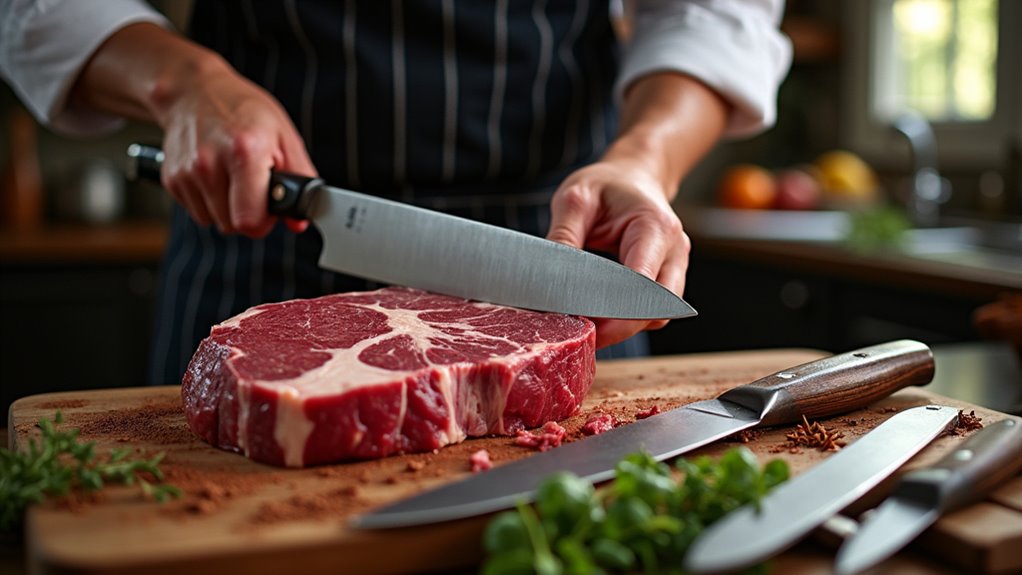
A chef’s knife is essential for many kitchen tasks. Its sharp blade slices, dices, and minces with ease.
For tasks like removing bones, use a boning knife. Its thin and flexible blade makes filleting meat simple.
When serving a roast, a carving knife is best. Its long, narrow blade creates thin and even slices for a beautiful presentation.
A paring knife is perfect for small, detailed tasks. Use it to trim fat or silverskin.
The right knife makes cutting meat easy and fun. A versatile tool enhances your cooking experience, so enjoy your cooking!
Slicing Techniques for Tender Cuts
Slicing tender cuts of meat requires attention to detail.
First, notice the grain direction. Cutting against the grain makes the meat more tender.
Use a sharp knife for clean cuts. Aim for slices that are about 1/4 to 1/2 inch thick. This thickness ensures even cooking and great texture.
Uniform slices look better on the plate too.
Proper Knife Angle
To slice tender cuts of meat perfectly, use a knife angle of around 45 degrees. This angle makes clean cuts that keep the meat juicy and tender. A long, sharp chef’s knife or carving knife offers better control. This helps you avoid tearing and ensures uniform slices.
Always slice against the grain. This shortens muscle fibers, making each bite softer.
Let the meat rest after cooking. Resting helps the juices move back through the meat.
While slicing, apply steady, even pressure. Use a gentle sawing motion. This prevents damage to the meat’s structure. Additionally, mastering knife skills for precision can significantly enhance your slicing technique.
With these tips, you can create beautiful, uniform slices every time. Enjoy your delicious meal!
Grain Direction Awareness
Understanding grain direction is key for slicing meat. Cutting against the grain shortens muscle fibers, making each bite tender. To find the grain direction, check for lines or striations in the meat. This is important for tougher cuts like brisket or flank steak.
Slice meat into ¼-inch thick pieces against the grain. This maximizes tenderness and improves mouthfeel. Always use a sharp knife for clean cuts. A sharp knife reduces tearing and keeps the meat intact. Regular sharpening practices like using a honing rod will help maintain blade efficiency.
Let cooked meat rest before slicing. Resting helps the juices spread throughout the meat. This keeps your cuts moist and flavorful.
Enjoy your perfectly sliced meat!
Uniform Thickness Importance
Slicing meat into the same thickness is key for great cooking. For tender cuts like steak or pork loin, aim for 1/4 to 1/2 inch thick slices. This helps cook the meat evenly. Some parts won’t be overcooked while others stay undercooked.
A sharp chef’s knife or slicing knife makes cleaner cuts. This reduces tearing of the meat fibers. Less tearing means juicier meat and better flavor during cooking.
Always slice against the grain. This shortens the muscle fibers and makes each bite tender. Use a steady angle and pressure for consistent slices. Good technique improves how the dish looks and tastes. Regular knife maintenance ensures your blades remain sharp, enhancing your cutting performance.
With practice, these skills become easier. Enjoy your delicious, evenly cooked meat!
Techniques for Tougher Cuts of Meat
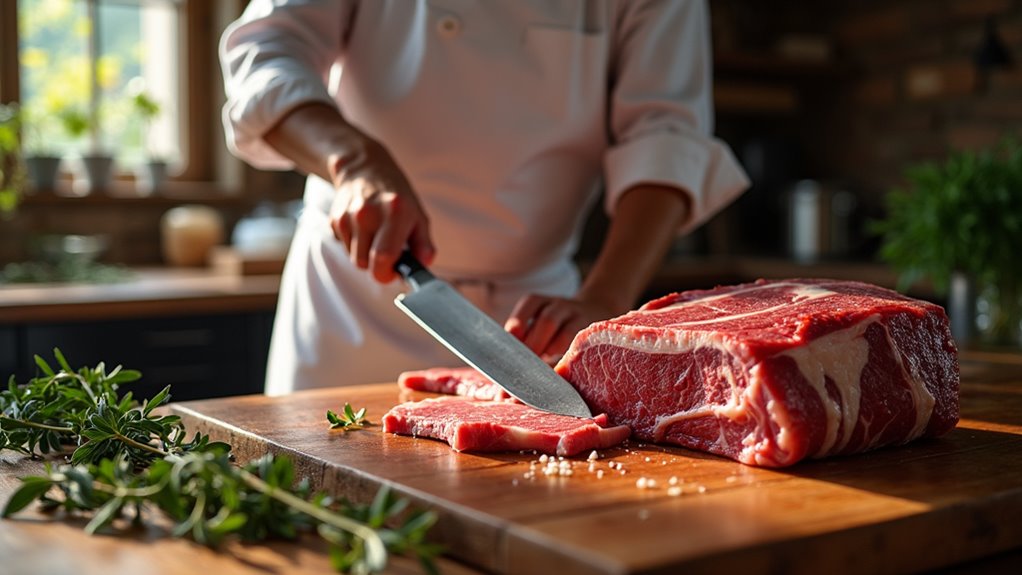
Tough cuts of meat can be delicious with the right techniques. Start with a sharp knife. A good chef’s knife or cleaver makes clean cuts. This helps avoid tearing the meat.
Slice against the grain. This breaks the fibers and makes the meat tender. Use a slicing motion, not chopping. Slicing keeps the meat whole and juicy.
Let larger cuts, like brisket or chuck roast, rest after cooking. Resting helps juices spread throughout the meat. This makes each bite flavorful.
Slow-cooking methods, like braising, work wonders. They break down tough tissues. This makes the meat easier to slice. Butcher knives are essential tools that enhance precision and control in meat preparation.
Follow these tips to improve your meat-cutting skills. Enjoy every meal more.
Importance of Resting Meat Before Cutting

Resting meat is an important step many people ignore. After cooking, let the meat rest for 10 to 15 minutes. This waiting time helps the juices spread out in the meat. It makes the meat taste better and feel juicy.
Cutting too soon makes the meat dry. Larger cuts, like roasts, need up to 30 minutes to rest. Smaller cuts, like chicken breasts, only need about 5 to 10 minutes.
Cover the meat loosely with foil. This keeps it warm without making it soggy. Different meats have different resting times. Knowing these times helps you cut meat perfectly.
Tips for Maintaining Knife Sharpness and Safety
To keep knives sharp and safe, develop a simple maintenance routine. Here are some effective tips:
- Hone your knife with a honing steel before and after each use. This keeps the edge aligned.
- Store knives in a block or on a magnetic strip. This prevents dulling and keeps them organized.
- Use a sharpening stone or electric sharpener every few months. This restores sharpness for better cutting.
- Always cut on a stable surface. A wooden or plastic cutting board works best.
Regularly assess your knife’s condition to determine if it needs honing or sharpening. Follow these tips to enhance your knife skills and ensure safety when cooking. Enjoy your time in the kitchen!
Frequently Asked Questions
How Do I Choose the Right Cutting Board for Meat?
Choosing the right cutting board for meat is important. First, think about size. Thicker boards are less likely to warp over time. Next, decide between wood and plastic. Wood boards need more care, but they are gentle on knives. Plastic boards are easier to clean and can go in the dishwasher.
Color coding is smart. Use different colors for raw meat and other foods. This keeps your kitchen safe and clean. Remember, a clean cutting board helps prevent foodborne illness. Choose wisely to keep your cooking safe and enjoyable.
What Is the Best Way to Clean My Knives After Cutting Meat?
Cleaning your knives after cutting meat is very important. Use hot, soapy water for the best results. A soft sponge works well for this task. Rinse the knives thoroughly to remove all soap. Dry them right away with a clean towel. This stops rust and keeps them sharp.
Store knives safely. A knife block or magnetic strip is a good choice. Proper storage helps maintain their edge and keeps them safe from damage. Remember, taking care of your knives will make them last longer.
How Can I Prevent Cross-Contamination While Cutting Meat?
Preventing cross-contamination while cutting meat is essential for food safety. Use separate cutting boards for raw meat and other foods. This step helps keep harmful bacteria away from ready-to-eat items.
Always use different utensils for raw meat. Knives, forks, and spatulas should not touch cooked food after cutting raw meat.
Wash your hands with soap and water after handling meat. Clean surfaces and cutting boards with hot, soapy water. Use a sanitizer if needed.
Keep raw meat on the bottom shelf of the fridge. This prevents juices from dripping onto other foods.
Storing meat properly and following these steps will help you stay safe in the kitchen. Enjoy cooking!
Should I Cut Meat With or Against the Grain for All Types?
Cutting meat against the grain makes it more tender. Studies show this can improve tenderness by up to 30%. Always check the grain direction before cutting. This small step can lead to a much better eating experience. Different types of meat have different grain patterns. For beef, look for long lines. For pork, the grain runs differently. Chicken grain is also unique. Knowing how to cut each type correctly is key. Enjoy your meal more by slicing meat the right way.
Can I Use a Regular Kitchen Knife for Cutting Meat?
A regular kitchen knife can cut meat well, but it needs to be sharp. A sharp edge makes cutting easier and cleaner. It’s important to keep your knife well-maintained.
For best results, think about getting a meat knife. These knives are made just for cutting meat. They often have a better shape and edge. A good meat knife helps you slice through tougher cuts smoothly.
Conclusion
You’ve learned important knife techniques for cutting meat. Now, it’s time to put them into action. Select the right knife for the job. Use the correct slicing methods for each cut of meat. Imagine a perfectly sliced roast, juices shining, ready to serve. With practice, you will cut meat like a pro. Always let your meat rest after cooking. Keep your knives sharp for the best results. Enjoy making and serving delicious dishes!