
Common Knife Maintenance Mistakes To Avoid
This post contains affiliate links. As an Amazon Associate, we earn from qualifying purchases.
To maintain your knives effectively and avoid common mistakes, ensure you hone them regularly, clean them immediately after use, and store them properly. Avoid washing them in the dishwasher, as this can warp handles and damage blades. Additionally, use wooden or plastic cutting boards to prevent dulling. For those looking for more in-depth information, further details will follow.
Essential Facts in 30 Seconds
- Do not wash knives in the dishwasher; it damages blades and warps handles.
- Hone knives regularly to keep them sharp and effective.
- Store knives in blocks or on magnetic strips to avoid dulling and accidents.
- Clean knives right after use to prevent rust and corrosion.
- Apply proper sharpening techniques to prolong knife life.
Using the Wrong Knife for the Job
Using the right knife in the kitchen is key for safety and speed. Many people make the mistake of using a chef’s knife for peeling. This knife isn’t meant for small tasks. A paring knife is safer and better for peeling fruits and vegetables.
On the other hand, a paring knife struggles with hard vegetables, like butternut squash. A cleaver works much better for tough cuts.
For bread, always use a serrated knife. This knife slices bread without crushing it. A straight-edged knife can ruin the texture.
Knowing each knife’s purpose helps improve your skills. A sharp knife is safer than a dull one. Always pick a sharp knife and the right cutting board. This will make cooking easier and more enjoyable. Additionally, using the correct knife type can significantly enhance your overall cooking experience.
Improper Knife Maintenance

Proper knife maintenance is essential for good kitchen tools.
Regular honing keeps your blade edge straight. A misaligned edge makes knives dull and less effective.
Avoid using the dishwasher for washing knives. The heat and strong detergents can ruin the blade and warp the handle.
Use the right sharpening techniques to keep the knife’s edge in shape. This helps your knife last longer.
Always store knives safely. Don’t leave them loose in drawers. This causes dullness and increases injury risks.
Clean knives right after use. Not doing so can cause rust and corrosion. This damages both the blade and handle. Immediate washing techniques are crucial for preventing food residue from drying on the knife.
Take care of your knives, and they’ll serve you well.
Incorrect Grip and Cutting Technique
Proper knife maintenance is key for safe and effective use. An incorrect grip can lead to accidents. Holding the handle too far back or placing your index finger on the blade is risky. These grips reduce control and increase the chance of injury.
Grip the handle close to the blade. This gives you better control and precision. Pinching the sides of the blade with your thumb and index finger creates a secure grip. A good grip means safer cutting and better results. Additionally, maintaining proper body positioning enhances your overall knife control and stability.
Practice proper cutting techniques. A stable grip helps prevent injuries. It also makes your knife work more efficient.
Stay safe and keep your maintenance routine strong.
Cutting on the Wrong Surface
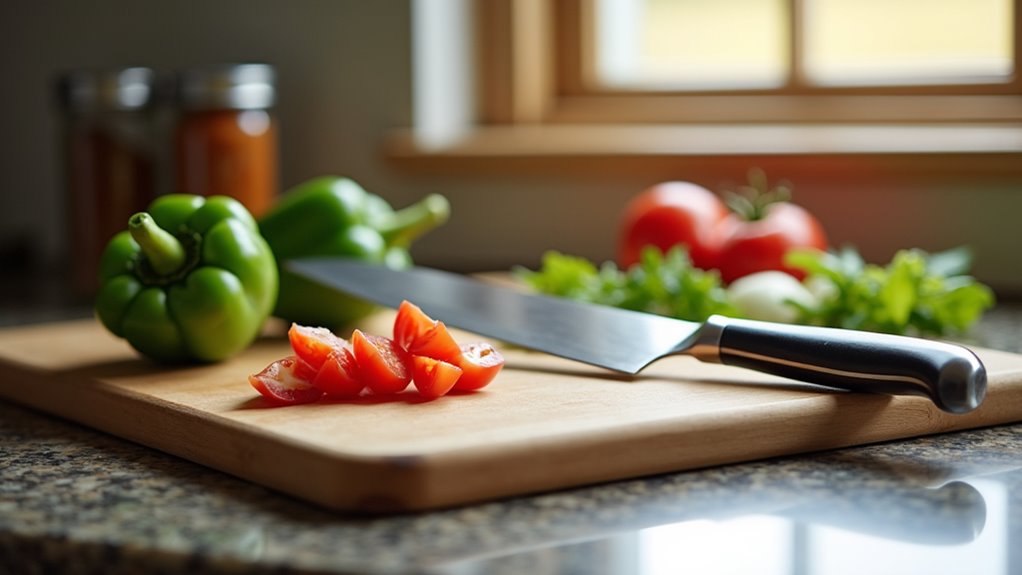
Using the right cutting surface helps keep your knife sharp and safe. Hard surfaces like glass, marble, or ceramic can dull your knives fast.
Wooden boards or plastic cutting boards are better choices. They’re kinder to your knife edges and help them stay sharp longer.
A stable cutting surface also makes food prep safer. It reduces slips and accidents while using your knife.
Be careful, though. Sharp knives on plastic boards can release microplastics into your food. Wooden boards often last longer for your knives.
Additionally, proper storage techniques, such as using knife block storage, can further enhance the longevity of your knives.
Choose wisely to ensure your knives remain sharp and effective!
Not Storing Knives Properly

Storing knives the right way is important. Poor storage can dull blades and cause accidents. Loose knives in drawers can get damaged. They can also cut you by accident.
Use knife blocks for safe storage. Knife blocks keep knives organized and protect the blades. You can easily grab a knife when you need it.
Another great option is a magnetic strip. This lets you hang your knives on the wall. It saves space and looks nice too. Plus, it helps prevent dulling.
For individual knives, use protective sheaths. Sheaths keep blades sharp and safe. They also make knives last longer. Proper knife storage solutions influence efficiency and safety in the kitchen, enhancing your overall cooking experience.
Storing knives properly keeps them in good shape. It makes your kitchen safer too. A safe kitchen reduces risks and helps with knife care.
Keep knives sharp and your kitchen safe!
Frequently Asked Questions
How Often Should I Sharpen My Knives?
Sharpen your knives every 10 to 20 uses. This keeps them effective. Look for signs of dullness like difficulty cutting. Use good sharpening stones. Try simple home sharpening methods. Professional sharpening services are also a great option. Regular maintenance helps your knives last longer. Keep your kitchen safe and efficient. A sharp knife is a happy knife!
What Is the Best Way to Clean My Knives?
A dull, rusty blade isn’t what you want. Protect your knives with proper cleaning. Always hand wash them using mild soap. Rinse well to remove all soap. Dry them immediately with a soft cloth. This prevents moisture and rust.
Keep knife hygiene in mind. Use safe materials that won’t damage the blade. Avoid soaking knives in water. This can lead to rust and dullness. Store knives properly, too. A knife block or magnetic strip is best.
Regular maintenance keeps your knives sharp and long-lasting. Treat your knives with care. They will serve you well for years.
Can I Use Dishwashers for Knife Cleaning?
Using dishwashers to clean knives is not a good idea. Dishwashers can damage blades and dull their sharpness. The heat can also harm the knife handles. Detergents leave residue that can cause rust.
Cleaning knives by hand is safer. Use warm water and mild soap. Dry them right away to keep them in good shape. This simple method helps your knives last longer and work better. Take care of your knives, and they will take care of you.
What Types of Knife Blocks Are Safest?
For safe knife storage, bamboo blocks, wooden holders, and magnetic strips are great options. These choices keep blades sharp and help prevent accidents. Drawer inserts are not recommended for safety. Wall-mounted racks save space and keep countertops safe. Knife sheaths also provide good protection for blades. These storage methods ensure your knives are easy to reach and safe to use.
How Can I Tell if a Knife Is Dull?
A knife is dull if it has certain signs. First, check how it slices through food. A dull knife feels hard to push through. Next, notice if food sticks to the blade. This means the edge is not sharp.
Try the paper test. Hold a piece of paper and slice it. A sharp knife cuts easily. A dull knife struggles.
Look closely at the blade. A dull knife reflects light off the edge. Listen to the sound when you cut. A dull knife makes a different sound than a sharp one.
Conclusion
Avoid these common knife maintenance mistakes. Keep your knives sharp and safe. Use the right knife for each task. Good maintenance extends a knife’s life. Store knives properly to prevent damage. A well-kept knife makes cooking easier. It’s like having a reliable friend in the kitchen. Check your technique and care routine. Enjoy the benefits of well-maintained knives every time you cook.