
How To Extend The Lifespan Of A Kitchen Knife
This post contains affiliate links. As an Amazon Associate, we earn from qualifying purchases.
To extend the lifespan of your kitchen knife, sharpen it monthly and hone it before each use. Always cut on plastic or wooden cutting boards to protect the blade’s edge. Clean the knife immediately after use with warm, soapy water, and avoid using dishwashers. Store knives in a block or with edge guards to prevent damage, and regularly check for rust and wear. For those interested in more in-depth knife care techniques, further explanations and tips will follow later in the article.
Essential Facts in 30 Seconds
- Sharpen knives monthly for optimal performance and longevity.
- Use honing rods before each use to maintain blade edge alignment.
- Hand wash knives with warm, soapy water to prevent rust and ensure hygiene.
- Store knives in a knife block or Blade Safe to protect them and keep them sharp.
- Regularly inspect knives for rust or dullness to ensure safety and functionality.
Regular Sharpening Techniques
Keep your kitchen knives sharp. Regular sharpening is key for great performance. Sharpen your knives at least once a month. Use sharpening stones that fit your knife’s steel hardness for the best results.
Before using your knives, hone them with a honing rod. This step realigns the blade edge and keeps it sharp without removing material.
Watch for signs that show your knife needs sharpening. If cutting soft foods becomes hard or requires too much force, it’s time to sharpen. Regular honing before each use can help maintain sharpness and performance.
With these simple techniques, you can make your knives last longer. Taking care of your knives helps reduce wear and tear. A sharp knife makes cooking easier and more enjoyable.
Proper Knife Usage

Using kitchen knives correctly is key for safety and keeping them sharp. Always cut food only. Avoid hard items like frozen food or bones. These can damage your knife’s blade.
Use a plastic or wooden cutting board. This helps maintain sharpness. Check your knife’s sharpness before each use. A dull blade can slip and cause accidents.
For scraping food off your cutting board, use the back of the knife. This protects the blade. Limit your knives to light chopping and slicing tasks. Regularly clean your knives to keep them in good shape. Proper cleaning techniques are essential for preventing rust and preserving the longevity of your knife.
Use a honing rod to maintain sharpness. This simple tool helps you keep your knives ready for cooking. Proper knife use leads to a safe and efficient cooking experience.
Stay safe and enjoy cooking!
Cleaning and Maintenance Practices
Keep your kitchen knife in great shape. Wash it well and hone it often.
Always hand wash your knife with warm, soapy water right after you use it. Avoid the dishwasher to keep the blade safe.
Make it a habit to hone your knife before each use. This helps the edge stay sharp and ready to cut. Regular cleaning practices will make your knife last longer and work better. Enjoy cooking with your well-maintained knife!
Proper Washing Techniques
Cleaning your kitchen knife the right way keeps it sharp and lasts longer. Always wash your knife by hand right after using it. Use warm water and mild dish soap. This stops food from sticking and makes it easier to clean.
Grab a soft sponge or cloth. Scrub the blade gently from the back to the tip. Let the soap sit for 30 seconds to work well. Rinse it under warm water to wash away all soap and food.
Dry your knife completely with a clean cloth. This helps prevent rust and moisture. Regularly check for rust prevention to ensure your knife remains in optimal condition.
Never soak knives in the sink or put them in a dishwasher. Both can hurt the blade and handle, causing damage. Taking these simple steps keeps your knife in great shape.
Regular Honing Schedule
Honing your kitchen knife is key for a sharp edge. Set a regular schedule. Hone your knife before each use or at least once a week. Use the right honing rod based on your knife’s steel type. This keeps your knife in great shape. Regular honing not only maintains sharpness but also extends knife lifespan by preventing misalignment.
Here’s a quick guide:
| Honing Rod Type | Ideal Steel Type |
|---|---|
| Ceramic Rod | Softer Steels |
| Diamond Rod | Harder Steel Knives |
| Steel Rod | General Use |
| Regular Schedule | Before each use or weekly |
| Check Sharpness | Slice through paper or tomato |
Stay sharp and safe in the kitchen!
Safe Storage Solutions

Storing kitchen knives safely is important for you and your knives. Use a knife block or Blade Safe. These keep knives separated and reduce the chance of damage.
Store knives with the blade edge up in vertical slots. This protects the blades and keeps them sharp. Avoid using utensil drawers. Loose storage can cause chipping and injuries. If you use a drawer, add plastic edge guards for safety.
Keep your knife storage clean, especially wooden blocks. This prevents dampness and bacteria. Proper knife storage greatly enhances the kitchen experience by improving efficiency and workflow.
Safe storage solutions help knives last longer and ensure a safer cooking space. Proper knife storage greatly improves kitchen safety and knife performance.
Importance of Cutting Boards

Using the right cutting board is important for your kitchen. A good board helps keep your knives sharp.
Wood and plastic boards are best. They’re gentle on your blades. Avoid using glass or stone. They can dull your knives quickly.
Keep your boards clean. Wash them after each use. It’s a good idea to have separate boards for meats and vegetables.
This keeps your food safe and hygienic. Remember, a clean kitchen is a happy kitchen! Additionally, always use a cutting board for stability and safety when preparing your ingredients.
Ideal Cutting Board Materials
Choosing the right cutting board can help your kitchen knives last longer. Ideal materials like wood and plastic are gentle on knife edges.
Here are a few important points:
- Wooden cutting boards resist bacteria. This helps keep your food safe.
- Plastic cutting boards are easy to clean. They’re great for raw meat or fish.
- Always use separate boards for meats and vegetables. This prevents cross-contamination.
- Replace or resurface boards with deep cuts. These cuts can hide harmful bacteria.
A good cutting board keeps your food safe and your knives sharp. Make the right choice for your kitchen!
Preventing Cross-Contamination Practices
Keeping your kitchen safe is important. Preventing cross-contamination helps keep your food healthy. Use separate cutting boards for raw meat and vegetables. Bacteria from raw meat can easily spread to vegetables. This can cause serious health problems.
Choose plastic cutting boards for raw meat. They’re easy to clean and disinfect. Use wooden boards for vegetables and fruits. Wood naturally resists bacteria. Check your boards for deep scratches or grooves. These can trap bacteria. If your boards are very worn, replace or resurface them.
Wash both sides of wooden boards regularly. This helps prevent warping and bacterial growth. After washing, let your boards air-dry. This keeps them dry and safe for cutting. Additionally, always make sure to clean and dry knives before storage to maintain their sharpness and prevent rust.
Following these steps ensures your kitchen stays clean and your food remains safe.
Maintaining Board Hygiene Regularly
Keeping your cutting boards clean is very important. It helps prevent germs and keeps food safe. Here are some easy steps to follow:
- Wash your knives after every use. This keeps them sharp and free from germs.
- Use different boards for meats and vegetables. This helps avoid cross-contamination.
- Clean wooden boards well and let them air dry. This stops moisture from building up.
- Replace or fix boards that have deep cuts. These cuts can hide bacteria. Additionally, using high-carbon stainless steel blades can enhance your knife’s performance and longevity.
Awareness of Knife Properties
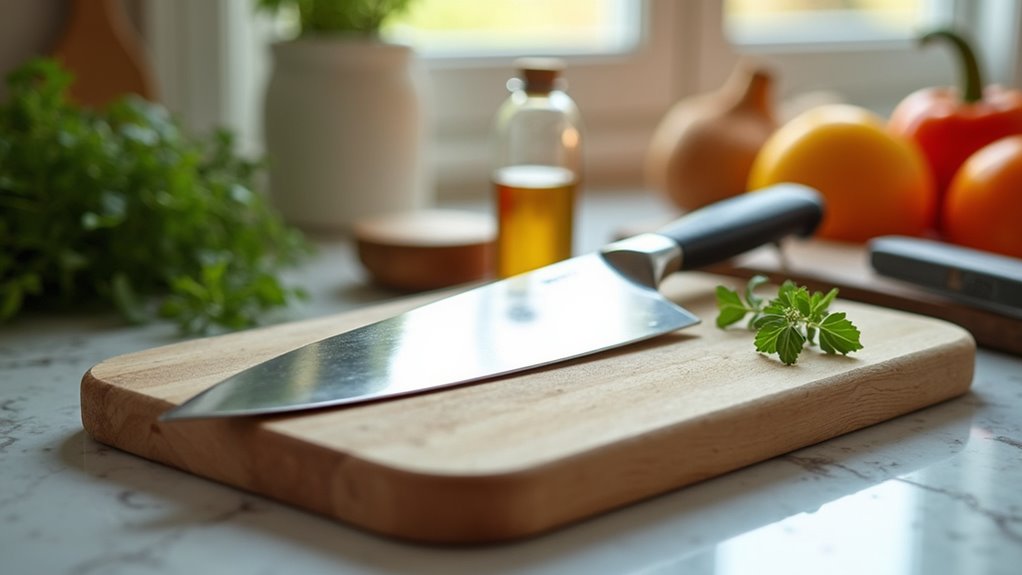
Understanding your kitchen knife is key for safety and good performance. The knife’s materials and design play a big role in how well it works. High-carbon steel knives hold their edge well but can rust without care. A thinner blade is perfect for precise cuts. A thicker blade is better for tougher jobs.
Keep your knives sharp with a good sharpener. Dull knives need more force, which can lead to accidents.
The handle material matters too. It affects your grip and comfort while cutting. Knowing these details helps you use your knife effectively and safely. Additionally, understanding the differences between carbon steel vs. stainless steel can further guide your knife selection and maintenance practices. Enjoy your cooking!
Signs of Wear and Damage

Kitchen knives wear out over time. This wear and damage can hurt how well they work and affect safety. Here are some signs you should check for:
- Dullness: A knife that doesn’t cut well will glide over food. It might mash instead of slice. This is a sign it needs replacing.
- Visible Damage: If the blade is shorter or has uneven edges, it’s unsafe. A damaged knife won’t perform well.
- Rust and Corrosion: Rust can mix with food. It can also carry bacteria, which is bad for health.
- Excessive Sharpening: A knife that struggles to cut cleanly may have lost its shape. This means it’s less effective and might need to be replaced.
Keep these signs in mind to ensure your kitchen knives stay safe and effective.
Investing in Quality Knives

Quality knives make cooking easier and more enjoyable. Investing in high-carbon steel and premium materials means better edge retention. These knives last longer and perform well.
A good knife feels balanced and comfortable in your hand. Many have ergonomic designs. This reduces hand fatigue while you cook. You can focus on your meal without discomfort.
Most quality knives come with warranties. This shows the manufacturer’s trust in their product. Proper care is key for longevity. Clean and dry your knives after use. Consider professional sharpening to keep them in top shape.
In the long run, buying quality knives saves you money. Cheaper knives break or dull quickly. You end up spending more for replacements. Quality truly matters in your kitchen.
Frequently Asked Questions
How Often Should I Oil My Kitchen Knife?
Oiling your kitchen knife helps keep it in great shape. Do this about once a month. If you live in a humid place, oil it more often. Use food-grade oils for safety.
Apply a thin layer of oil. Wipe off any extra oil. This prevents rust and keeps the blade sharp. Taking these steps ensures your knife lasts longer and works better. A well-oiled knife is a happy knife!
Can I Put My Knife in the Dishwasher?
Putting your knife in the dishwasher can cause serious damage. Dishwashers use high heat and harsh detergents. This can dull your blade quickly. Rust is also a big risk. Knives can rust from water and detergent exposure.
The best way to care for your knife is to wash it by hand. Use warm, soapy water and a soft cloth. Rinse well and dry it immediately. This method keeps the blade sharp and prevents rust. Taking these simple steps will help your knife last longer. Keep your tools in great shape for cooking!
What Type of Cutting Board Is Best for Knives?
Wooden or bamboo cutting boards are best for your knives. They provide a soft surface that helps keep blades sharp. Glass cutting boards should be avoided. They can quickly dull your knives. Plastic boards are easy to clean, but they may not last as long. Composite boards offer good durability and are a great choice too. Always use proper cutting techniques. Keep your board clean for safe food preparation. Your knives will thank you!
How Do I Know if My Knife Is High-Quality?
Knowing if your knife is high-quality is key. Look at the blade materials first. Stainless steel is great for strength and rust resistance. A good blade should hold an edge well.
Next, check the handle design. It should feel comfortable in your hand. A well-designed handle allows for better grip and control while cutting.
Weight balance matters too. A good knife feels balanced when you hold it. This makes cutting easier and safer.
Brand reputation plays a big role. Trusted brands usually make high-quality knives. Read user reviews to see what others think. This can guide your choice.
Finally, follow care instructions. Proper care keeps the edge sharp and the knife in good shape. A well-maintained knife performs better and lasts longer.
Is It Safe to Use a Dull Knife?
Using a dull knife is not safe. It can lead to accidents and injuries. A dull knife slips easily, making it hard to control. This can cause cuts and other injuries while cooking.
Sharp knives make cutting easier and safer. They glide through food without much effort. With a sharp knife, you can cut smoothly and quickly. It improves your cooking experience and saves time.
Regular maintenance is key. Sharpen your knives often to keep them effective. Use a knife sharpener or a whetstone for best results. A few minutes of care can make a big difference.
Storing knives properly also helps. Keep them in a knife block or a magnetic strip. This prevents damage and keeps them handy. A safe kitchen is a happy kitchen. Take care of your knives to stay safe while cooking.
Conclusion
Follow these tips to make your kitchen knife last longer. Regularly sharpen your knife to keep it cutting well. Use it properly to avoid damage. Always clean your knife after use. Store it safely to keep it in good shape. A quality knife performs better. Just like a strong car lasts longer, a good knife does too. A well-cared-for knife makes cooking easier and more fun. Take these steps, and your knife will serve you for years.