
Butchering Basics: Knife Techniques For Large Cuts
This post contains affiliate links. As an Amazon Associate, we earn from qualifying purchases.
To butcher large cuts effectively, begin with a sturdy cutting board and a sharp chef’s knife. It’s essential to use a handshake grip for better control and a claw grip to protect your fingers. Understanding muscle groups and joint locations will help you achieve cleaner cuts. Trim excess fat to maximize yield, and always remember to cut away from your body. Maintaining your knives is crucial for both safety and efficiency. For those interested in a deeper understanding, further explanation and supporting details will follow. Master these basics to confidently explore more advanced butchering techniques.
Essential Facts in 30 Seconds
- Use a sturdy cutting board for stability with large cuts of meat.
- Utilize a cleaver for easier cuts by leveraging its weight.
- Identify natural seams and joints to guide cuts for cleaner portions.
- Keep your knife sharp for precise cuts and reduce force needed.
- Practice the claw grip technique to protect fingers while handling meat.
Essential Tools for Butchering
Starting out in butchering? Having the right tools is very important. A sturdy cutting board, made of wood or plastic, gives you a safe surface to work on. It helps prevent slips and accidents.
You need a good chef’s knife for most cutting tasks. A boning knife with a flexible blade is useful for separating meat from bone and trimming fat.
Don’t forget a cleaver. It’s heavy and sharp, perfect for breaking down larger cuts of meat.
To keep your knives sharp, a sharpening stone is essential. Sharp knives make butchering easier and safer.
Wearing cut-resistant gloves is also smart. They protect your hands from cuts.
In addition, understanding the importance of butcher knives can significantly enhance your butchering skills.
Get these tools ready. With the right equipment, you can butcher with confidence.
Proper Grip and Stance
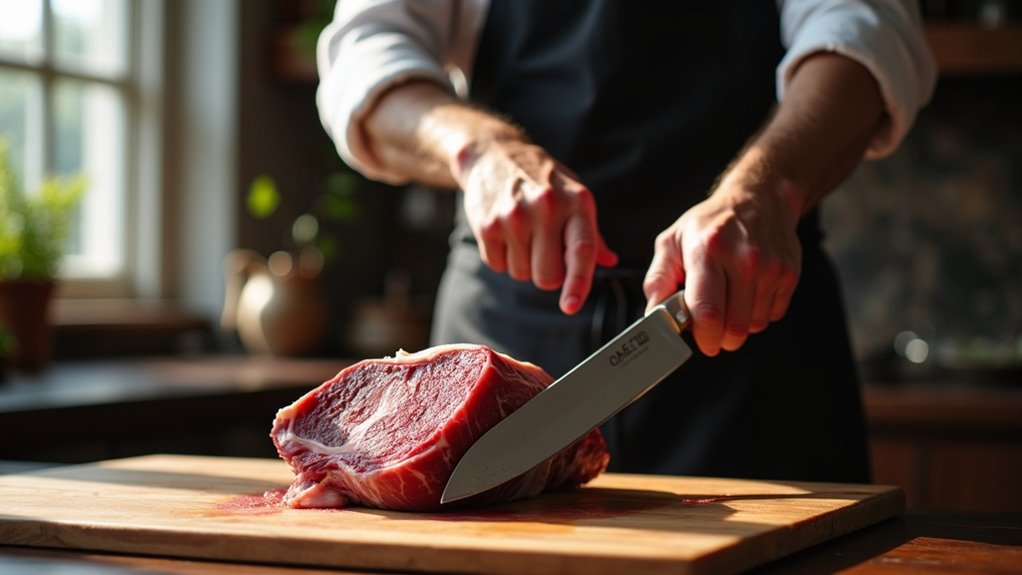
Your grip and stance matter a lot when butchering. Use a handshake grip for your knife. Wrap your fingers around the handle tightly.
With your other hand, use a claw grip to hold the meat. This will keep it steady while you work.
Stand with your feet shoulder-width apart. Keep a relaxed posture. This helps you stay balanced.
Control is important in this process. A good grip and stance lead to safer and more precise cuts. Proper body positioning helps enhance your overall butchering skills. Remember these tips to improve your butchering skills.
Handshake Grip Technique
To master the handshake grip technique, focus on how to hold the knife. This grip gives control and leverage, especially with sharp knives. Here’s how to do it:
- Wrap your fingers around the handle. Make sure they aren’t on the blade.
- Rest your thumb against one side of the handle for support.
- Keep a relaxed but firm grip. This helps with movement.
Don’t forget about your other hand! Use the claw technique to hold the meat securely. Curl your fingertips under to grip tightly.
Good posture is important too. Keep your shoulders squared and knees slightly bent. This stance helps you stay balanced and stable, especially when working with larger cuts. Remember that maintaining knife sharpness is essential for safe and effective cutting.
Claw Grip Safety
Using the claw grip keeps you safe while butchering. This grip protects your fingers from the blade. Tuck your fingertips under and use your knuckles to guide the food. Position your thumb behind your fingers. This prevents slips and cuts. Stand with your knees slightly bent and shoulders squared. This stance helps you maintain a strong grip. Practicing the claw grip not only improves safety but also enhances your overall knife techniques, making the butchering process more efficient.
| Key Elements | Description |
|---|---|
| Fingertips | Tucked under for safety |
| Knuckles | Guide the food while cutting |
| Thumb Position | Behind fingers to prevent cuts |
| Non-Dominant Hand | Holds food securely |
Practice the claw grip with different items. This builds muscle memory. It makes cutting larger pieces safer and easier.
Posture and Balance
Proper posture and balance are key for safe and effective butchering. Follow these tips for a strong grip and stance:
- Hold the knife with a firm handshake grip. Wrap your thumb and index finger around the handle. Keep your other fingers resting underneath.
- Stand with your shoulders squared to the cutting surface. Bend your knees slightly for better stability.
- Use the “claw” technique with your non-dominant hand. Curl your fingertips inward to protect them while guiding the knife.
Make sure your cutting surface is stable and at a comfortable height. Good posture keeps your back straight. This prevents leaning.
You can create even cuts and maintain control throughout the butchering process. Additionally, correct grip technique enhances safety and precision while handling your knife.
Understanding Meat Anatomy

Understanding meat anatomy helps anyone who wants to butcher or cook meat. Familiarize yourself with key muscle groups like chuck, rib, loin, round, and brisket. Each area provides different cuts with unique textures and flavors.
The animal’s bones and joints guide your cuts during butchering.
Key terms include “marbling.” Marbling adds flavor and tenderness to meat. “Connective tissue” affects cooking methods for specific cuts.
Learning about the anatomy of animals like beef, pork, and lamb is essential. This knowledge makes butchering easier and helps you select the best cut for your recipes.
Basic Cuts for Large Portions

Making basic cuts for large portions of meat requires the right tools and skills. Sharp, sturdy knives allow for clean cuts and safe handling.
Start by finding natural seams and joints. This method helps disassemble the meat with less waste.
Here are some useful tips for better cutting:
- Use high cuts for large sections.
- Use low cuts for delicate parts.
- Practice the “claw” grip with your non-dominant hand. This gives stability.
- Use a rocking motion to cut through tough sections easily. Additionally, ensure your knife is properly sharpened to enhance cutting efficiency.
With these techniques, you can cut meat more effectively and confidently.
Techniques for Maximizing Yield

To maximize your meat yield, trim away excess fat and sinew first. A sharp knife is important. Clean cuts mean less waste.
Use the whole animal. Bones and off-cuts make great stocks and soups. Cut larger pieces along natural seams and joints. This method reduces waste and gives cleaner portions.
For smaller pieces, dice and mince carefully. This ensures every bit is usable. Keep your knife sharp for better cuts. A sharp blade helps maintain the meat’s integrity. Fillet knives are particularly useful for intricate cuts, enhancing control and precision.
Careful planning and technique are key to maximizing yield.
Safety Practices While Butchering
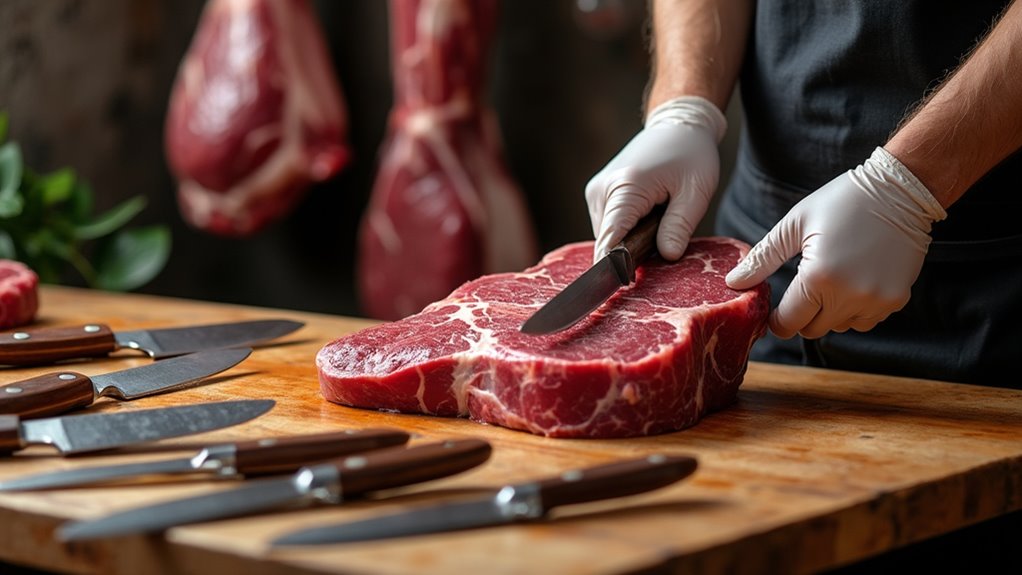
Butchering safely is very important. A sharp knife helps a lot. It cuts meat cleanly and needs less force.
Always hold the meat with a claw grip. This way, your fingers stay safe and away from the blade.
Wear protective gloves for extra safety. Keep your workspace clean and organized. Clear away any distractions.
Take your time and work carefully. If you feel tired or distracted, take a break. Staying focused helps prevent accidents.
Always cut away from your body. This keeps your hands safe. Additionally, remember that a dull knife is more dangerous because it requires more force, increasing the risk of slips.
When finished, clean your tools right away. Store knives in a safe place.
Follow these tips to butcher safely and enjoy your work.
Proper Grip Techniques
A proper grip is essential for safe and effective butchering. The right grip keeps you in control and reduces accidents.
Follow these tips to improve your grip:
Use the handshake grip. Place your thumb and index finger on the handle. This gives you better leverage.
Try the “claw” technique. Curl your fingers inward with your other hand. This helps protect against cuts.
Keep a stable posture. Stand with your feet shoulder-width apart. Bend your knees slightly for balance and less fatigue.
Additionally, being aware of your surroundings is vital during knife use to prevent accidents, which aligns with proper knife handling.
These simple techniques make butchering safer and easier.
Maintain Sharp Knives
Keeping knives sharp is key for safe and effective butchering. Regularly hone blades with honing steel. Dull knives can slip and cause accidents, making this step very important.
Invest in a good knife sharpener. Sharpen knives every few uses. This helps with control and reduces the force needed for cutting.
Always clean and dry knives after use. This prevents rust, which hurts performance. Store knives in a block or on a magnetic strip. This protects the blades and keeps cuts accidental.
Use the right grip and technique. The handshake grip and claw technique improve safety and precision for butchering large cuts. Additionally, regular assessment of knife condition ensures that you can identify when honing or sharpening is needed to maintain optimal performance.
Maintaining Your Knives
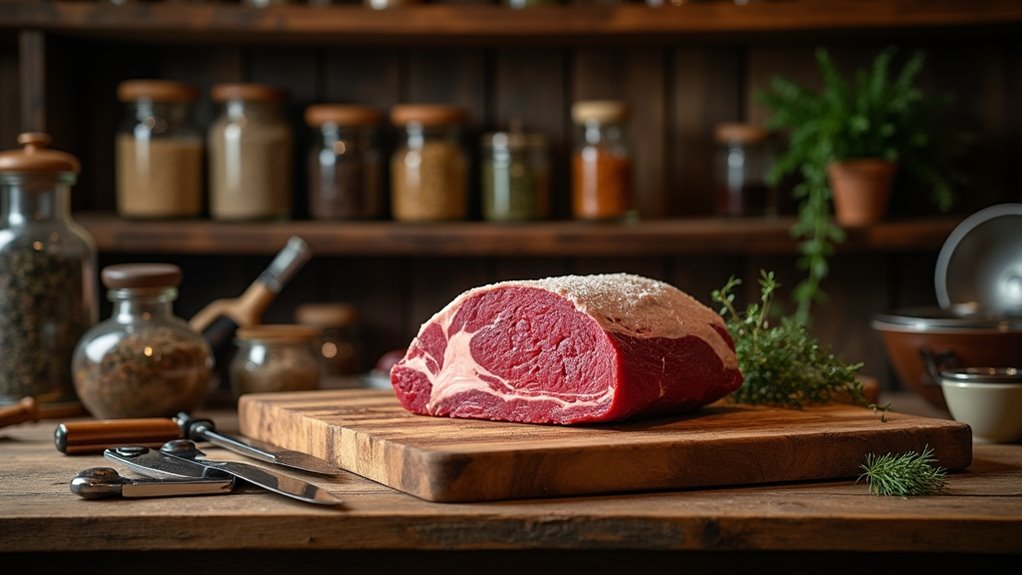
Keep your knives sharp and safe. Regular care is key for long-lasting performance. Follow these easy steps for great results:
- Sharpen often: Use a whetstone or honing rod. This keeps edges sharp for safe cuts.
- Wash correctly: Clean knives with warm, soapy water after each use. Dry them well to stop rust.
- Store smart: Use a knife block, magnetic strip, or sheath. This protects blades and keeps them sharp.
Check for nicks before using your knives. Apply food-safe mineral oil to wooden handles. This helps prevent cracking.
A little effort keeps your knives in great shape!
Practice Makes Perfect
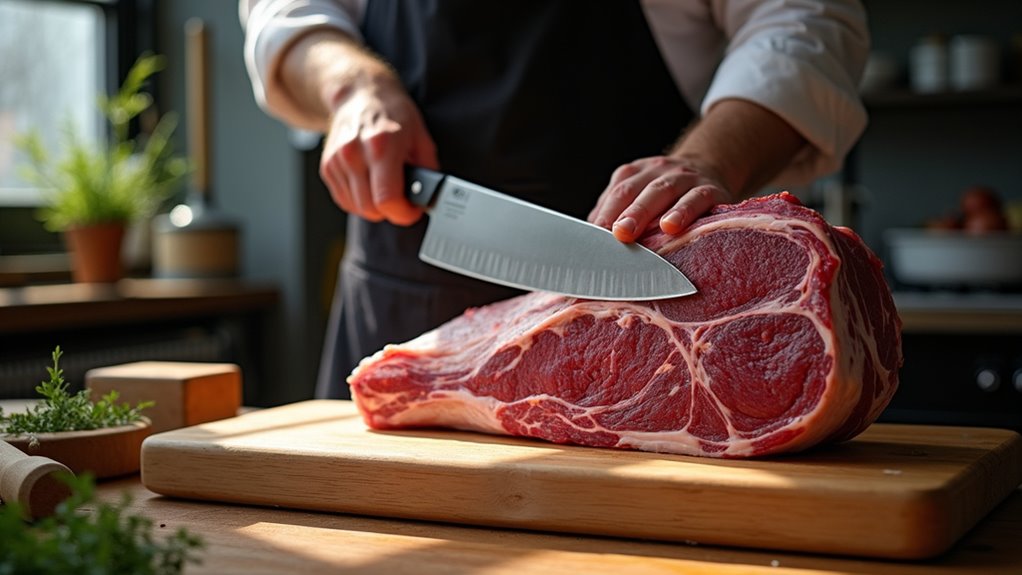
Your knives are sharp and ready. Now, it’s time to use them! Practice is key. Start by learning the parts of the animal. This helps you cut in the right places.
Focus on breaking down larger cuts into smaller pieces. This builds your skills and confidence.
Use a sharp chef’s knife or boning knife. Dull blades can cause accidents and bad cuts.
Try different meats like beef, pork, and chicken. This will make you more skilled and adaptable.
With time, you’ll cut more quickly and accurately. Keep practicing, and soon you’ll be a skilled butcher!
Frequently Asked Questions
What Types of Meat Are Best for Beginners to Practice Butchering?
Practicing butchering is easier with larger cuts of meat. Whole chickens, pork shoulders, and beef chuck roasts are great options. They have enough surface area for you to work with. Their sizes are manageable, making them perfect for beginners.
Whole chickens allow you to learn about both cuts and joints. Pork shoulders provide good meat for pulled pork. Beef chuck roasts teach you how to handle tougher cuts.
These meats help you build confidence and improve knife skills. You can learn to recognize different meat types and their textures. This practice will make you more comfortable in the kitchen.
Choose these cuts to start your butchering journey. Enjoy the process and have fun learning!
How Do I Clean and Sanitize My Butchering Area?
Cleaning your butchering area is important for safety. Start by removing all debris. Next, wash surfaces with hot, soapy water. Rinse everything thoroughly. After that, use sanitizers to kill germs. This will help keep your workspace clean and safe. Remember to clean tools and equipment too. A spotless area prevents cross-contamination. Regular cleaning keeps your butchering area shining and ready for use. Take pride in your workspace. It makes a big difference!
Can I Use Regular Kitchen Knives for Butchering?
Regular kitchen knives can be used for butchering. They may not work as well as specialized knives. Butcher knives are designed for cutting meat. They help you work faster and safer. Investing in quality knives can make a big difference. A good knife can cut through tough meat easily. It’s important to have the right tools for the job. This way, you can enjoy butchering more. Proper knives can improve your skills and make the process smoother. Choose wisely and your butchering tasks will become easier.
What Is the Best Way to Store Leftover Meat Cuts?
To keep leftover meat fresh, use airtight containers or plastic wrap. Store it in the fridge within two hours. Eat it within 3 to 4 days. For longer storage, freeze the meat. It can last for months in the freezer. Remember to label each container with the date. This helps you track freshness and avoid freezer burn. Safe storage keeps your meat tasty and healthy!
How Often Should I Sharpen My Butchering Knives?
Sharpen your butchering knives often. Do this before each use for the best results. The right time to sharpen depends on what you cut. If the knife feels dull or you feel extra resistance, sharpen it. Regular sharpening helps keep your knives performing at their best. A sharp knife is safer and makes cutting easier. Keep your tools in top shape for better results. Use a good sharpening tool for the best finish. Always take care of your knives. Proper care will extend their life and effectiveness.
Conclusion
You’ve learned the basics of butchering. Now, stand confidently in front of a large cut of meat. With a sharp knife in your hand, you can turn that meat into tasty portions for family meals. Always keep safety in mind. Take care of your tools for the best results. Practice your techniques. In no time, you will cut like a pro. Butchering is a rewarding experience. Enjoy every bite of your hard work!