Vegetable Prep Techniques For Faster Cooking
This post contains affiliate links. As an Amazon Associate, we earn from qualifying purchases.
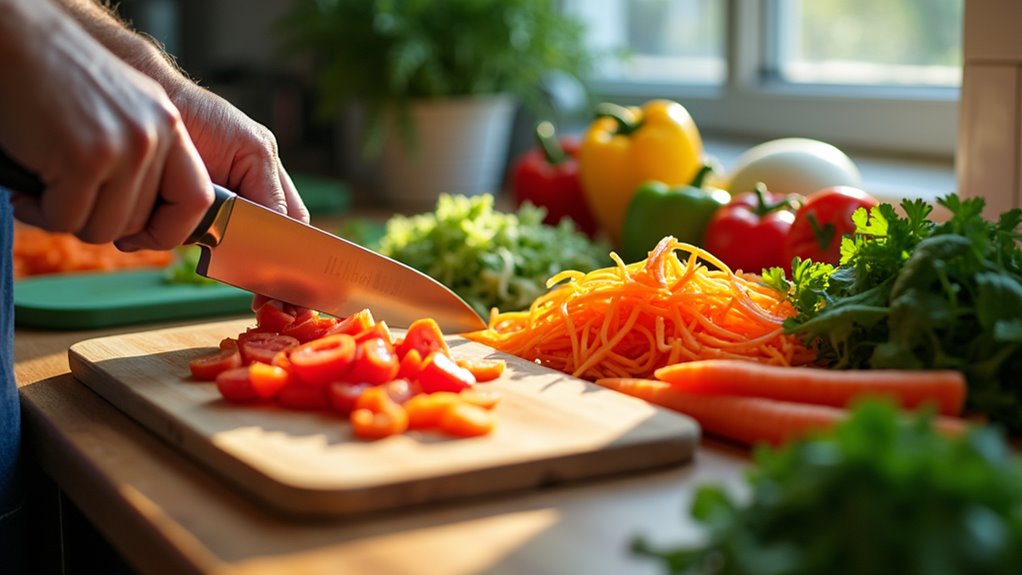
To speed up your cooking, mastering essential vegetable prep techniques is key. Utilizing a sharp chef’s knife and a sturdy cutting board ensures clean cuts, while batch chopping hard vegetables like carrots and celery saves valuable time. For easy access, store prepped veggies in airtight containers. Wash leafy greens immediately after purchase and use a salad spinner to maintain their crispness. Organizing your fridge so that veggies are at eye level makes them readily accessible. Further details and additional tips will follow for those looking to enhance their cooking efficiency.
Essential Facts in 30 Seconds
- Batch chop hard vegetables like carrots and celery for quick cooking access.
- Prep leafy greens right after buying to keep them fresh and reduce cooking time.
- Use a food processor for faster chopping and uniform vegetable sizes.
- Store prepped vegetables in clear, stackable containers for easy access.
- Organize your fridge with veggies at eye level to facilitate quick meal assembly.
Essential Tools for Veggie Prep
Preparing vegetables is easier with the right tools. A sharp chef’s knife, about 20–25 cm long, makes clean cuts. A smaller paring knife, around 7.5–10 cm, is great for small tasks.
Use a solid cutting board for chopping. Wood boards keep your knife sharp. Plastic boards are easy to clean.
A salad spinner is key for leafy greens. It washes and dries them quickly. This helps dressings stick better.
Use clear, stackable containers to store prepped veggies. They save space in your fridge.
A vegetable peeler with a comfy grip and sharp blade makes peeling fast. It reduces waste and speeds up your prep time. A sharp chef’s knife is considered the workhorse of the kitchen, making veggie prep even more efficient.
With these tools, you can enjoy prepping vegetables more!
Efficient Veggie Preparation

Batch chopping vegetables like carrots and celery makes prep faster. This saves time and keeps veggies ready for meals or snacks.
Prep leafy greens right after buying them. Wash and dry them well. This helps them last longer in the fridge.
Store chopped veggies in airtight containers. They stay fresh and easy to grab.
Keep your fridge organized. Place veggies at eye level for quick access. This makes healthy eating simple and fun.
For added versatility, consider making julienne cuts for salads, stir-fries, and garnishes.
Enjoy your fresh veggies!
Batch Chopping Techniques
Batch chopping saves time and makes meal prep easier. Spend 30 minutes to an hour once or twice a week. Prepare large amounts of vegetables.
Chop hard veggies like carrots, broccoli, and bell peppers ahead of time. Store them in airtight containers. They last up to a week. Softer vegetables should be eaten within 3-4 days.
This method cuts cooking time. It also boosts meal variety. Adding more veggies to your diet becomes simple. Use a food processor to speed things up.
With batch chopping, you’ll have ready-to-use vegetables for stir-fries, salads, and snacks. Meal prep becomes quick and fun!
Prepping Leafy Greens
Leafy greens boost your meals with great nutrition and flavor. To keep them fresh, wash your veggies right after buying. This removes dirt and pesticides. Use a salad spinner to dry them well. This keeps the greens crisp and tasty.
Store dried greens in resealable bags. Add paper towels inside the bags. They soak up extra moisture and stop wilting.
Cut leafy greens into your favorite sizes. This makes them easy to add to salads, smoothies, or cooked dishes.
Want to save some for later? Blanch greens like spinach or kale for a short time before freezing.
Check your stored greens often. Rotate them to use the freshest leaves first. This helps reduce waste and keeps your meals delicious.
Snack Pack Preparation
Snack packs with pre-cut vegetables make healthy snacking easy. Prepare simple packs with carrots, celery, and bell peppers.
Keep these veggies in clear containers. This way, you see them and grab them quickly. Pair your veggies with tasty dips like hummus or yogurt dressing.
It’s smart to prep snack packs for the week during vegetable prep time. This saves you time and helps avoid unhealthy snacks. Mastering the Brunoise technique can help you achieve uniform cuts that enhance the visual appeal of your snack packs.
Add colorful options like cherry tomatoes and snap peas. They make your snacks more fun and delicious. Enjoy your healthy snacks!
Keeping the Kitchen Organized

To keep your kitchen organized while prepping vegetables, set up a special area just for this. Have all your tools close by. This makes cooking faster and easier.
Use a scrap bowl or compost bin for vegetable scraps. This keeps your workspace clean and helps the planet.
Store vegetables in airtight containers. Label them with a grease pencil for easy finding. This saves time searching in the fridge or freezer.
For berries, choose breathable containers. This stops humidity from building up.
Keep avocados and lemons stored properly. Don’t let them sit in water. This keeps them fresh longer.
An organized kitchen makes vegetable prep quick and simple. Additionally, using a cutting board helps protect your knife edges, ensuring they remain sharp and effective for your vegetable preparation.
Common Produce Prep Missteps
Prepping your produce well is important. Many people make common mistakes.
Washing berries too early leads to mold. Rinse them just before eating for the best results.
Storing avocados is crucial. Keep them in cool, dry places. This helps them stay fresh longer.
Know the right way to handle your fruits and vegetables. It makes a big difference.
Enjoy your healthy snacks!
Proper Washing Techniques
Proper washing techniques keep your produce fresh and safe.
Wash leafy greens right after buying them. Use a salad spinner to remove excess water. This helps your vegetables last longer.
For berries, wash them just before eating. Too much moisture can lead to mold.
Avoid soaking fruits like avocados and lemons. Store them in a cool, dry place instead.
To peel garlic easily, smash the cloves with a knife. Avoid trendy hacks that can be unsafe.
Stick to these simple tips for cleaner, healthier meals. Enjoy your fresh produce!
Safe Storage Practices
Storing your produce safely is very important. For berries, wait to wash them until you’re ready to eat. This keeps them fresh and stops mold from growing.
Avocados and lemons shouldn’t be soaked in water. Instead, wrap them in a paper towel. This towel absorbs moisture and helps them last longer.
Label your storage containers with a grease pencil. This makes it easy to know what’s inside your fridge or freezer. This simple step cuts down on waste and keeps your food fresh.
Focus on safe storage practices to keep your fruits and vegetables delicious. Follow these tips to enjoy tasty meals every time.
Efficient Peeling Methods
Peeling fruits and vegetables can be quick and easy. For garlic, smash the cloves with the flat side of a knife. This method works better than shaking them in a jar, which often leaves bits behind.
For potatoes and carrots, use a sharp vegetable peeler. Choose one with a comfortable grip. This helps you peel without much effort.
Don’t peel cucumbers and zucchini too early. Peeling them ahead of time can cause spoilage. Peel these veggies just before you need them.
Peeling under running water can be helpful. It washes away dirt and makes the skin easier to grip.
When peeling round fruits like apples or peaches, cut a small flat spot on one side. This helps them stay steady on your cutting board.
Enjoy peeling with these simple tips!
Overall Veggie Prep Strategy

Prep your vegetables right after buying them. This makes cooking easier and more fun. Set aside time once or twice a week to chop, slice, and store your veggies. This batch prep keeps them fresh and ready for meals. Use sharp knives and clear storage containers for best results.
With veggies prepped, you’ll feel less tempted to grab unhealthy snacks. Colorful vegetables make meals exciting and nutritious. The easier your veggie prep is, the more likely you’ll eat healthy. A solid grip on your knife enhances control over the knife, ensuring safer and more efficient prep.
These tips save time and help you build better eating habits. Enjoy the benefits of good health and well-being!
Cooking Methods That Retain Nutrients

Cooking vegetables the right way helps keep their nutrients. Steaming is a top method. It softens veggies while keeping vitamins like C and B.
Grilling makes food tasty too. Just cook for 3-4 minutes on each side. This keeps the nutrients safe.
Roasting at 375-400 degrees Fahrenheit adds flavor. It works best for root vegetables.
Quick pickling in vinegar brine is great for cucumbers and carrots. It keeps them nutritious for up to two months.
Sautéing in a small amount of oil for a few minutes locks in nutrients. Use these methods, and your veggies will be tasty and healthy!
Benefits of Having Prepped Veggies

Prepped veggies can truly change your kitchen game. Having these ready-to-use ingredients makes cooking faster and helps you eat healthier.
Here are some great reasons to keep prepped vegetables on hand:
- Saves Time: Get dinner ready much quicker. No more long prep times.
- Promotes a Balanced Diet: With veggies nearby, you’ll add them to meals and snacks more often.
- Enhances Variety: Mix and match veggies to create different, tasty dishes.
- Encourages Spontaneity: With prepped veggies, you feel inspired to cook. This means less takeout and fewer processed foods.
Embrace prepped veggies. They can make your daily meals easier and more delicious!
Storage Tips for Freshness

To keep vegetables fresh and ready to use, follow these storage tips.
Store chopped vegetables in airtight containers in the refrigerator. This helps keep them fresh and prevents spoilage.
Don’t wash certain vegetables until you’re ready to use them. Excess moisture can speed up spoilage.
For leafy greens like lettuce, use resealable bags with paper towels. The towels absorb moisture and keep greens crisp.
Wash herbs before storage. Shake off extra water. Place them in resealable bags wrapped in paper towels.
Label your containers with a grease pencil. This makes it easy to identify contents and track freshness.
These tips ensure your vegetables stay delicious longer.
Frequently Asked Questions
How Do I Choose the Right Knife for Vegetable Prep?
Choosing the right knife for vegetable prep is important. A chef’s knife is great for most tasks. It can chop, slice, and dice with ease. A paring knife works well for small jobs. Use it for peeling and trimming.
Look for high-quality blade materials. Stainless steel is a popular choice. It stays sharp for a long time and is easy to clean. A good grip on the handle is also key. Comfort is important for safe and effective use.
Consider the size of the knife, too. A larger knife can handle bigger vegetables. A smaller knife is better for delicate tasks. Think about what you cook often. This will help you pick the best knife for your kitchen.
Invest in a good knife. It will make your prep tasks faster and easier. Happy cooking!
Can I Prep Vegetables the Night Before Cooking?
Prepping vegetables the night before cooking is a great idea. Store them in airtight containers. This keeps them fresh and saves time. Hard vegetables like carrots, bell peppers, and broccoli work well. Soft veggies may not last as long. Always wash and cut them before storing. This way, they’re ready to use when you cook. Enjoy your meals with less hassle!
What Are the Best Vegetables for Meal Prepping?
The best vegetables for meal prep include hard veggies like carrots and broccoli. Leafy greens, such as spinach, also work well. Root vegetables, like sweet potatoes, are great too.
Store these vegetables in airtight containers. This keeps them fresh all week long. Carrots stay crunchy and sweet. Broccoli remains bright and tasty. Spinach keeps its vibrant green color. Sweet potatoes are filling and nutritious.
Meal prepping with these veggies makes cooking easier. You can mix and match them in different meals. Enjoy healthy, delicious food throughout the week!
How Long Do Prepped Vegetables Last in the Fridge?
Prepped veggies have a limited shelf life. Hard vegetables, like carrots and bell peppers, can last up to a week. Softer veggies, such as lettuce and tomatoes, usually last about 3 to 4 days.
To keep them fresh, store them in airtight containers. Check for signs of spoilage, like wilting or bad smells. Eating fresh veggies is not only tasty but also healthy. Enjoy your prepped veggies while they are at their best!
Is It Safe to Freeze Prepped Vegetables?
Freezing prepped vegetables is safe and easy. Use the right methods, like blanching, to keep their quality high. Blanching helps lock in flavor and nutrients. Package the veggies well to prevent freezer burn. This way, they stay safe and tasty for months. Enjoy your favorite vegetables anytime!
Conclusion
Master veggie prep techniques to speed up cooking. Each cut helps create tasty meals. With the right tools and an organized kitchen, cooking becomes easier. Ready-to-cook vegetables save time and reduce stress. Smart vegetable storage keeps everything fresh and accessible. Prep your veggies wisely. Enjoy a smoother cooking experience and more time to savor your meals. Transform your time in the kitchen now.