
Step-By-Step Guide To Removing Stains From Knives
This post contains affiliate links. As an Amazon Associate, we earn from qualifying purchases.
To effectively remove stains from your knives, begin by identifying the type of stain and gather some mild dish soap, warm water, and a non-abrasive sponge. It’s essential to inspect the knife for rust or damage before cleaning. Hand-wash the blade with soapy water, soaking it for a few minutes if needed. Rinse thoroughly and dry it immediately with a soft towel. For rust stains, create a paste with baking soda and water, apply it to the affected area, and let it sit. Regular maintenance checks will help keep your knives in top condition. Further details and tips will be provided for those looking for more in-depth guidance.
Essential Facts in 30 Seconds
- Inspect the knife for stains or rust to choose the right cleaning method.
- Soak the knife in warm, soapy water for a few minutes to loosen residues.
- Use a non-abrasive sponge to gently scrub the blade.
- For tough stains, make a paste of baking soda and water, apply, and let sit for 10 minutes.
- Rinse the knife under warm water and dry with a soft towel.
- Store the knife in a cool, dry place.
Identifying the Type of Stain
To identify the type of stain on your knife, start by examining the blade closely. Reddish-brown patches indicate rust. Rust happens when moisture and oxygen cause corrosion. Dark spots or discoloration usually mean food residues. Acidic foods like tomatoes or citrus often leave these stains. You can typically wipe these residues away easily. Regularly inspecting your knife is important. This keeps it safe for food preparation. If you find rust, you need to clean it more thoroughly. Being proactive helps maintain your knife’s performance and appearance. Additionally, you can apply a thin layer of protective coatings to help prevent future rust formation.
Gathering Necessary Cleaning Supplies
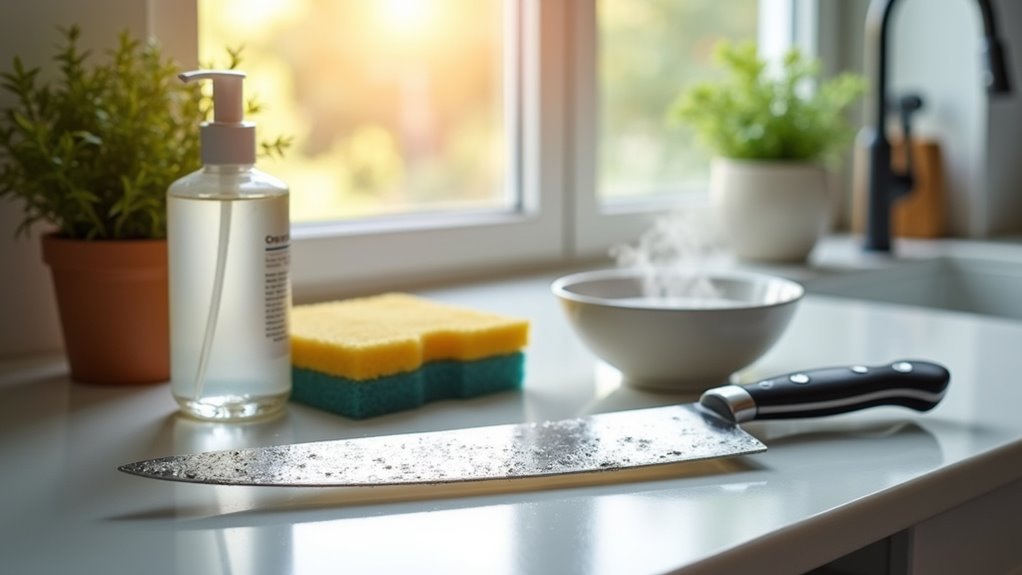
To clean your knife effectively, gather these cleaning supplies. This ensures your knife stays in great shape.
- Mild dish soap: It breaks down food residues without damaging the blade.
- Warm water: This helps dissolve grease and makes cleaning easier.
- Non-abrasive sponge: Use it to avoid scratching the knife’s surface.
- Soft towel: Keep one handy to dry the knife completely and prevent rust.
A soft-bristled brush is useful, too. It gets into small crevices for better cleaning.
Collect these items for a successful cleaning session. Your knives will thank you! Additionally, remember that proper knife cleaning is essential for maintaining their performance and preventing rust.
Preparing the Knife for Cleaning
Gather all your cleaning supplies before you start.
Check your knife for rust or damage. This step helps you pick the right cleaning method. Good preparation makes cleaning easier and more effective.
A clean knife will last longer and work better. Stay safe and keep your knife sharp. Enjoy the process!
Gather Cleaning Supplies
To clean your knife well, gather these supplies first:
- Mild dish soap – This works as a gentle cleaner. It won’t harm the blade or handle.
- Soft sponge or cloth – Use a non-abrasive type. This prevents scratches on the knife.
- Warm water – This helps to remove food bits and stains easily.
- Soft towel – Have this ready to dry your knife. It stops dampness from building up.
A soft-bristled toothbrush is handy for cleaning small spaces and designs.
With these items, cleaning your knife will be easy. Keep it sharp and shiny!
Assess Knife Condition
Inspect your knife’s condition before cleaning. First, remove it from storage. Place it on a stable, clean surface.
Check for surface stains, rust, or food residues. Reddish-brown patches indicate rust. Note how severe it is, as this affects cleaning methods.
Ensure the knife is completely dry first. This prevents more rust from forming.
Gather your cleaning supplies: mild dish soap, a soft cloth, and a non-abrasive sponge.
Evaluating the knife’s condition helps make cleaning easier and safer. Regular maintenance, including monitoring blade condition, ensures knife reliability and extends the lifespan of your knife.
Choose Cleaning Method
After ensuring your knife is clean and dry, it’s time to pick the right cleaning method.
First, check for any visible rust or stains. Your choice will depend on what you see. Here are some effective ways to clean your knife:
- Baking soda: This works well for light rust. Mix it with water to make a paste.
- White vinegar: Use this for heavier stains. Soak the knife for a few minutes.
- Mild dish soap: Mix with warm water for general cleaning. Scrub with a non-abrasive sponge.
- Soft cloth: Use this for drying and polishing your knife afterward.
Keep your workspace bright and tidy. This helps you clean safely and effectively. Remember that proper cleaning practices are vital for knife maintenance.
Removing Sticky Food Residues
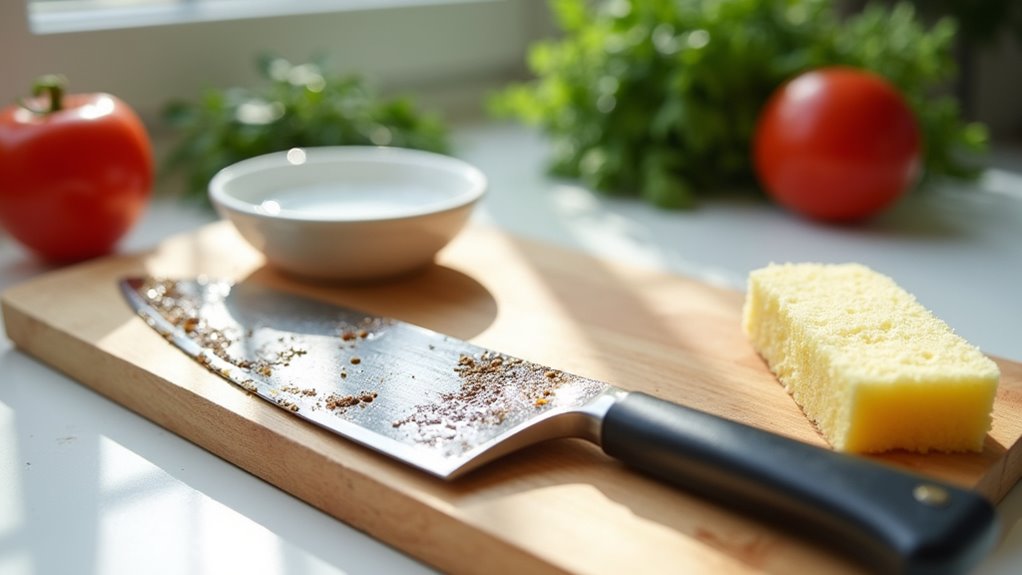
Removing sticky food off your knives is easy.
First, soak the knife in warm, soapy water for a few minutes. This will help loosen the sticky bits.
Next, grab a soft sponge or cloth. Gently scrub the blade. Avoid steel wool; it scratches the knife.
For tough spots, mix baking soda and water into a paste. Apply this paste and let it sit for 10 minutes. Then, scrub again.
Rinse the knife under warm water to wash away soap and food.
Dry your knife with a soft towel right away. This stops rust and keeps it clean.
Addressing Rust Stains

Rust stains on knives can be annoying. Quick action restores their shine and function. Here are easy ways to remove rust using natural solutions:
- Lemon juice: Rub a cut lemon on light rust stains.
- White vinegar soak: Soak the knife for 30 minutes to loosen rust.
- Baking soda paste: For heavy rust, mix baking soda with water. Apply the paste overnight. Scrub gently in the morning.
- Citric acid solution: Mix citric acid with water. Soak the knife if needed.
Always dry the knife well after cleaning. Proper care keeps your kitchen knives in great shape! Regular honing is crucial for maintaining knife performance and preventing the risk of injury from dull knives.
Inspecting the Knife After Cleaning

After cleaning your knife, inspect it carefully.
Check the blade for rust or stains. Run your finger gently along the edge to test the sharpness. This quick check helps you find problems early.
Keeping your knife in good shape is important. Regular inspections can also extend its life. A well-maintained knife makes cooking easier and safer.
Always take a moment to care for your tools.
Visual Inspection for Rust
To keep your knife in great shape, inspect it visually after cleaning. This helps catch problems early.
Here’s what to check:
- Reddish-brown patches on the blade mean rust. Treat it quickly.
- Check the edge for sharpness. Any damage can hurt performance.
- Look at the handle. It should be clean and dry to prevent rust.
- Regular visual checks keep your knife strong and extend its life. Additionally, regular maintenance checks are essential for ensuring your blade remains protected.
Taking care of your knife helps it serve you well for a long time.
Check for Stains
After cleaning your knife, check for stains or discoloration.
Look closely at the blade for reddish-brown patches, which may be rust. Use a clean paper towel to wipe the surface gently. This helps reveal any sticky spots or leftover residue from washing.
Pay special attention to the edge. Stains or rust can hurt the knife’s sharpness and performance. For tough stains, a magnifying glass can help you see better.
Regular checks after cleaning catch stains or rust early, stopping further damage. This easy step keeps your knife sharp and ready for your next cooking task. Additionally, it’s important to clean the blade thoroughly to prevent scratches and ensure effective polishing later on.
Assess Blade Sharpness
After cleaning your knife, it’s important to check its sharpness. This ensures it cuts well every time. Here’s how to assess the blade:
- Look closely at the blade. Check for dull areas or any damage.
- Carefully run your thumb along the edge, away from your body. Feel for nicks or rough spots.
- Look for rust or stains. These can weaken the blade.
- If the blade feels dull, use a honing steel to sharpen it. Regular professional sharpening contributes to overall knife health, ensuring your knives remain effective and long-lasting.
Regular checks help keep your knife working well and lasting longer. Always do this after cleaning to keep your knife in top shape.
Maintaining Your Knives to Prevent Future Stains

Caring for your knives is essential to keep them stain-free and sharp. Always wash your knives by hand right after use. Use mild soap and a soft sponge. This prevents food from sticking and hardening.
After washing, dry your knives with a soft towel. Leaving them damp can cause rust over time.
Store your knives in a cool, dry place. Avoid putting them on wet surfaces to reduce oxidation. For carbon steel knives, apply a thin layer of food-safe oil after cleaning. This helps shield them from moisture and corrosion.
Check your knives regularly for any signs of wear or damage. If you notice stains or rust, take action quickly to keep them looking good and working well. Monitoring humidity levels helps maintain the integrity of your knives and prevents future stains.
Proper maintenance keeps your knives in great shape.
Frequently Asked Questions
Can I Use Vinegar to Remove Stains From Knives?
Vinegar is a great option for removing stains from knives. It works well on different materials and types of rust. To use vinegar, mix it with water for better results. This helps prevent future stains and keeps your knife safe. After cleaning, always rinse and dry the knife. This keeps it in good shape for the next use. Vinegar is simple and effective for knife maintenance.
What if My Knife Has Multiple Types of Stains?
A knife with multiple stains needs careful attention. Start by identifying each type of stain. Use safe cleaning solutions that match your knife’s material. For example, stainless steel knives need different care than ceramic ones.
Regular cleaning is key. Wash the knife after each use. Use warm, soapy water and a soft cloth. Avoid harsh chemicals that can damage the blade.
Store the knife properly. Use a knife block or a magnetic strip. This keeps the blade safe and prevents future stains. Good care helps your knife last longer and stay sharp.
Are There Natural Alternatives to Commercial Rust Removers?
Finding a rusted heirloom knife in your attic can be exciting. You can use natural cleaners like lemon juice or vinegar to remove rust. Both are easy to find and safe to use. Baking soda is another great option. Make a paste with water and apply it to the rusted areas.
Salt also works well for rust removal. Mix it with lemon juice or vinegar for better results. These methods are eco-friendly and safe for your family. You can keep your metal items rust-free with these simple remedies. They are easy to make and use. Try them out and see how well they work!
How Often Should I Clean My Knives to Prevent Stains?
Clean your knives after every use. This helps stop stains and keeps them sharp. Check for food bits on the blade. Use a cloth to wipe them dry. Store knives in a safe place. Proper care can make your knives last longer. A little effort goes a long way. Happy cooking!
Is It Safe to Use Metal Scrubbers on Knives?
Metal scrubbers can damage knives. They create scratches that ruin the blade. Use non-metal options instead. These are safer and clean well. Take care of your knives. Clean them gently. This helps them last longer and prevents stains. Always prioritize knife care for the best results.
Conclusion
Follow these steps to keep your knives clean and sharp. A shiny blade looks better than a rusty one. Proper care matters. Tackle sticky stuff and stubborn rust with the right tools. Regular cleaning stops stains and helps knives last longer. Take a few minutes to care for your utensils. Enjoy cooking with your clean knives ready to use.