
How To Julienne Vegetables: A Step-By-Step Guide
This post contains affiliate links. As an Amazon Associate, we earn from qualifying purchases.
To julienne vegetables, begin by trimming each end for stability and peeling root vegetables if necessary. Slice the vegetable into thin round discs at a slight angle, then stack a few discs and cut them lengthwise into strips approximately 1/8 inch wide, aiming for strips that are 2-3 inches long for consistency. Using a sharp knife ensures safety and precision. Further details and tips will follow to help you refine your technique and master this skill for your dishes.
Essential Facts in 30 Seconds
- Wash and peel vegetables; trim ends for stability.
- Slice vegetables into even discs; stack 3-4 discs for easier cutting.
- Cut discs lengthwise into 1/8 inch wide and 2-3 inches long strips.
- Use a sharp chef’s knife or julienne peeler for precision and safety.
- Practice consistent cutting for uniformity and better presentation.
Understanding the Julienne Cut
The julienne cut is an important cooking skill. This classic French technique makes vegetables into thin matchstick pieces. They’re usually 2-3 inches long and 1/16 to 1/8 inch wide.
To julienne vegetables, start with a clean cutting board. First, trim your vegetable. Then, slice it into even discs. Stack the discs and cut them lengthwise into strips. This keeps the pieces uniform for even cooking.
Julienned vegetables, like carrots and bell peppers, look great and cook evenly. Use them in salads, stir-fries, or as garnishes.
This technique can really boost your cooking skills and make your dishes more appealing. Enjoy practicing this helpful skill!
Essential Tools for Julienne Cutting
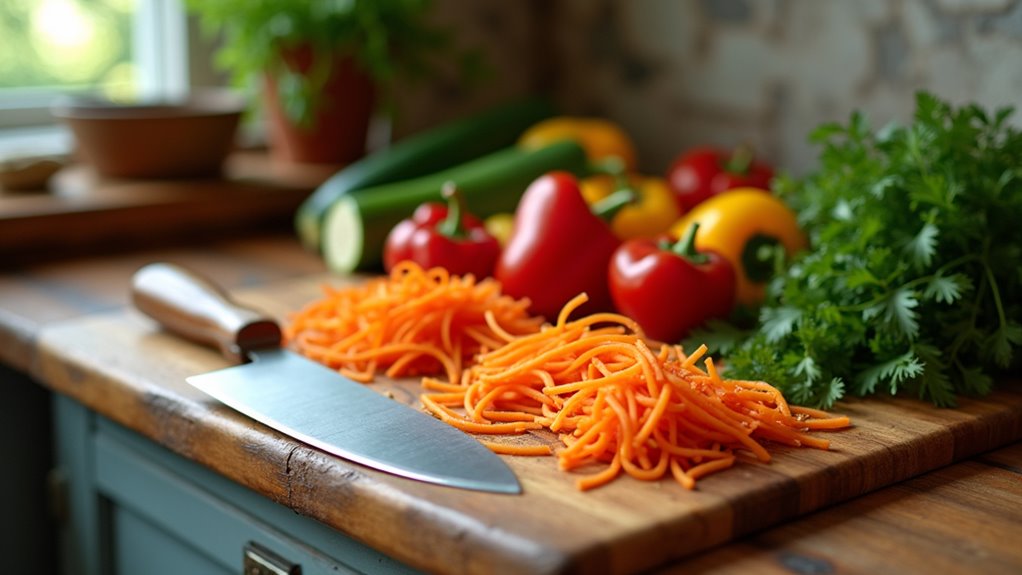
To julienne vegetables well, having the right tools is important. A sharp 8-inch chef’s knife cuts precisely. A sturdy wooden cutting board gives you a stable surface to work on. A julienne peeler can help with quick slicing, but it offers less control over the thickness of your strips. Consider using a mandoline slicer; it can make even, thin strips easily. Always use a guard with the mandoline for safety. A paring knife’s versatility can also enhance your cutting techniques for more intricate designs. Practice makes perfect. The more you julienne, the better you’ll get. Enjoy your cooking!
Knife Selection and Care
An 8-inch chef’s knife is great for julienne cutting. Its size offers good control and speed. The knife should feel sturdy and fit comfortably in your hand.
A sharp knife is very important. Dull blades can cause accidents and uneven cuts. Regular honing maintains knife sharpness and ensures better cutting performance.
Always wash and dry your knife by hand after using it. This helps prevent rust and keeps it sharp.
Check your knife often for any damage or wear. These simple steps make julienne cutting easier and safer. They also help your knife last longer in the kitchen.
Enjoy your cooking!
Ideal Cutting Board Types
Here are some great options to consider:
- Bamboo boards: These are strong and help keep your knife sharp.
- Wood boards: They offer a steady surface and are gentle on blades.
- Plastic boards: Lightweight and easy to clean, but may not be as steady.
- Size: Make sure your board is big enough for the vegetables you cut.
Choosing the right cutting board is essential for extending the lifespan of your kitchen knife.
Find the perfect cutting board to boost your cooking experience. Enjoy julienne cutting like a pro!
Julienne Peeler Benefits
A julienne peeler is a game-changer for preparing vegetables. This tool quickly cuts firm vegetables like carrots, zucchini, and potatoes into even matchstick shapes. Its sharp edges save time compared to using a knife. The ergonomic design feels good in your hand and reduces tiredness during long use. You can use it safely, as the design helps protect your fingers. Plus, its small size means it fits easily in your kitchen drawers.
| Benefit | Description |
|---|---|
| Quick Cutting | Speeds up vegetable prep time. |
| Comfortable Grip | Reduces tiredness while cutting. |
| Improved Safety | Lowers chances of finger cuts. |
| Ideal for Firm Veggies | Best for carrots, zucchini, and potatoes. |
| Compact Design | Fits easily in kitchen storage. |
Preparing Your Vegetables
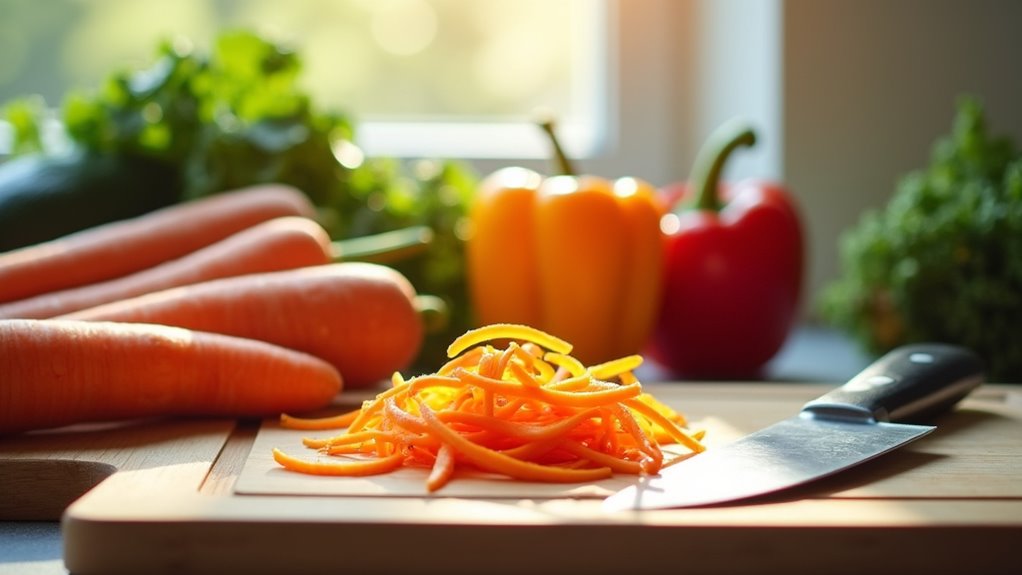
Preparing your vegetables is key for perfect julienning. Start with a good wash. Rinse away dirt and pesticides.
Peel root vegetables like carrots and beets for a fresh taste. Trim about 1/4 inch from each end. This gives you a stable base for slicing and stops slips.
For round vegetables, cut them in half. Lay them flat on the cutting board. This helps you make even cuts.
Cut your vegetables into small, manageable sections. This makes them easier to handle and ensures consistent sizes.
- Wash and peel well.
- Trim 1/4 inch from each end.
- Cut round vegetables in half.
- Make small, easy-to-handle sections.
Consider using sharp knives to enhance your cutting efficiency and safety.
Follow these steps for great results!
The Julienne Technique: Step-by-Step

Prepare your vegetables for the julienne technique. Start by cutting off 1/4 inch from each end. This makes them stable.
Next, cut the vegetable into round discs. Keep the angle between 25 and 30 degrees. For easier slicing, stack 3-4 discs on top of each other.
Now, slice the stacked discs lengthwise. Aim for strips about 1/8 inch wide. This gives you that classic matchstick shape. Make sure the strips are 2-3 inches long. Consistency is key for even cooking and looks.
Try this technique with firm vegetables like carrots, cucumbers, and bell peppers. With practice, you’ll master the julienne technique. You’ll create beautiful, julienned vegetables for your meals!
Tips for Consistency and Safety
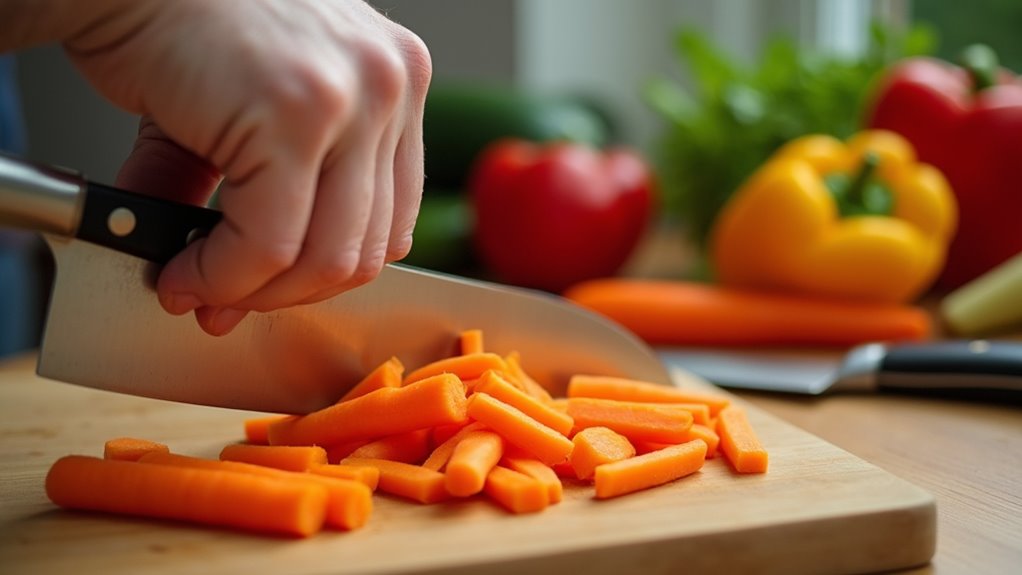
Julienning vegetables needs focus on safety and even cuts. Follow these tips for best results:
- Cut vegetables into uniform sizes. Aim for 1/8 inches wide. This helps with even cooking.
- Always use a sharp knife or a julienne peeler. Dull tools can slip and cause injuries.
- To stabilize round vegetables, cut a flat base or halve them. This creates a secure surface.
- Tuck your fingers in and away from the blade. Use your knuckles as a guide when cutting.
Practice julienning different vegetables often. A steady hand and attention to detail help you cut safely. Additionally, mastering knife skills for precision enhances your ability to create beautiful and evenly cut vegetables.
Enjoy making your meals more colorful and fun!
Alternative Methods for Julienning

Julienning vegetables can be easy and fun. Use a mandoline slicer for quick, even strips. It has settings to change the thickness.
For round vegetables, like carrots, cut them in half. This gives you a flat base. It makes slicing safer and easier. A julienne peeler is another good tool. Its sharp edges make fast matchstick slices. This works well for root vegetables, too.
Try the bias cut method, too. Slice at an angle for longer, attractive pieces. Carrots and zucchini look great this way.
Start with soft veggies, like zucchini. They’re easier to handle. Once you feel confident, move to firmer veggies. Enjoy making your meals colorful and tasty!
Using a Julienne Peeler
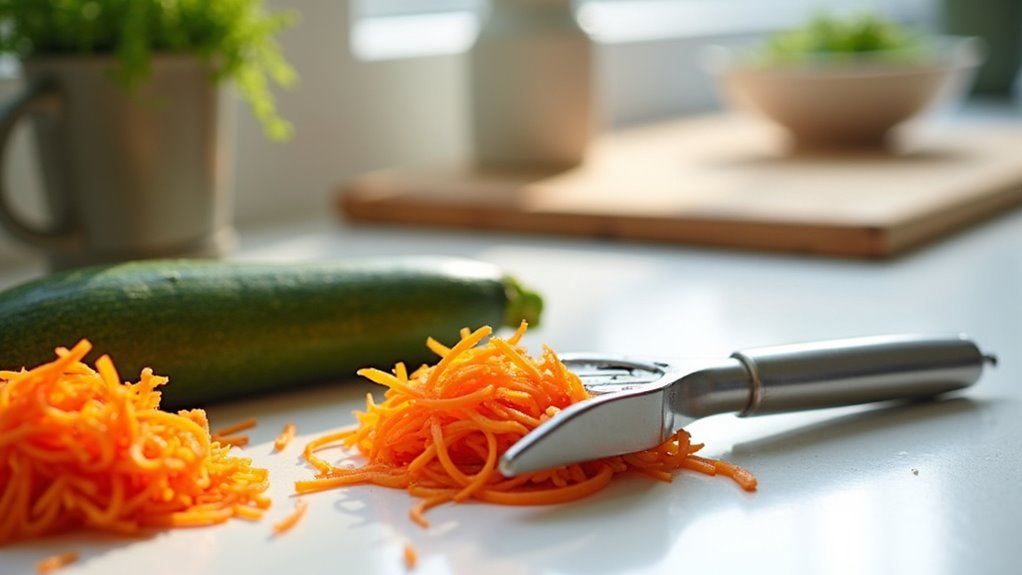
Using a julienne peeler makes preparing vegetables fast and fun. This tool has sharp edges that transform firm vegetables into thin strips, like matchsticks.
Here are some easy tips to use it safely:
- Place the vegetable on a stable cutting board.
- Don’t hold round veggies in your hand. This helps prevent cuts.
- For root vegetables, cut them in half and lay them flat.
- If the peeler feels hard to use, grab a knife for safety.
With a julienne peeler, you create beautiful and even veggie strips. These strips are great for salads or as garnishes.
Enjoy the quick and easy prep this tool brings to your kitchen!
Incorporating Julienned Vegetables Into Dishes

Incorporating julienned vegetables into your meals adds flavor and makes them look great. A julienne peeler easily slices bell peppers, carrots, and cucumbers into thin strips. These colorful veggies make salads fun, especially for picky eaters.
Here’s a simple guide for using julienned vegetables:
| Dish Type | Suggested Use |
|---|---|
| Salads & Slaws | Add color and crunch |
| Stir-Fries | Ensure even cooking |
| Garnishes | Enhance presentation |
Try adding julienned root vegetables like beets to roasted dishes. They add a nice crunch. You can also use them in spring rolls or sushi for a fresh taste. Enjoy trying new combinations!
Frequently Asked Questions
Can I Julienne Frozen Vegetables?
Julienning frozen vegetables is possible, but it can be difficult. First, thaw the vegetables completely. After thawing, pat them dry to remove excess moisture. This step is important. Use a good julienne knife for better results. Fresh vegetables are easier to julienne. They offer crisp textures and uniform shapes. If you want the best outcome, choose fresh over frozen.
How Do I Store Julienned Vegetables?
Store julienned vegetables in an airtight container. Keep them in the fridge for the best freshness. Place a damp paper towel inside the container. This helps keep the vegetables crisp and fresh. Most julienned veggies last for 3 to 5 days. The exact time depends on the type of vegetable. For example, carrots may stay fresh longer than zucchini. Always check for signs of spoilage. Enjoy your healthy snacks or meals!
What Are Common Mistakes When Julienning?
A sharp knife is key to perfect julienning. Always use a stable cutting board. Keep your fingers curled under to avoid cuts. Cut vegetables into even pieces for uniform cooking. Practice makes perfect, so don’t rush.
Common mistakes include cutting too thick or uneven slices. This can make cooking difficult. Another mistake is not paying attention to knife safety. Always cut away from your body.
Staying organized helps too. Keep your workspace clean and tidy. This will help you focus on your cuts. With practice, you can turn vegetables into beautiful julienne strips. Enjoy your culinary journey!
Can I Use a Mandoline for Julienning?
Using a mandoline for julienning is a great choice! It’s fast and gives uniform cuts. Always prioritize safety. Use the hand guard to protect your fingers. Make sure your vegetable is stable before cutting. This makes the process easier and safer. With practice, you’ll master julienne cuts in no time. Enjoy cooking with your perfectly sliced veggies!
What Are the Nutritional Benefits of Julienned Vegetables?
Julienned vegetables pack a punch when it comes to nutrition. These thin strips of veggies are full of vitamins and minerals. They help your body stay healthy and strong. Eating more vegetables can boost your vitamin intake. This means more energy and better health.
These vegetables also aid in digestion. They are high in fiber, which keeps your digestive system working well. A healthy gut means you feel better overall.
Antioxidants are another benefit. Julienned vegetables have high levels of these powerful compounds. Antioxidants help fight free radicals in the body. This can reduce the risk of chronic diseases.
Making meals with julienned vegetables makes your plate look nice. They add color and texture, making food more fun to eat. This is great for picky eaters who may not like whole veggies.
In short, julienned vegetables are tasty and healthy. They are an easy way to boost your meals. Enjoying them can lead to a happier, healthier you!
Conclusion
Julienning vegetables brings fun and flavor to your meals. Bright strips of carrots, zucchini, and bell peppers can make any dish more exciting. This simple cutting technique adds color and texture.
To julienne, start with a clean, sharp knife. Cut off both ends of the vegetable. Slice it into sections about 2-3 inches long. Then, cut each section into thin strips. Aim for even slices for the best look and taste.
Practice makes perfect. The more you julienne, the better you will become. Impress your friends and family with your skills. With the right tools and steps, anyone can do this. Enjoy creating beautiful dishes that taste great!