Skip to content
KnifeFlow
  • Types
  • Maintenance
  • Skills
  • Materials
  • History
  • Laws
  • Buying GuidesExpand
    • Review
KnifeFlow
  • knife handling safety guidelines
    Skills

    Knife Safety Rules Everyone Should Follow In The Kitchen

    ByMichasile

    To ensure safety in the kitchen with knives, always opt for a sharp knife, as it requires less force and minimizes the risk of slips. Selecting the appropriate knife for each task is crucial; for instance, use a chef’s knife for chopping and a paring knife for peeling. Employ proper cutting techniques by maintaining a…
    Read More Knife Safety Rules Everyone Should Follow In The KitchenContinue

  • rocking motion enhances cutting
    Skills

    The Role Of Rocking Motion In Chef’s Knife Techniques

    ByMichasile

    The rocking motion is a crucial technique for effectively using a chef’s knife, allowing you to chop with precision and ease. By maintaining the tip of the knife on the cutting board, you can achieve quicker, cleaner cuts while minimizing hand strain. This method is particularly useful for evenly chopping herbs and garlic. With practice,…

    Read More The Role Of Rocking Motion In Chef’s Knife TechniquesContinue

  • mastering precise knife techniques
    Skills

    Knife Skills For Precision: Brunoise, Chiffonade, And More

    ByMichasile

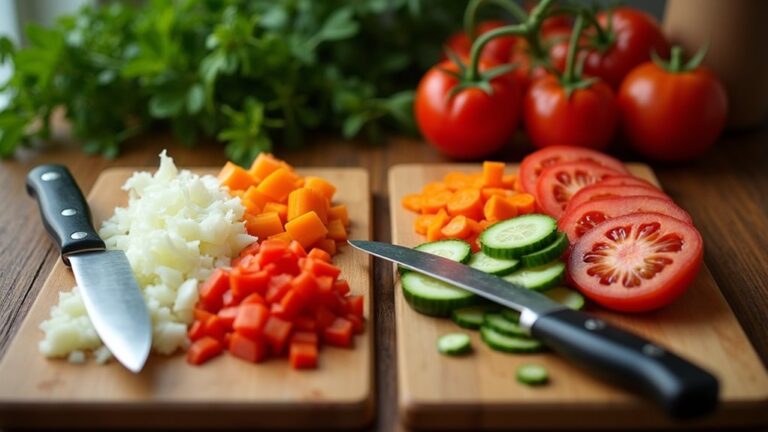
    Mastering knife skills for precision, such as the brunoise cut and chiffonade, is essential for enhancing your culinary creations. The brunoise produces 1/8-inch cubes for even cooking, while chiffonade finely slices herbs into ribbons to elevate flavor. Consistent cuts not only ensure quicker cooking times but also enhance presentation. Proper grip and regular practice are…

    Read More Knife Skills For Precision: Brunoise, Chiffonade, And MoreContinue

  • julienne vegetables step guide
    Skills

    How To Julienne Vegetables: A Step-By-Step Guide

    ByMichasile

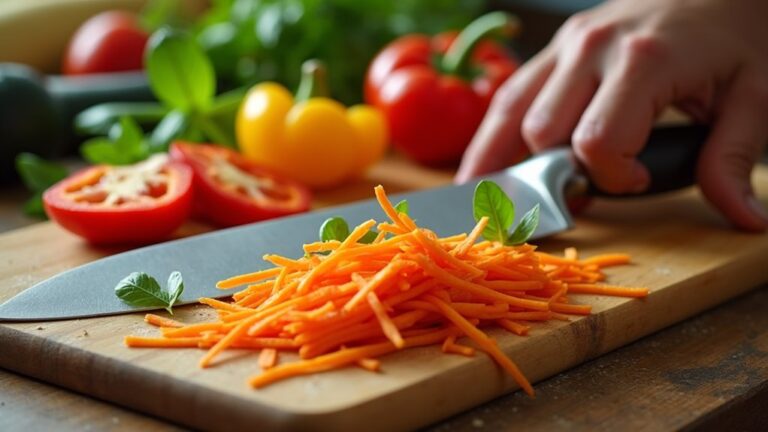
    To julienne vegetables, begin by trimming each end for stability and peeling root vegetables if necessary. Slice the vegetable into thin round discs at a slight angle, then stack a few discs and cut them lengthwise into strips approximately 1/8 inch wide, aiming for strips that are 2-3 inches long for consistency. Using a sharp…

    Read More How To Julienne Vegetables: A Step-By-Step GuideContinue

  • knife skills for meat cutting
    Skills

    Cutting Meat: Knife Techniques For Different Cuts

    ByMichasile

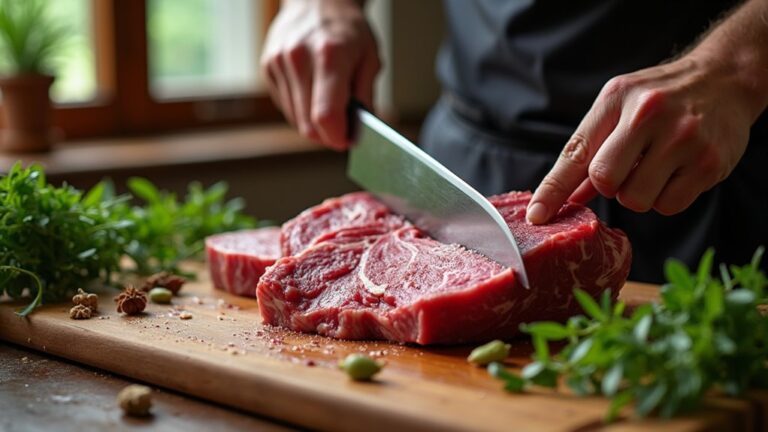
    Cutting meat effectively involves understanding the different cuts and utilizing the proper knife techniques. For tender cuts like tenderloin, slice against the grain into 1/4 to 1/2 inch pieces at a 45-degree angle using a chef’s knife or carving knife for precision. For tougher cuts such as brisket, a sharp knife is essential to navigate…

    Read More Cutting Meat: Knife Techniques For Different CutsContinue

  • filleting fish with technique
    Skills

    How To Fillet A Fish Using The Right Knife Technique

    ByMichasile

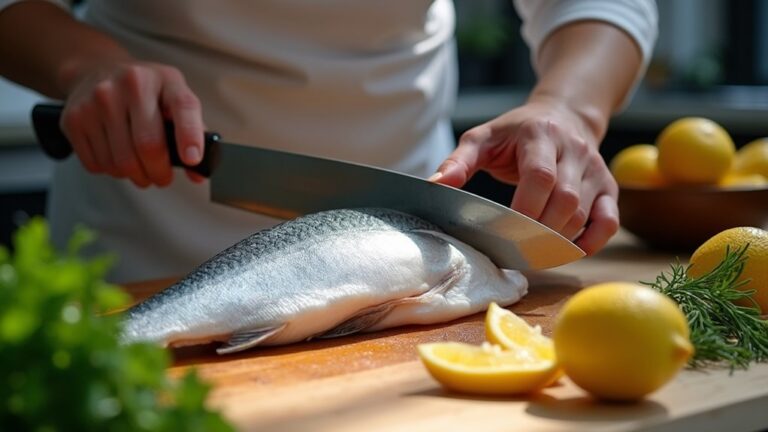
    To fillet a fish efficiently, use a sharp seven-inch curved knife, and follow a straightforward technique. Begin by scaling the fish and removing the gills, then make a clean cut behind the gills with a butcher knife. Glide the curved knife along the spine to separate the fillet from the bones, and repeat this process…

    Read More How To Fillet A Fish Using The Right Knife TechniqueContinue

  • mastering onion dicing techniques
    Skills

    Dicing Onions Like A Pro: Knife Skills Simplified

    ByMichasile

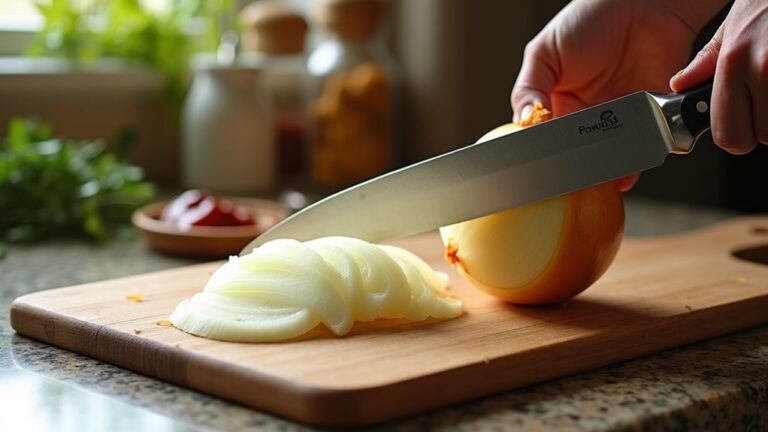
    To dice onions like a pro, you need a sharp chef’s knife, ideally between 8 to 10 inches long, and the proper technique. Begin by using the claw grip to safeguard your fingers while guiding the knife. Cut the onion in half from root to tip, ensuring the root remains intact. Make uniform slices across…

    Read More Dicing Onions Like A Pro: Knife Skills SimplifiedContinue

  • cooking knife skills essentials
    Skills

    Chopping Vs. Slicing: Techniques Every Cook Should Know

    ByMichasile

    Chopping involves cutting food into uneven pieces, making it ideal for vegetables like onions, while slicing creates thin, even pieces, perfect for meats and bread. Using a stable cutting board and the “claw grip” technique will help protect your fingers. For consistent cooking, aim for 1/2-inch pieces when chopping. Maintain control during slicing by keeping…

    Read More Chopping Vs. Slicing: Techniques Every Cook Should KnowContinue

  • claw grip cutting technique
    Skills

    How To Master The Claw Grip For Safer Cutting

    ByMichasile

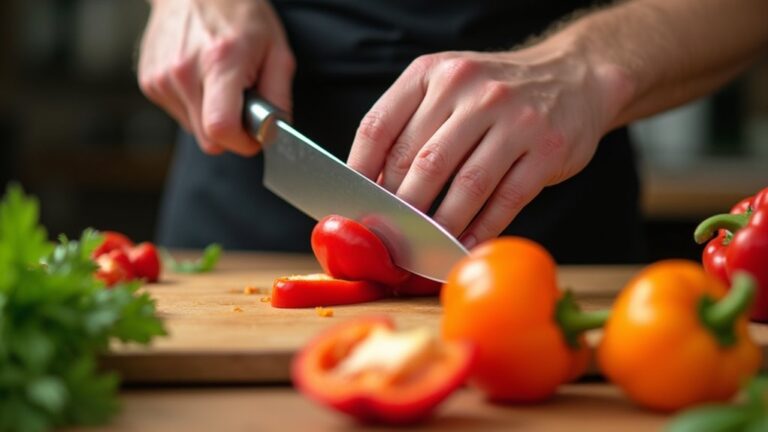
    To master the claw grip for safer cutting, curl your fingertips inward, tucking them under your knuckles, while holding the knife handle firmly but comfortably. Keeping your wrist straight enhances control as you chop. Practice with easy vegetables like celery and zucchini for about 20 minutes at a time. Correct finger positioning and avoiding excessive…

    Read More How To Master The Claw Grip For Safer CuttingContinue

  • knife grip and control
    Skills

    The Fundamentals Of Proper Knife Grip And Control

    ByMichasile

    To achieve proper knife grip and control, employ a pinch grip for enhanced stability—holding the handle with three fingers while your thumb and index finger grip the blade. To ensure safe cutting, curl your fingertips into a claw shape to protect them. When mincing or chopping, keep the knife tip on the board and use…

    Read More The Fundamentals Of Proper Knife Grip And ControlContinue

  • year round blade care tips
    Maintenance

    Seasonal Knife Maintenance: Caring For Blades Year-Round

    ByMichasile

    To ensure your knives remain in excellent condition throughout the year, it’s essential to understand their materials and follow a seasonal maintenance routine. Spring is for cleaning and oiling the blades, summer focuses on keeping them dry with silica gel packets, autumn is the time for sharpening to handle tough ingredients, and winter requires careful…

    Read More Seasonal Knife Maintenance: Caring For Blades Year-RoundContinue

  • knife maintenance through sharpening
    Maintenance

    The Role Of Professional Sharpening In Knife Longevity

    ByMichasile

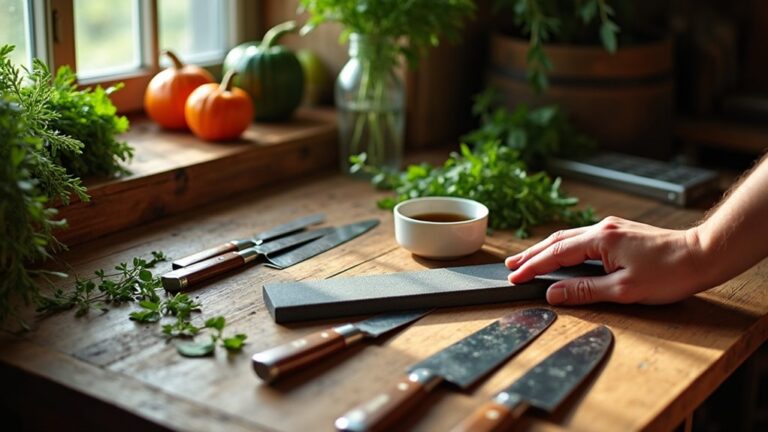
    Professional sharpening is essential for extending the lifespan of your knives. By utilizing expert services, you not only restore sharpness but also ensure the correct edge angle is maintained, which helps prevent damage and wear. A sharp knife cuts smoothly and safely, allowing for quicker and more efficient cooking. Additionally, regular professional maintenance can reduce…

    Read More The Role Of Professional Sharpening In Knife LongevityContinue

Page navigation

Previous PagePrevious 1 … 59 60 61 62 63 64 Next PageNext

Affiliate Disclosure

We are a participant in the Amazon Services LLC Associates Program, an affiliate advertising program designed to provide a means for websites to earn advertising fees by advertising and linking to Amazon.com

© KnifeFlow

  • Sitemap
  • Privacy
  • Disclaimer
  • About
  • Contact
  • Types
  • Maintenance
  • Skills
  • Materials
  • History
  • Laws
  • Buying Guides
    • Review
Search